I’m currently reading Ben Crowe’s Where The Light Gets In, and he tells the story of his involvement with Richmond and their remarkable turnaround from rock bottom to a premiership dynasty.
What’s interesting to me are the parallels between Richmond’s low point in 2009 and Essendon’s current predicament.
Their timeline was: Damien Hardwick appointed coach in 2009, Brendon Gale appointed CEO in 2010, Peggy O’Neal elected president in 2013, and then the first premiership of their dynasty arrived in 2017. Eight years from rock bottom to a flag.
Ben’s book lays out the philosophical blueprint for what it truly takes to turn a football club around. While it’s an excellent read, it’s also somewhat heartbreaking because it reinforces just how far Essendon still has to go.
The biggest takeaway for me is that genuine transformation isn’t driven by a single coach, CEO, president, player or draft pick. It’s the result of years of aligned leadership, cultural change, patience, and unwavering commitment to a long-term vision.
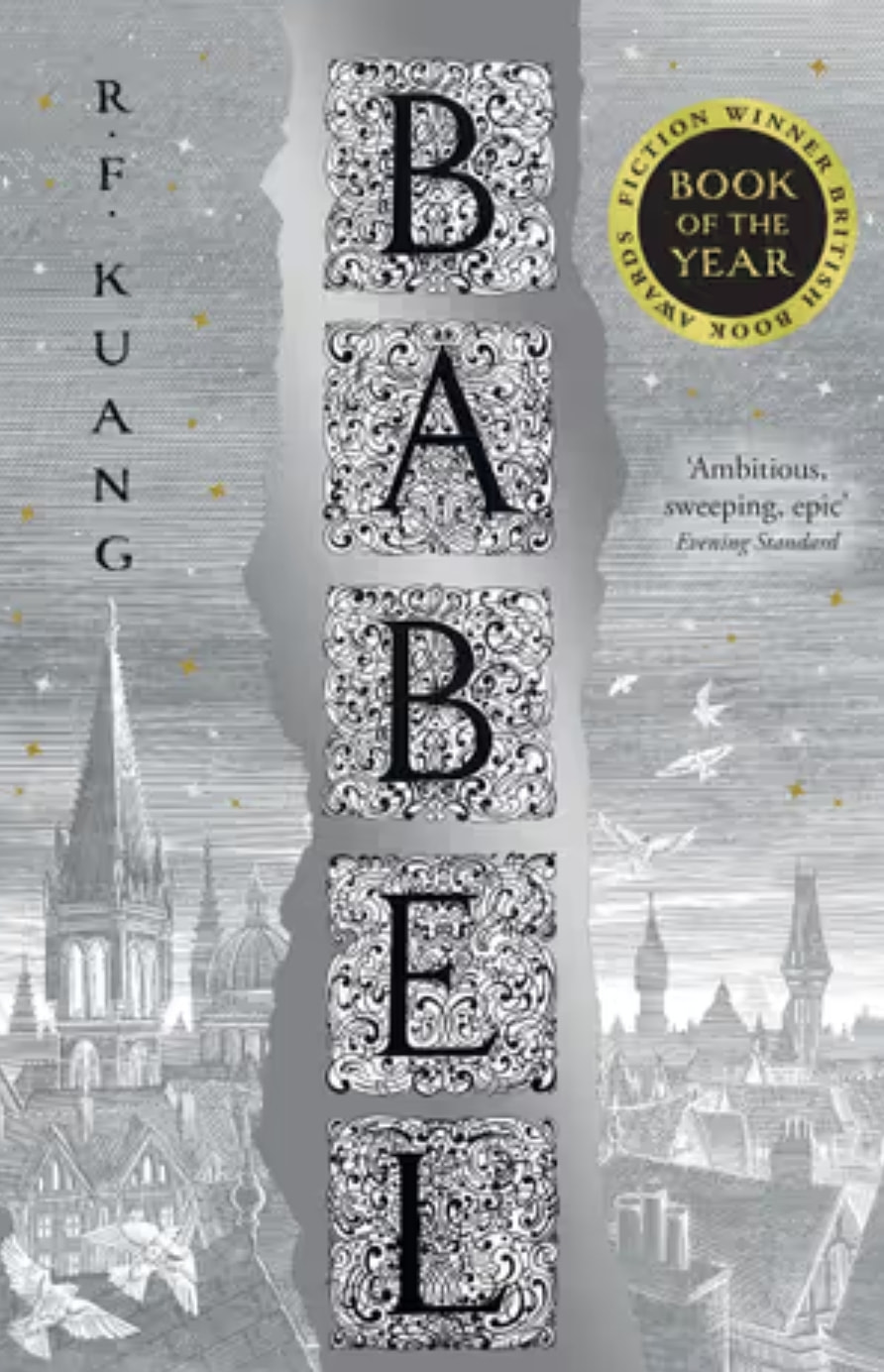
I went and watched RF speak at the Sydney Writers’ Festival and grabbed this on the way out. Started reading it on the way home on the bus and was drawn in immediately, so I put the other book I was reading on ice and went with this. It started well, and the ending was great, but I have to say I found the book as a whole was just “okay”. The author gets her message across but I didn’t rate it as a fantasy novel. Kuang gets criticised for lacking nuance and I can relate to that. She does hammer home certain themes in this book.
I think I’ve only read a couple of books in the last month, with the trip intervening. Picked up a couple in Sydney, including Michael Connelly’s latest, his new character, Stilwell, based on Santa Catalina Island about 40km out from LA. There’s an impending drug raid which fails, but which turns up something that links to a cold case murder on the mainland.
He has to co-operate with another Connelly star in Renee Ballard. All excellent police procedural.
Second book was Possible Springs, a debut from Samantha Ross combining rural noir with a touch of the Latin American trope of magic realism. Jimny Adams was 11 when she was pulled out of a river and brought back to life. However she was now able to read people’s thoughts…and keep it on the QT. At the time, kids were disappearing. There were a couple of consistency issues, but on the whole, I thought she carried it, The major part of the story took place when Jimny was 18-19. I enjoyed it.
Edit…second thoughts on Possible Springs. The crime solving is quite shabby, but just the story of the whole town I enjoyed quite a lot.
Joan Sauers’ third book, Murder at Thornwood Park, with Rose McHugh set in the Southern Highlands outside Sydney. The last member of the family owning the estate has died, and has assigned Rose to collate all the assets which aren’t being auctioned, for the local history aspects where Rose works.
Rose discovers some trinkets that are out of whack with other assets, and when she discovers that there was a station of WAAAF girls near there during the war, who can’t be authenticated as having left willingly after their training. Rose has the usual bee in her bonnet and pursues the idea of a serial killer but there are people determined to stop her.
I think this is the best of her three books. Pretty sure one of the genre fans, probably @OBITV , didn’t like the earlier ones.
I stopped reading about 6 weeks ago when my dog passed away. My brain just couldn’t absorb books at the time. I need to get back to it. I really miss it!
I’m reading Charles II by Antonia Fraser. He was one of the more successful Stuart monarchs, succeeded Cromwell, introduced, spaniels, and yatching as a sport. Didn’t produce any legitimate heirs, but heaps of illegitimate children. His mistress Nell Gwynn is well known, but there were plenty of others.
The young policewoman, Sally White, at the heart of one of her recent books is the lone officer in charge of Edenville police station up in the northeast of Victoria. Her biological father is a crook, and her stepfather is the Assistant Chief Commissioner. The latest case is of a young journalist who’s gone missing in alpine country. He’s been fishing around in the chop-chop market with tobacco growers.
Something’s fishy…and various people are falling under suspicion. It’s way up to her usual standard.
I’m reading the third book in the 3 Body Problem ahead of the series return on Netflix.
The author may know his science, but research and geography he clearly flunked. Without spoiling too much, there’s a section set in Australia where he seems to have confused the Great Victorian Desert and the state of Victoria, resulting in Warburton being on the edge of the desert. Also he seems to think Canberra is a major city, and we have an indigenous Australian named Fraisse who knows and performs the Maori haka.
I have just finished reading a novel by the American John Barth called The Sot-Weed Factor. I read it first when I was still in school, circa 1967. For those who don’t know, sot-weed is an old name for tobacco, and a factor is the manager of a plantation.
Things about the book. First, it’s immensely long, 800+ pages or 40+ hours of audiobook (beautifully read, though). Second, it’s written in a pastiche of 17th century English, but as far as I can tell, a good one. Third, the plot is ridiculously complicated but really doesn’t matter all that much. Fourth, it’s extremely funny – often laugh out loud funny – if you have the right sort of sense of humour.
The main character is Ebenezer Cooke, a young Englishman who at the beginning of the story decides that he is a poet and gets himself appointed Poet Laureate of the colony of Maryland. He is the son of the owner of a tobacco plantation there. He vows to dedicate himself to poetry and remain a virgin for life, the better to pursue his vocation.
I won’t attempt to describe the plot further; it’s too complicated and not worth the trouble. But part of it involves a search for the secret journals of Captain John Smith of Pocahontas fame, and his second-in-command, Sir Henry Burlingame. The journals, when found, tell the true story of what happened between Smith and Pocahontas, which is somewhat different from the traditional story. According to the journals, the name Pocahontas translates as She of the Smallnesse and Impenetrabilitie. That will give you an idea of the nature of the novel.
I liked it a lot. Back in 1967 I couldn’t put it down.
I’ve just finished this one and fully endorse @Alan_Noonan_10 's rating. I love all her books and this one is no exception. Highly recommended Aussie bush noir at its finest.
Thing that Osmon said that made me smile talking about one of his books, I think maybe he was reading readers comments where someone said ‘I knew who it was by chapter ten.’
And he said, ‘that’s interesting, because I didn’t.’