Good morning/afternoon/evening/night everybody
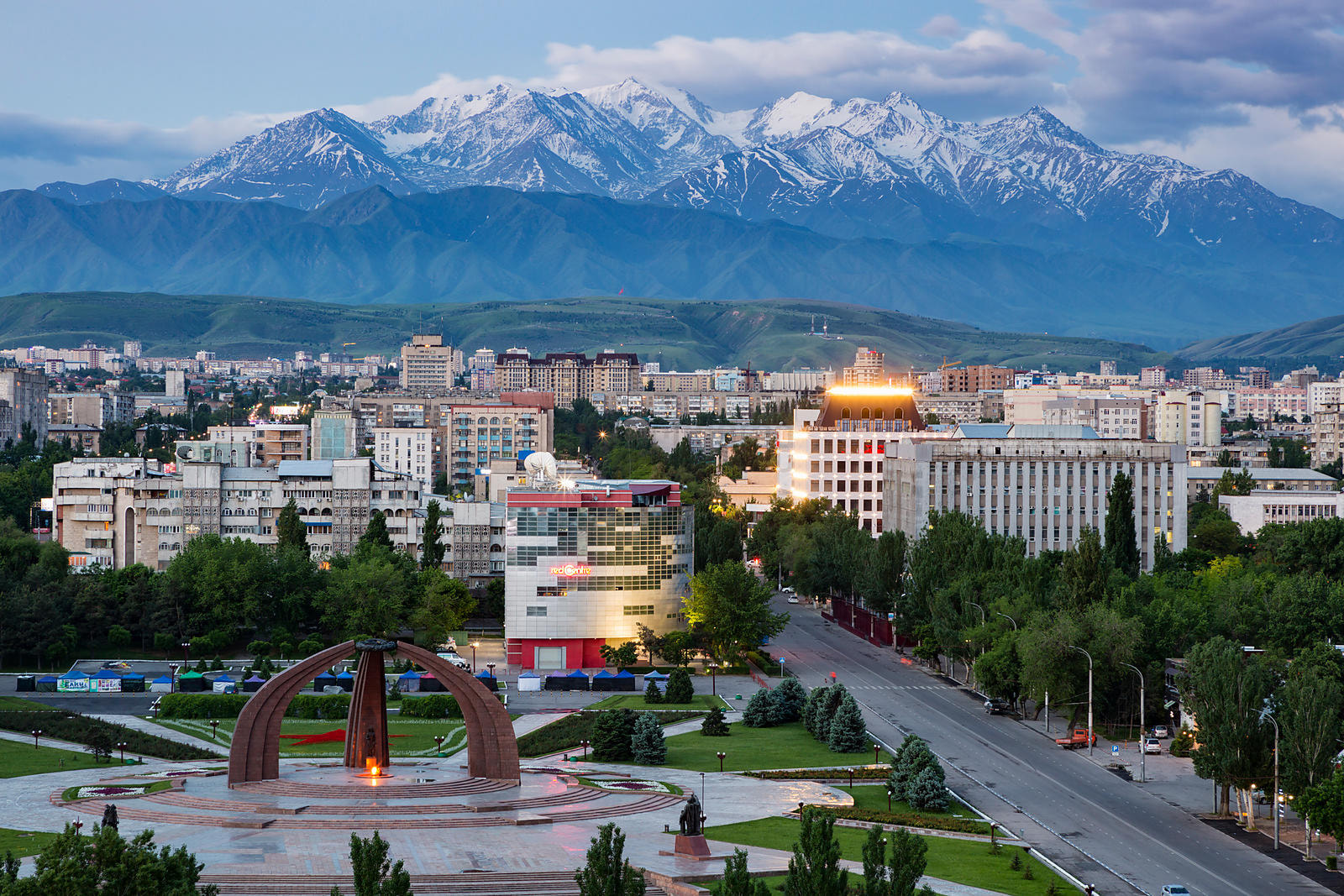
Бишкек Bishkek, Capital of Kyrgyzstan

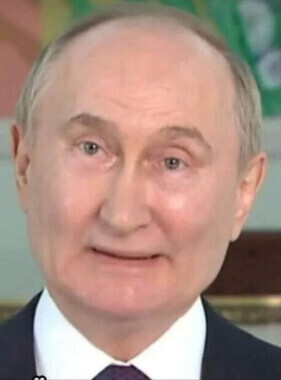
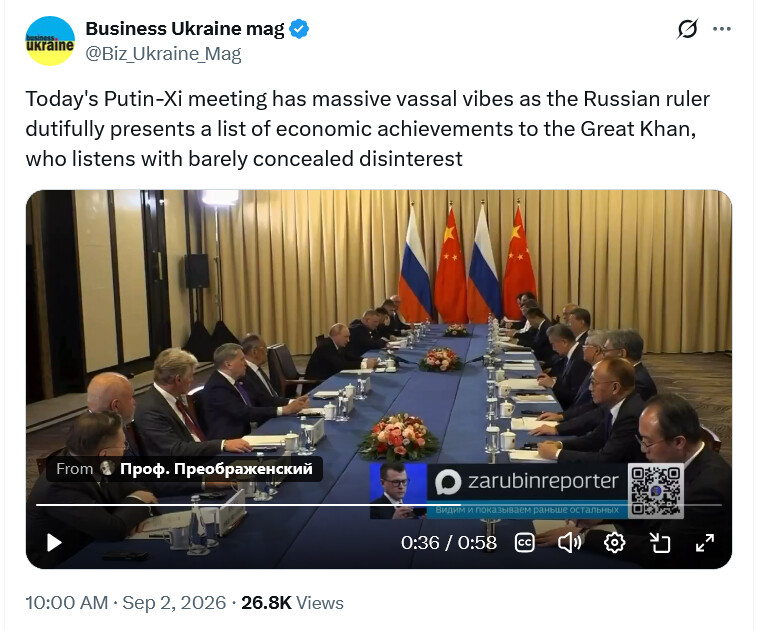
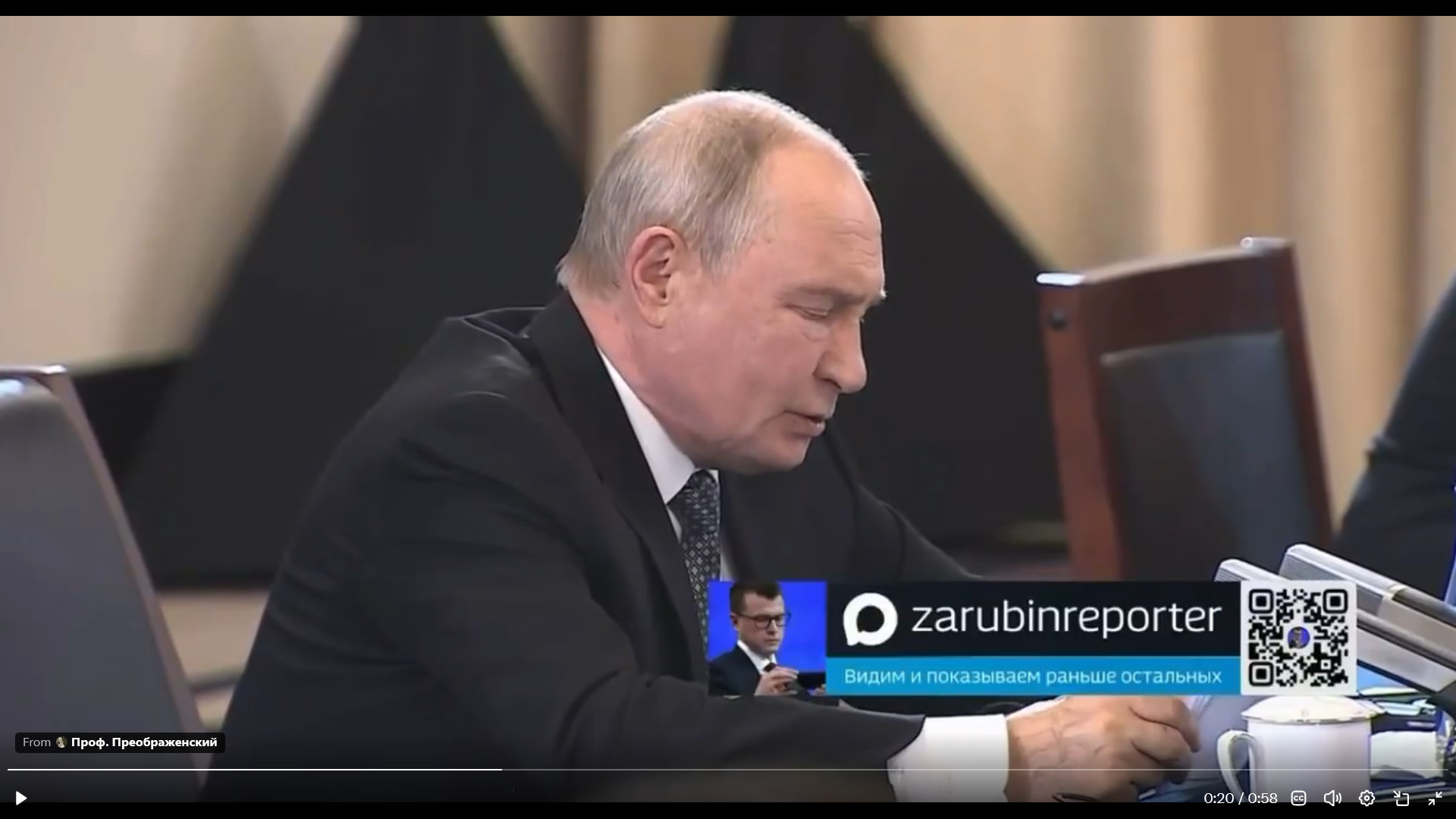
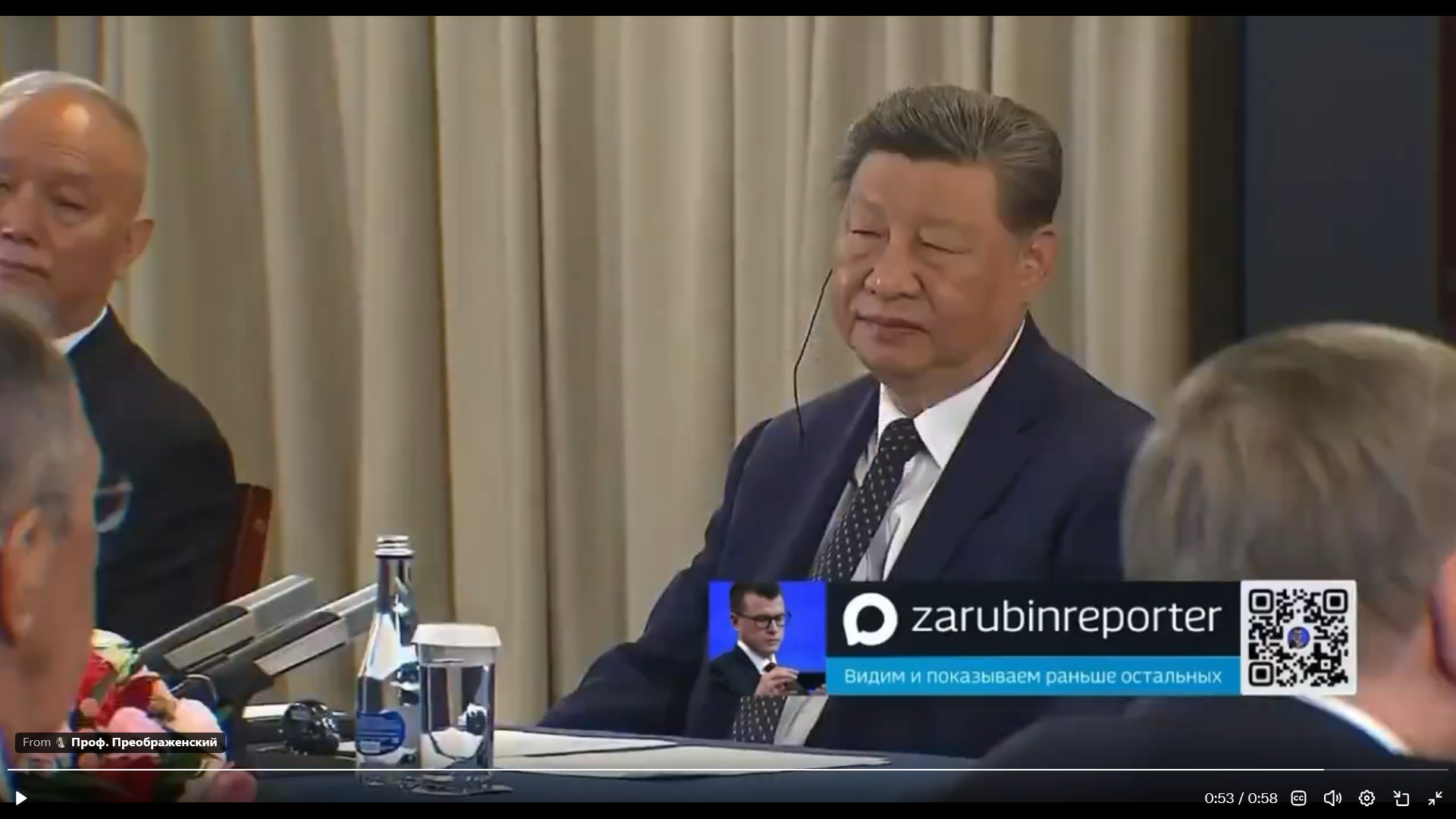

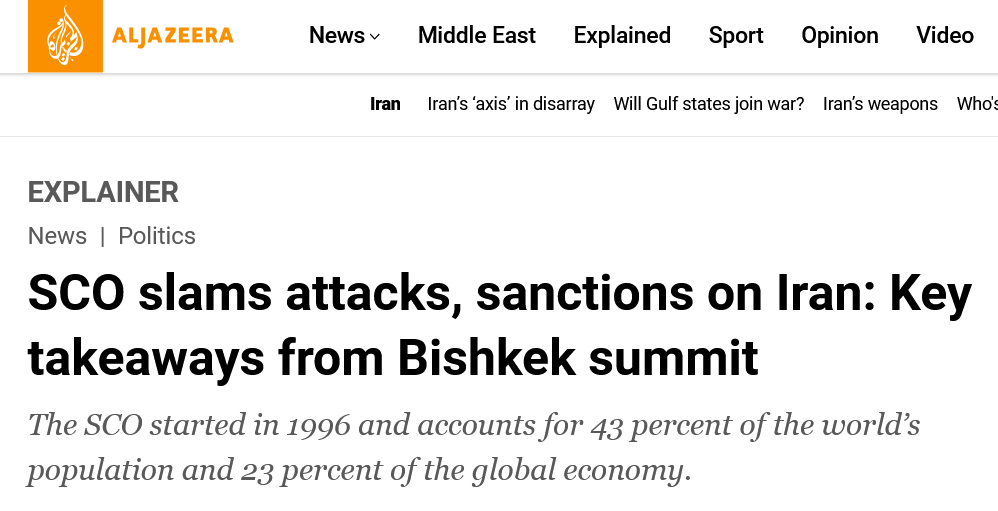
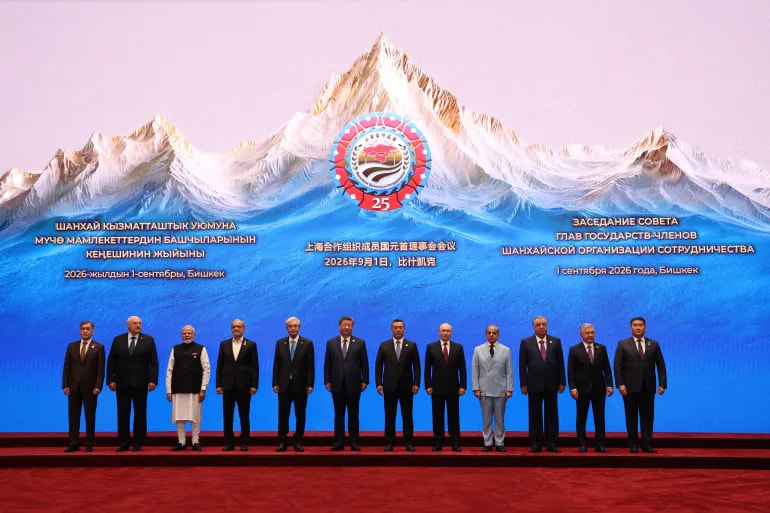

Leaders of the Shanghai Cooperation Organisation (SCO) have signed a joint statement condemning the US and Israel’s war on Iran and Western sanctions on some of their members, after a two-day summit in Kyrgyzstan’s capital, Bishkek.
The joint statement, called the “Bishkek Declaration”, was signed by Chinese President Xi Jinping, his Russian counterpart, Vladimir Putin, Indian Prime Minister Narendra Modi and Pakistani Prime Minister Shehbaz Sharif, among other leaders of SCO member nations. The SCO consists of Russia, China, India, Pakistan, Iran, Belarus, Uzbekistan, Kazakhstan, Tajikistan and the Kyrgyz Republic.
Here are key takeaways from the summit:
SCO condemns attacks and sanctions on Iran, attacks on Palestine
The SCO condemned “military strikes on the territory of the Islamic Republic of Iran, which have resulted in numerous civilian casualties and significant damage to the country’s economy”.
They said that the US-Israel attacks on Iran “violate the principles and norms of international law and the UN Charter and create serious risks to international peace, security and stability”.
“Member States express their sincere condolences to the people and Government of the Islamic Republic of Iran on the tragic death of Supreme Leader Seyyed Ali Khamenei, and to the families of the victims,” the declaration added.
SCO members also reaffirmed “their support for the sovereignty and territorial integrity of the Islamic Republic of Iran and advocate a resolution to the conflict solely through political and diplomatic means.”
The declaration also mentioned that Israel’s attacks on Palestine had destabilised West Asia.
“Member States note that the only possible way to ensure peace and stability in the Middle East is a comprehensive and just settlement of the Palestinian question,” the declaration said.
Without specifying US sanctions on Iran and on countries doing business with Iran, and Western sanctions on Russia due to its war on Ukraine, SCO members also said in their declaration that they are opposed to any “unilateral coercive measures” that go against the rules of the UN and World Trade Organization and could have a “negative impact on the global economy.”
SCO backs Iran’s NPT rights
The grouping’s leaders also backed Iran’s rights as a member of the Nuclear Non-Proliferation Treaty (NPT).
Apart from the US, Russia, China, the United Kingdom and France, other NPT signatories cannot build nuclear weapons. But they have the right to a peaceful nuclear programme. They can build civilian nuclear reactors, and use nuclear technology for research and medicine.
Though the US has long accused Iran of secretly harbouring the ambition of building nuclear bombs, Iran has consistently denied those accusations, insisting it is only interested in a peaceful programme. It is on that basis that the US and Iran struck their 2015 nuclear deal – Iran agreed to limit uranium enrichment to 3 percent, which is enough for civilian reactors, but well below the levels of enrichment needed for a nuclear bomb.
But the US under President Donald Trump first bombed Iran in 2025 and then – alongside Israel – launched the war on Iran in February 2026, arguing that the military action was aimed at stopping Iran from building a nuclear weapon.
Then, Trump insisted that Iran would need to completely surrender its nuclear programme – including domestic uranium enrichment. Iran has rejected that demand, pointing out that it would mean foregoing its NPT rights.
The SCO on Tuesday upheld the position of Iran, itself an SCO member.
SCO members emphasised “their inalienable right” to develop research, produce and use atomic energy “for peaceful purposes and to pursue equitable, sustainable, and mutually beneficial international cooperation in this area without discrimination.” They said that any measures which restrict this right are “contrary to international law.”
Economic and energy cooperation
Economic cooperation was also a key topic SCO members discussed as the US and Israel’s war on Iran continues to hobble trade through key maritime routes, such as the Strait of Hormuz, which in turn has upended global supply chains, the energy market and financial markets.
In their Bishkek declaration, members said they will “support and strengthen an open, transparent, fair, inclusive, and non-discriminatory multilateral trading system based on generally accepted international principles and rules that promotes global economic development, ensures fair market access, and ensures special and differential treatment for developing countries.”
They also said they would implement “the SCO Economic Development Strategy for the period up to 2030” in order to deepen economic cooperation and said they would continue “to develop practical dialogue to strengthen financial cooperation.”
Amid the global energy market’s paralysis due to the war in Iran, SCO members also said they “support the expansion of inclusive and mutually beneficial cooperation in energy” and agreed to implement “the SCO Member States’ Energy Cooperation Strategy to 2030.”
Fight against ‘terrorism’
India and Pakistan faced off – as they have previously at multilateral platforms, including the United Nations – on the issue of “terrorism” that they each accuse the other of sponsoring.
India has since the late 1980s accused Pakistan of arming, financing and sheltering armed groups to feed a rebellion in Indian-administered Kashmir. Since the 1990s, New Delhi has also accused Pakistan of backing “terrorist” acts across India, including the Mumbai attacks of 2008.
Pakistan has rejected accusations of a systematic strategy of using armed groups against India, but has conceded specific instances where fighters who attacked India were proven to be Pakistani. In recent years, it too has accused India of backing armed groups that have targeted Pakistan – a charge New Delhi rejects.
On Tuesday, India’s Modi described terrorism as a “grave challenge to all of humanity”, and asked countries to steer clear of “double standards” on the issue.
“We must dismantle the entire ecosystem of terrorist financing, recruitment, radicalisation, and safe havens. We must speak with one voice and make it clear that there can be no place for double standards on this serious issue,” Modi said. “We must send a strong message to countries that use terrorism as an instrument of policy and provide safe haven and support to terrorists that terrorism can never be a strategic asset for anyone.”
Observers widely interpreted his comments as aimed at Pakistan.
Pakistan’s Sharif, however, himself insisted that Islamabad was a victim of terrorism.
“Recalling Pakistan’s immense sacrifices in the fight against terrorism, I reiterated that terrorism must be condemned in all its forms and manifestations,” he said.
In the Bishkek declaration, SCO leaders committed to combat “terrorism, separatism, and extremism”.
“Member States strongly condemn terrorism in all its forms and manifestations, emphasise that ‘double standards’ in the fight against terrorism are unacceptable, and call on the international community to combat terrorism, including the cross-border movement of terrorists,” SCO leaders added.