You’ll like this link then, especially the downlink speeds!
If things line up properly tonight we might be able the see the aurora on the south coast (wa, vic, tas).
4 Likes

Gone red alert for aurora. Hope someone gets to see it!
1 Like
Largest Virtual Universe Free for Anyone to Explore
September 10, 2021 | Science

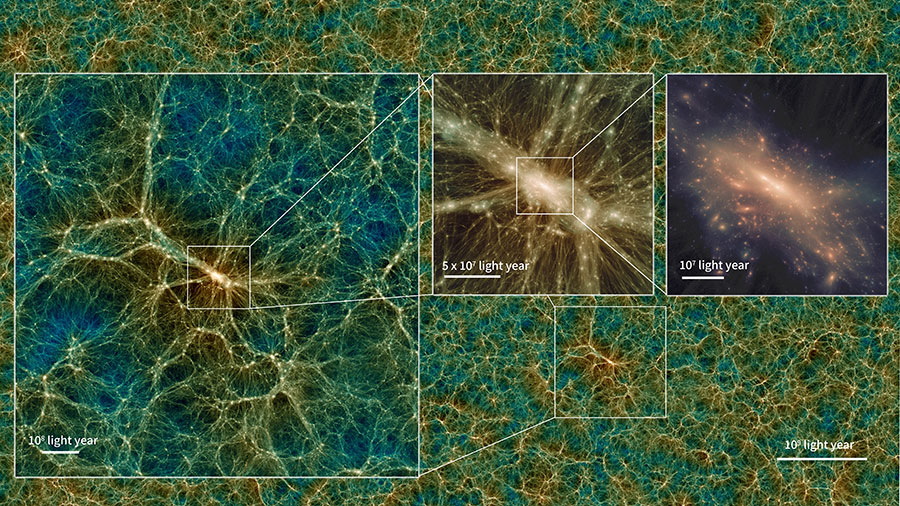
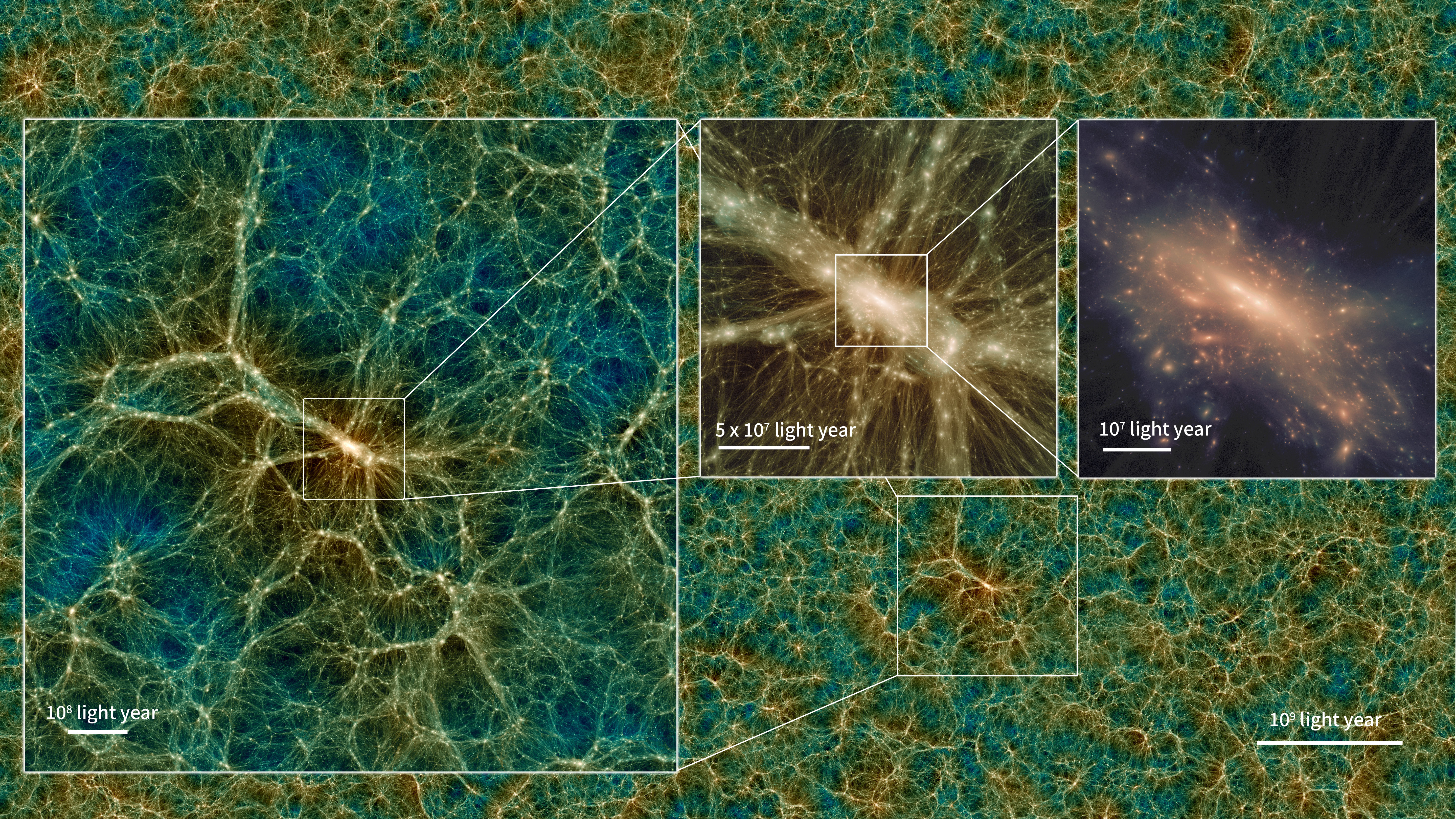
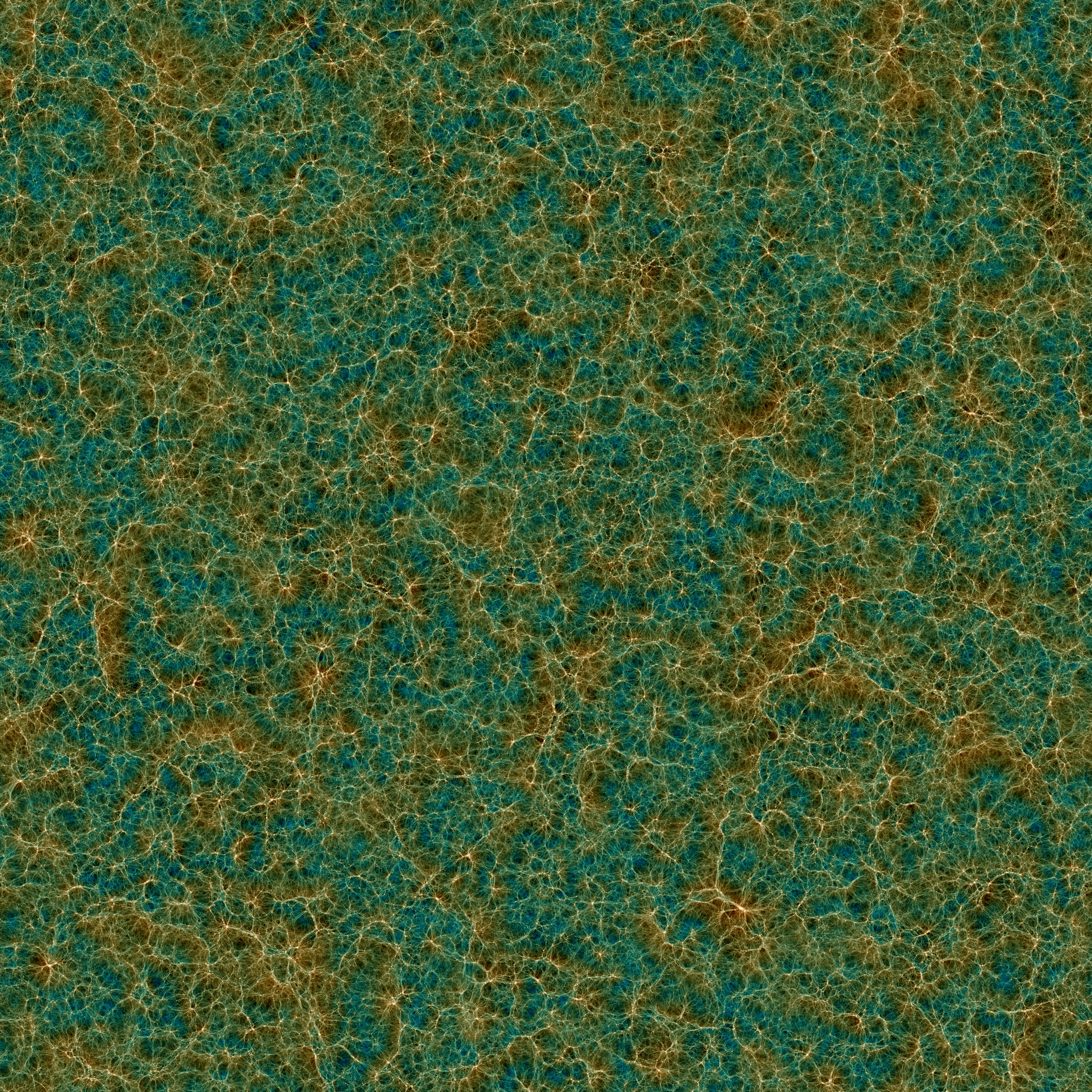
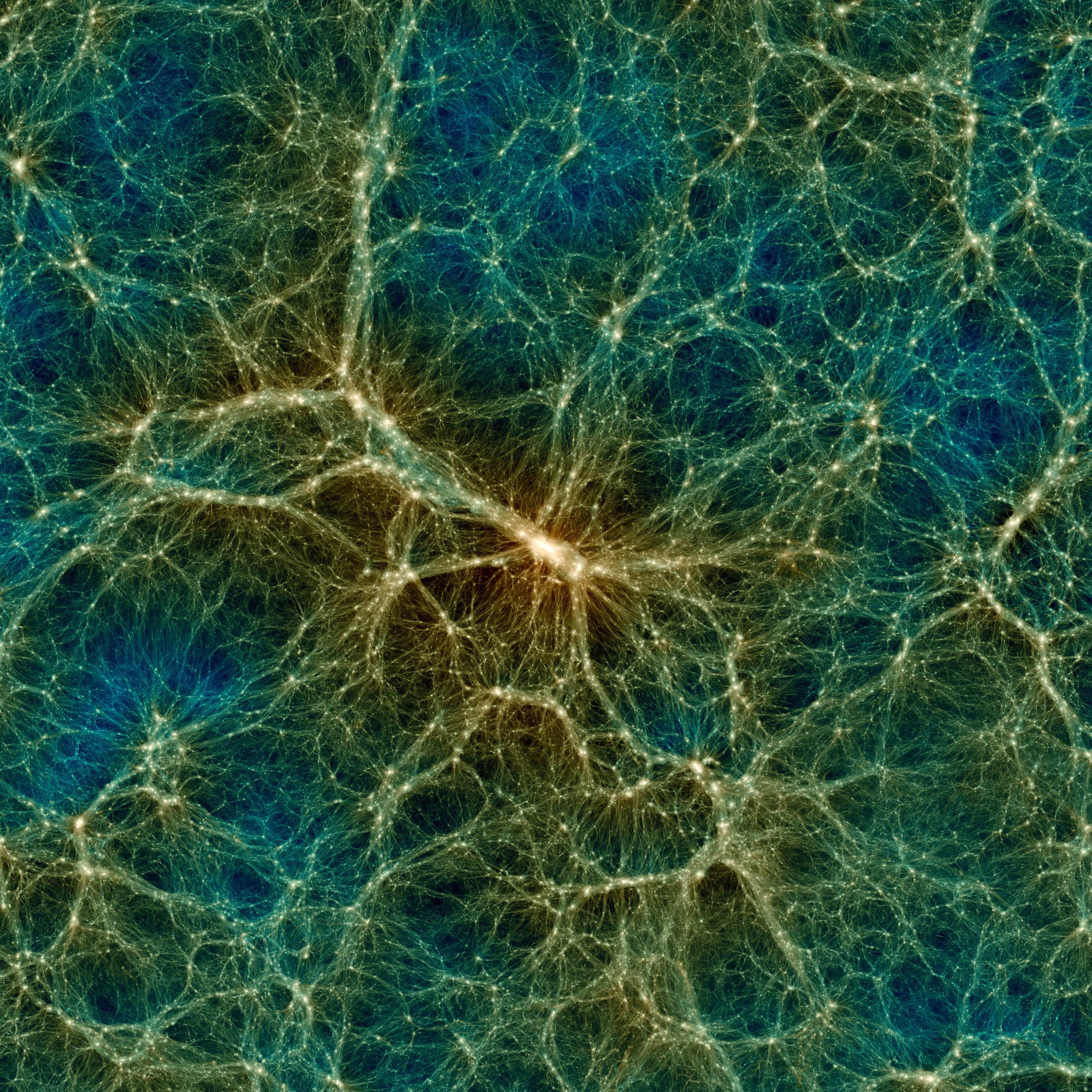
The distribution of dark matter in a snapshot from Uchuu. The images show the dark matter halo of the largest galaxy cluster formed in the simulation at different magnifications. (Credit: Tomoaki Ishiyama) Original size (6.9MB), Background (20.8MB), Left (5.3MB), Center (1.5MB), Right (1.1MB)
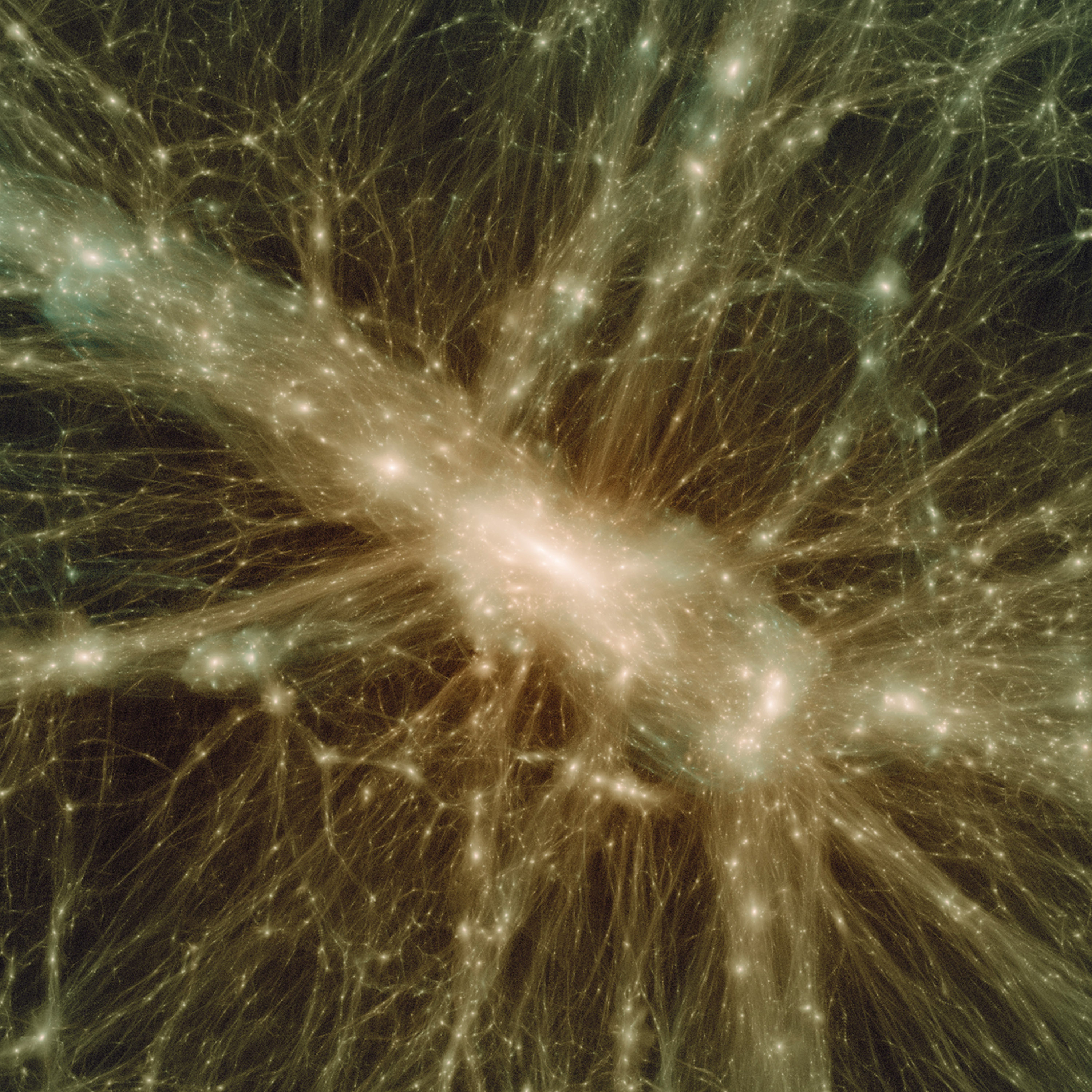
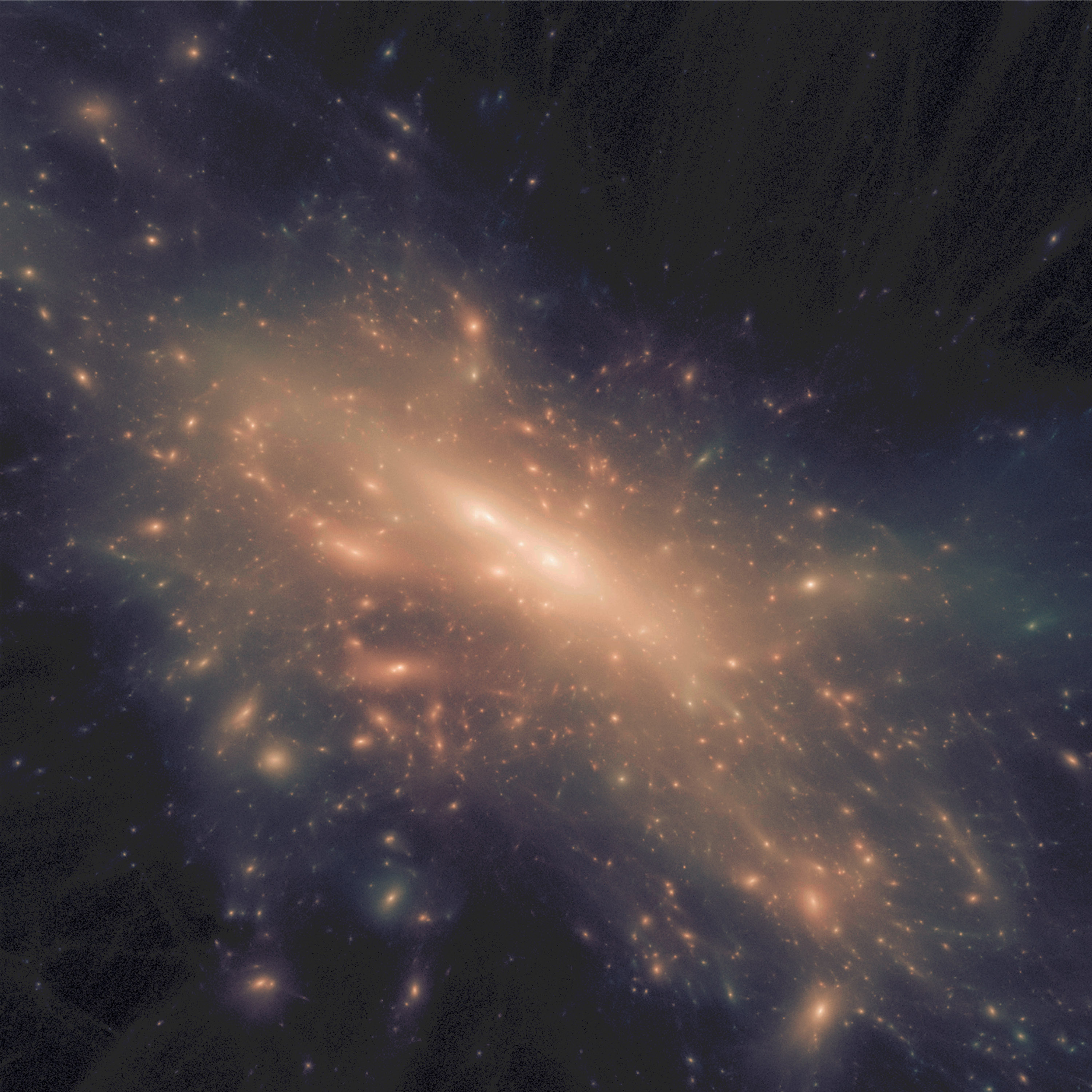
Forget about online games that promise you a “whole world” to explore. An international team of researchers has generated an entire virtual UNIVERSE, and made it freely available on the cloud to everyone.
Uchuu (meaning “Outer Space” in Japanese) is the largest and most realistic simulation of the Universe to date. The Uchuu simulation consists of 2.1 trillion particles in a computational cube an unprecedented 9.63 billion light-years to a side. For comparison, that’s about three-quarters the distance between Earth and the most distant observed galaxies. Uchuu will allow us to study the evolution of the Universe on a level of both size and detail inconceivable until now.
Uchuu focuses on the large-scale structure of the Universe: mysterious halos of dark matter which control not only the formation of galaxies, but also the fate of the entire Universe itself. The scale of these structures ranges from the largest galaxy clusters down to the smallest galaxies. Individual stars and planets aren’t resolved, so don’t expect to find any alien civilizations in Uchuu. But one way that Uchuu wins big in comparison to other virtual worlds is the time domain; Uchuu simulates the evolution of matter over almost the entire 13.8 billion year history of the Universe from the Big Bang to the present. That is over 30 times longer than the time since animal life first crawled out of the seas on Earth.
Julia F. Ereza, a Ph.D. student at IAA-CSIC who uses Uchuu to study the large-scale structure of the Universe explains the importance of the time domain, “Uchuu is like a time machine: we can go forward, backward and stop in time, we can ‘zoom in’ on a single galaxy or ‘zoom out’ to visualize a whole cluster, we can see what is really happening at every instant and in every place of the Universe from its earliest days to the present, being an essential tool to study the Cosmos.”
An international team of researchers from Japan, Spain, U.S.A., Argentina, Australia, Chile, France, and Italy created Uchuu using ATERUI II, the world’s most powerful supercomputer dedicated to astronomy. Even with all this power, it still took a year to produce Uchuu. Tomoaki Ishiyama, an associate professor at Chiba University who developed the code used to generate Uchuu, explains, “To produce Uchuu we have used … all 40,200 processors (CPU cores) available exclusively for 48 hours each month. Twenty million supercomputer hours were consumed, and 3 Petabytes of data were generated, the equivalent of 894,784,853 pictures from a 12-megapixel cell phone.”
Before you start worrying about download time, the research team used high-performance computational techniques to compress information on the formation and evolution of dark matter haloes in the Uchuu simulation into a 100-terabyte catalog. This catalog is now available to everyone on the cloud in an easy to use format thanks to the computational infrastructure skun6 located at the Instituto de Astrofísica de Andalucía (IAA-CSIC), the RedIRIS group, and the Galician Supercomputing Center (CESGA). Future data releases will include catalogues of virtual galaxies and gravitational lensing maps.
Big Data science products from Uchuu will help astronomers learn how to interpret Big Data galaxy surveys expected in coming years from facilities like the Subaru Telescope and the ESA Euclid space mission.
These results appeared as Ishiyama et al. “The Uchuu simulations: Data Release 1 and dark matter halo concentrations” in the September 2021 issue of Monthly Notices of the Royal Astronomical Society.
1 Like
I feel like you can’t blow stuff up, though…
Stars exploding all over the place all the time.
Jupiter’s Great Red Spot — the biggest storm in the solar system — is deeper than expected
ABC News
3-4 minutes
Jupiter’s Great Red Spot, a storm so big it could swallow Earth, extends surprisingly deep beneath the planet’s cloud tops, scientists have reported.
Key points:
- NASA’s Juno spacecraft shows Jupiter’s Great Red Spot is 350 to 500 kilometres deep
- The planet, known as a gas giant, is composed mainly of hydrogen and helium
- The storm has changed shape and could be shrinking in size
Data from NASA’s Juno spacecraft is providing a deeper understanding of Jupiter’s wondrous and violent atmosphere, including its Great Red Spot, finding the storm extends much further down than first thought.
Despite the storm shrinking, it still has a width of 16,000 kilometres and a depth of between 350 and 500 kilometres.
The planet, known as a gas giant, is composed primarily of hydrogen and helium, with traces of other gases.
The data is giving scientists studying the solar system’s largest planet — so big that 1,000 Earths could fit inside it — a three-dimensional account of Jupiter’s atmosphere.
An instrument called a microwave radiometer enabled scientists to peer beneath Jupiter’s cloud tops and investigate the structure of its numerous vortex storms.
Lead scientist Scott Bolton, from Southwest Research Institute, said there might not be a hard cut-off at the bottom of the storm.
Jupiter’s Great Red Spot captured by NASA’s Juno spacecraft. (REUTERS: NASA/JPL-Caltech/SwRI/MSSS/Gerald Eichstad/Sean Doran/Handout )
Dr Bolton said assumptions based on how Earth’s atmosphere behaves, as well as models produced over the past few decades, had given the impression that the Great Red Spot was a relatively shallow storm.
“Jupiter works in this mysterious way that we’re sort of revealing for the first time because this is the first mission that’s been able to look inside the planet,” Dr Bolton said.
The Juno spacecraft will soon be measuring the depth of the polar cyclones, which might penetrate even deeper beneath the clouds.
The Great Red Spot could be the tallest Jovian storm measured with Juno’s microwave and gravity-mapping instruments, Dr Bolton said.
“I wouldn’t want to be too quick to guess that we’ve seen the deepest,” he said.
The Great Red Spot has evolved in shape over time and there are indications that it may be shrinking in size.
“It’s the biggest storm in the entire solar system. There isn’t anything else like it,” Dr Bolton said
In 2011, Juno has been orbiting the solar system’s largest planet since 2016 obtaining information about its atmosphere, interior structure, internal magnetic field and the region.
Juno also is due to fly by Jupiter’s large moons, Europa and Io, and explore the small rings around the planet.
By contrast, some of the surrounding jet streams extend an estimated 3,200 kilometres into Jupiter.
NASA recently extended the mission by another four years, to 2025.
4 Likes
I thought this was an interesting little fact:
“Olympus Mons is a shield volcano located in Mars’ western hemisphere. It is the largest volcano in the solar system at 72,000 ft tall (two and a half times the height of Mount Everest) and 374 miles wide (nearly the size of the state of Arizona). Mars’ atmosphere is so thin that the volcano’s peak actually pokes out above it, meaning that if one were to hike to the summit of Olympus Mons, they would hike into space.”
I knew it was the highest known mountain in the solar system, but I didn’t know it protruded above the atmosphere.
Fast forward a thousand years or so and I wonder if Mons will be the new ultimate mountaineering challenge, lol ?
6 Likes
Throughout time, millions have aspired to mount mons.
4 Likes
Just be aware if you haven’t looked before, it will appear first above the horizon (maybe 15 degrees above) and disappear again before the horizon.
3 Likes
Clouds might interfere .
Nah space station is higher up 
2 Likes
I thought this image was doctored.
A view of 29 Raptor engines at the base of the Super Heavy booster. Credit: SpaceX

NZ space program. Rocket Lab. The launch itself is 20 minutes in.
Tour of the facilities.

It always baffles me how something with so many different moving pieces, operating at such extreme conditions, with probably millions of things that could go wrong, manage to work at all
2 Likes
I’m so confused. I definitely posted some rocketlab stuff in one of these threads a couple of years ago after seeing a talk from one of the guys behind it which lead me to question all of my life choices, but I can’t work out where I posted it.
Anyway, the New Zealand accent counting down tin, nine, eet, seven, sex… gets me every time!
2 Likes
Found it. Was in the DJ thread, of course…
3 Likes
Yeah get over there!!