Shouldn’t even look at an EV than is not AWD.
1 Like
Any particular reason for that? 2WD is standard for most ICE cars. Why should it be different for EVs?
We have had AWD cars for a number of years, or rather Mrs Fox has. Started with a Holden Adventra Wagon, and the handling was great, then a series of Lexus AWD which were even better, and now we both have Tesla AWD.
They are smooth to drive, handling is precise and firm, and just feel so much safer.
I agree with all that and I have AWD as well. But with EVs there seems to be a bit of a trade off, and if you get 2WD you get greater range. Eg the longest range Tesla is the Model 3 2WD (by quite a distance).
You also get less power, but still plenty.
2 Likes
Take away the diff/CVS from the front of the car and you have better weight balance and also tighter turning circle. The car will be more nimble and handle much better.
2 Likes
I just noticed that Tesla model 3 now is only AWD in the Performance model, guess that accounts for the Long Range model being cheaper than when I got mine in 2022. I find that a bit disappointing, as the Performance model is over $80,000. Model Y is better value with Long range AWD about $65000
Maybe a rung below what you’re looking at but the new MG4 Urban has a ton of space, feels good to drive, keeps everything pretty simple and comfortable. Seems like a winner in the affordable second car/runabout category. Nothing but positive reviews. I tested the Atto 2 and had a look at the 3, not a fan of the styling and put off by the floaty drive. They don’t seem to be arsed with changing up the suspension etc for Australian drivers.
1 Like
You are confusing handling and grip.
AWD gives you great grip, especially in the wet or on gravel roads .
But you have zero feel of the road with front tyres pulling you along, there is a reason Porsche made only RWD on their sports cars for a long time, until they became so powerful they needed AWD just to get the power down .
I am not a racing car driver, but I know what I meant. Yep road grip is superior with AWD, but I found that handling it also much more precise with the Tesla and no front end movement due to rear push.
I once owned a Renault Fuego with a 1.6 litre turbo charged engine. It was front wheel drive and it handled perfectly, and also owned a Nissan 350Z which was 300 Hp and RWD and it was a beast to handle. So maybe handling depends on a number of design attributes.
1 Like
I’d say most high tech modern cars that have AWD are doing some degree of vectoring or traction control so you, the driver, ‘feel’ that you’re stuck to the road, but the CPU is the thing that is keeping you there.
Anyway, I just moved over to the new OVO plan. 11am - 3pm, 4 hours free electricity. The daily connection fee went up 40c per day, to cater for this.
Solar FIT is about 1c per KWH
3 Likes
Not as relevant directly for motor vehicles, but were the announcements about the expected cost per MW of sodium storage batteries by BYD/CATL as big as some Youtube presenters wanted to imply? That if they hit their 2027 target it puts the price at a point where grid (and home) storage becomes viable for governments even ignoring subsidies?
1 Like
I second the suggestion of waiting until the new Atto3 comes out. It’s a whole lot more than the change from FWD to RWD. One blogger described the shift to the next gen BYD models from current as the difference between the original iPhone and the iPhone 4. It’s generations better.
Even if you decide to go with the current generation, once the new one comes out, you’ll be able to buy the current model with a few km on it for a whole lot less than you can today.
Also, I’ve seen nothing but good reviews on the new MGs either.
2 Likes
CATL’s Naxtra (Sodium Ion) batteries are already selling at a comparable cost per capacity. And they last many more cycles than current LFP batteries. So they’re already considerably cheaper as far as grid installers are concerned. With a potential to drop to one third the cost as production ramps up to full capacity. Not to mention the improved performance capacity over a larger range of operating temperatures.
3 Likes
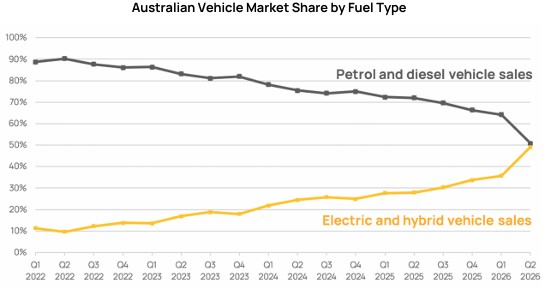
It’s be worth seeing the pure EV though, as the hybrid range cuts across some of the biggest selllimg brands, and I think they really delay the transition
1 Like
This country is not yet ready for a complete transition to EVs. The charging infrastructure is not there, and the range of all but some very expensive EVs is not great enough.
yep . I did it but so far could not be happier . about 10 to 15 $ extra per month for the supply charge , but my 42kw new battery with a slightly under sized 6 kw solar wasn’t quite cutting it. I kinda khew that would be the case but wanted to try it before either getting more solar , or trying 4 hours free
4 hours free will probably mean my battery will never go flat now and shouldn’t need extra solar so that will save me at least 5 to 7 k outlay .my battery hasnt been below 70% so far but it has been sunny since I switched to BB this plan . I’ll see how it copes with a few weeks or clouds and rain and summer AC on every night .
in pretty confident it will cope . I definatley won’t need to use the peak expensive power if ever .
I even think I have enough capacity that I could partially charge an ev during the free 4 hours. there is even another 1 hour jura after the 4 hours free at 7c per kW so it’s almost 5 hours free. I’m finding my battery is 100% by midday at the moment
2 Likes
I hear that line a lot. Obviously it’s more difficult to justify a transition to EV for those without a house for access to cheaper charging, but the fact is, that the transition doesn’t and can’t happen instantly. Australia traditionally replaces 8% of the cars on the road with new ones every year. And even with the current sales of full EVs at 21%, we still only have 2-3% of all cars on the road that are BEVs. Even if we moved to 97% new sales BEVs within a few years, like Norway, it would still take an additional 8-10 years to move to almost all cars on the road to be BEVs.
The reason for the long winded details above, is that if we transitioned as fast as possible from here, we’re talking about a 15 year transition to move to a mostly EV fleet. You only need to look at the UK, who are a few years ahead of us, and had all the same arguments as we currently do. They now have over 120K public EV chargers, with the current fastest growth in Ultra Rapid Chargers. That works out to 15 BEVs per public charger. The government may believe that it’s their job to provide public chargers for Australia to transition to BEVs, but even if they do nothing, where there’s a market, there are people who will build chargers to meet demand and thereby profit.
Outback Australia will be the slowest to transition, due to the vast distances and low populations. But essentially it’s supply and demand. As the demand increases, businesses will step in to provide services.
As for affordability of charging, the wholesale cost of electricity dropped by nearly 50% in the last 12 months across Australia, and 60% in Victoria. The cost of renewable energy is significantly cheaper than fossil fuel based or nuclear based electricity, and continues to drop in base price, the more we install. You’ll see the price of charging EVs drop significantly over the next decade. I don’t know if the price of petrol will increase or drop over the same period, but it would need to drop significantly for petrol and diesels to remain price competitive to run.
In my case, as I’ve said before, above, I currently have access to electricity to power the car for some price between zero, and 4.7 cents per kWh. I hear people argue that I have to take into account the cost to set up solar and battery to get this cheaper power, but the original solar paid itself off in 4.5 years, and the battery will pay itself off in under 4 years, just by time-shifting power usage for the cheapest available power into time slots, like evenings, where power costs a lot more. This will pay the entire additional solar and battery cost off separately to the savings I’m also making on car running costs.
As for range, 97% of my driving is covered by my very short range EV of 160-180km. To be fair, I have a range extender, which allows me to travel an additional 120km by generating power from fuel as I drive. But I very rarely use it, and if I didn’t have it, I’d have to schedule an occasional charger stop for 15 minutes into my planning for the day. I currently travel around 100km per day on average, so up to 200km in a day, and the 160-180km range covers that pretty comfortably.
5 Likes
I don’t disagree with any of that, but I don’t think it’s inconsistent with what I said. I have a PHEV with a claimed EV only range of 120 km, although it’s in fact about 80 km at best on the highway. I don’t use any petrol at all when I’m in the city. But I have a house in the country that’s 200+ km away and has no charging facilities, and I will not be switching to a full EV until I can get one at a reasonable price with a highway range of at least 600 km. I’m hopeful that that will be possible within about 3 years.
1 Like
Every house with a power point has charging facilities.
3 Likes