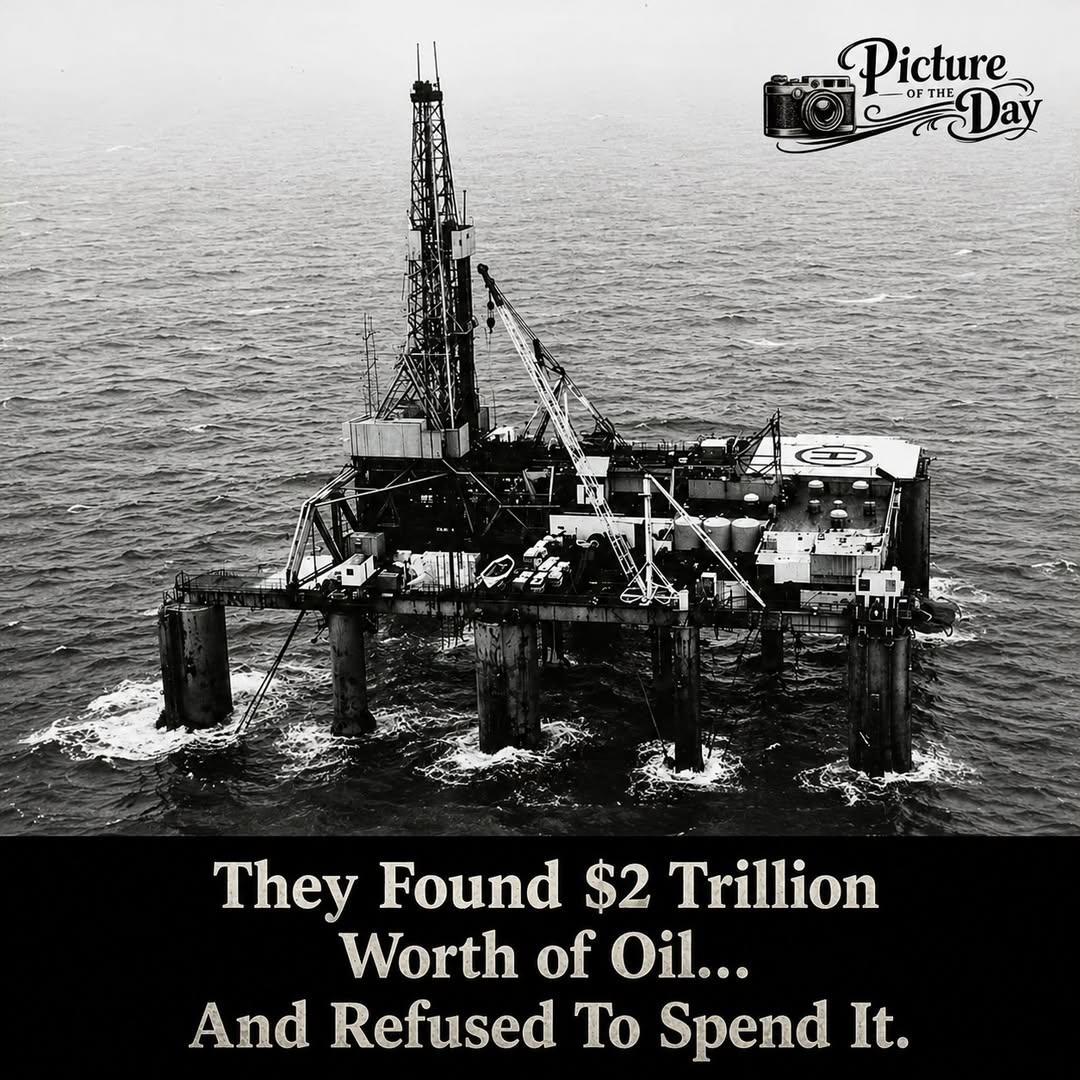
A fishing boat off the Norwegian coast in 1969 passed something strange rising out of the North Sea. Steel towers. Drilling platforms. The unmistakable shape of an oil rig.
Ekofisk had just been discovered — one of the largest offshore oil fields ever found.
Norway was about to become rich. Absurdly, historically rich.
And this is usually where the story falls apart.
Look at what oil has done to other nations. Venezuela sits on the largest reserves on the planet and can’t keep the lights on. Nigeria has pumped oil for over sixty years and still battles crushing poverty. Libya and Iraq turned petroleum wealth into corruption, conflict, and collapse.
The pattern is almost universal: money floods in, leaders build monuments to themselves, a handful of families get obscenely wealthy, and the rest of the population is left holding nothing once the wells run dry.
Norway had a front-row seat to all of this. And in 1990, its parliament made a decision that should have been politically impossible.
They chose to barely spend any of it.
Instead, lawmakers created what’s now known as the Oil Fund — officially the Government Pension Fund Global. The concept was almost absurdly disciplined: every dollar of oil revenue goes into the fund. The fund invests that money across global markets. And the government is only allowed to withdraw a small slice each year — 4% at first, closer to 3% today.
Everything else stays locked in, growing, untouched.
Critics went ballistic. Norwegians were sitting on a fortune and being told they couldn’t touch it.
“Why hoard money for people who aren’t even born yet?” the argument went. The government’s answer never changed: because those people will need it more than we do right now.
The first deposit landed in 1996 — a modest $150 million.
What happened next is the part almost no country manages to pull off. Norway just… kept going. Through elections where politicians promised to raid the fund for votes. Through recessions where citizens demanded emergency withdrawals. Through crisis after crisis where “just this once” would have been an easy sell.
Every time, the answer was no.
The fund’s strategy was almost boring by design — no risky bets, no chasing trends. Just small ownership stakes spread across roughly 9,000 companies worldwide, held patiently across decades.
By 2000, the fund held about $50 billion. By 2010, half a trillion. By 2020, it broke past $1 trillion.
As of late 2025, the fund sits at roughly $1.8 trillion — the largest sovereign wealth fund on Earth.
Split across Norway’s 5.6 million citizens, that’s around $320,000 per person. No one gets a check, though. The money isn’t for this generation. It’s for the ones who haven’t been born yet.
Here’s the detail that stops most people cold: over half of that $1.8 trillion has nothing to do with oil at all. It’s pure investment growth. Norway’s fund now earns more from global markets than the country earns pumping crude out of the ground.
They didn’t just get lucky with oil. They built a money machine that will outlive the oil entirely.
The fund now owns roughly 1.5% of every publicly traded company on the planet. Apple. Microsoft. Amazon. Office towers in Manhattan, London, Paris, Tokyo. Somewhere along the line, a sliver of nearly every major global purchase quietly finds its way back into this fund.
And the withdrawal rule still holds. That yearly 3% now covers roughly a quarter of Norway’s entire national budget — healthcare, schools, pensions, infrastructure — without ever touching the core of the fund itself.
Compare that to Saudi Arabia, scrambling to diversify before its oil dependence catches up with it. Or Venezuela, sitting on the richest reserves on the planet, in economic ruin.
Norway’s oil will run out eventually — three decades from now, maybe five. It won’t matter. By then, the fund will be generating returns for centuries.
They even built ethics into the machine. The fund won’t touch companies tied to certain weapons, severe environmental harm, or human rights abuses. Oil money, used to quietly build a world beyond oil.
None of this required a genius insight. Other nations found oil too. What Norway had was something rarer: the discipline to leave the money alone.
It took the nerve to plan past the next election. The restraint to hold the line for thirty straight years. And the humility to accept that people not yet born deserved this wealth just as much as anyone alive today.
Most countries can’t do it. The temptation to spend now is too strong, the political pressure too constant.
Norway looked at the wreckage oil left behind elsewhere and built the opposite outcome on purpose.
$150 million in 1996. Nearly $2 trillion now. Still growing.
Somewhere down the line, when Norway’s last oil rig goes quiet, a Norwegian kid will walk into a free university, funded by crude that stopped flowing before they were even born.
That’s the whole story. Not a lucky discovery — a choice, made in 1990, to put the future ahead of the present.
And it’s still paying off.
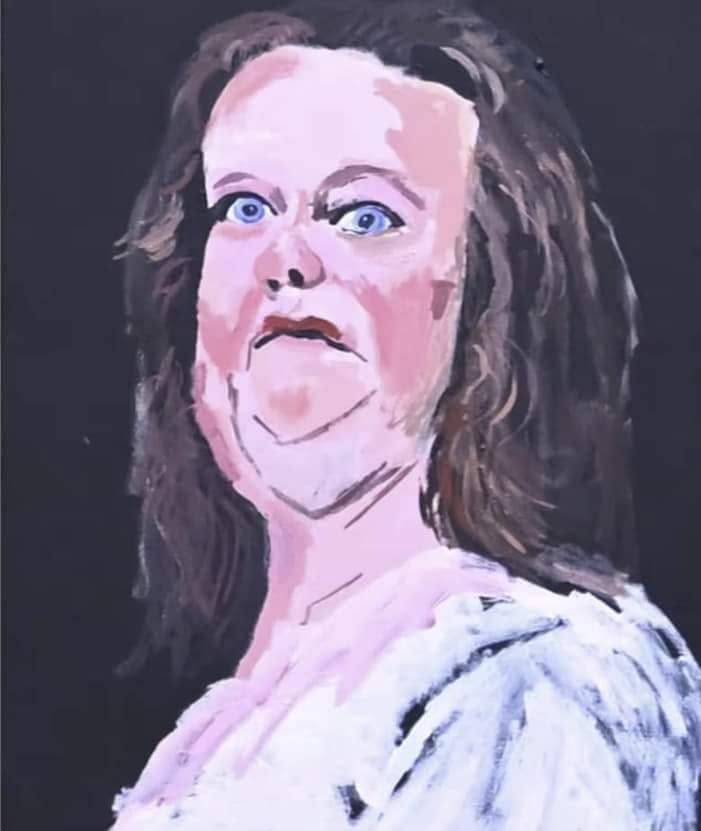
The reason is not her. It’s more likely that the LNP/One Nation axis depend on her for much of their funding, while the ALP doesn’t have the guts to face her down, because it would mean combatting the rest of the capitalist oligarchs along with her, not to mention the international capitalists under the Septics. Too much work - they’ll still get paid and enjoy an elevated standard of living anyway. Labor principles ? Gough had them, and look what the Media did to him !
I remember reading somewhere that every ex Resources Minister (ALP and/or Lib/NP), of the last 40 years, ended up with a role in one of the major resources companies after leaving the parliament…after further research (and some feedback from Bacchus), I have found that this is not the case.
Why would they look to upset their future employers?…so this line becomes irrelevant
There’s no stomach for taking on the big multi nationals amongst the mainstream parties…I 100% stand behind this last statement
PS: Why leave it at just iron ore…all our natural resources should be firmly under the control of our government…at a minimum, all the multi nationals should be paying similar tax to what the Norwegians impose on the multi nationals there.

EFA
“Show me a man that gets rich by being a politician, and I’ll show you a crook.”
― USA PRESIDENT, Harry Truman
Yes, I agree with you entirely. By mentioning only iron ore I was trying to simplify matters. let’s start with iron ore and once that is organised, move on to the others - gas and rare earth minerals in particular.
I just did a search and cannot find any Minister of Resources since Rex Conor in 1972 who worked for the Resources sector after Parliament. One worked in Qld in the Electricity industry.
I will check assistant ministers next.
I stand corrected…sorry for misleading people..it was not my intent.
OP is updated.
Norway’s oil is much more profitable than Australia’s resources. It gushes out of the ground and is easy to transport as a liquid…even the gas that Norway produces can be put in a pipeline to deliver it to their customers.
Australia’s iron ore has to be dug out of the ground, working through a strip ratio of waste, rail etc…We don’t have oil…And our gas can’t be delivered to customers by pipeline. We need to build a $20b liquefaction plant, turn the gas into liquid, and export it that way. It’s much less profitable.
The typical person in the street doesn’t understand this, so they are easily played.
should’ve done it with the gold
He didn’t search very hard
Ian Macfarlane (RM for Howard) got a job at Queensland Minerals Council a few months after quitting parliament in 2016 (then Minister for Industry), and also ended up on the board at Woodside.
Martin Ferguson (RM for both Rudd and Gillard) got a gig at British Gas literally weeks after quitting parliament in 2013, also took up a role with the country’s biggest oil and gas lobby (APPEA) 6 months later and then ended up as Head of Resources for Seven Group Holdings - this is notable because he involved himself in SGH’s attempt to buy out Nexus, who were given a very juicy gas field lease (in WA) when Ferguson was in office as RM.
Both of the above also breached ministerial standards requiring ex-ministers to not engage in lobbying for 18 months after leaving office.
That’s not to mention the literal dozens of politicians that held positions other than RM itself who end up in resource company gigs/lobby positions soon after they quit. McGowan jumping straight into an energy gig at Frontier probably being the most recent high profile example.
Nothing to be sorry for , it sounded plausible to me. But I knew Gareth Evans was resources minister and a couple are still in Parliament.
And one was also Scott Morrison
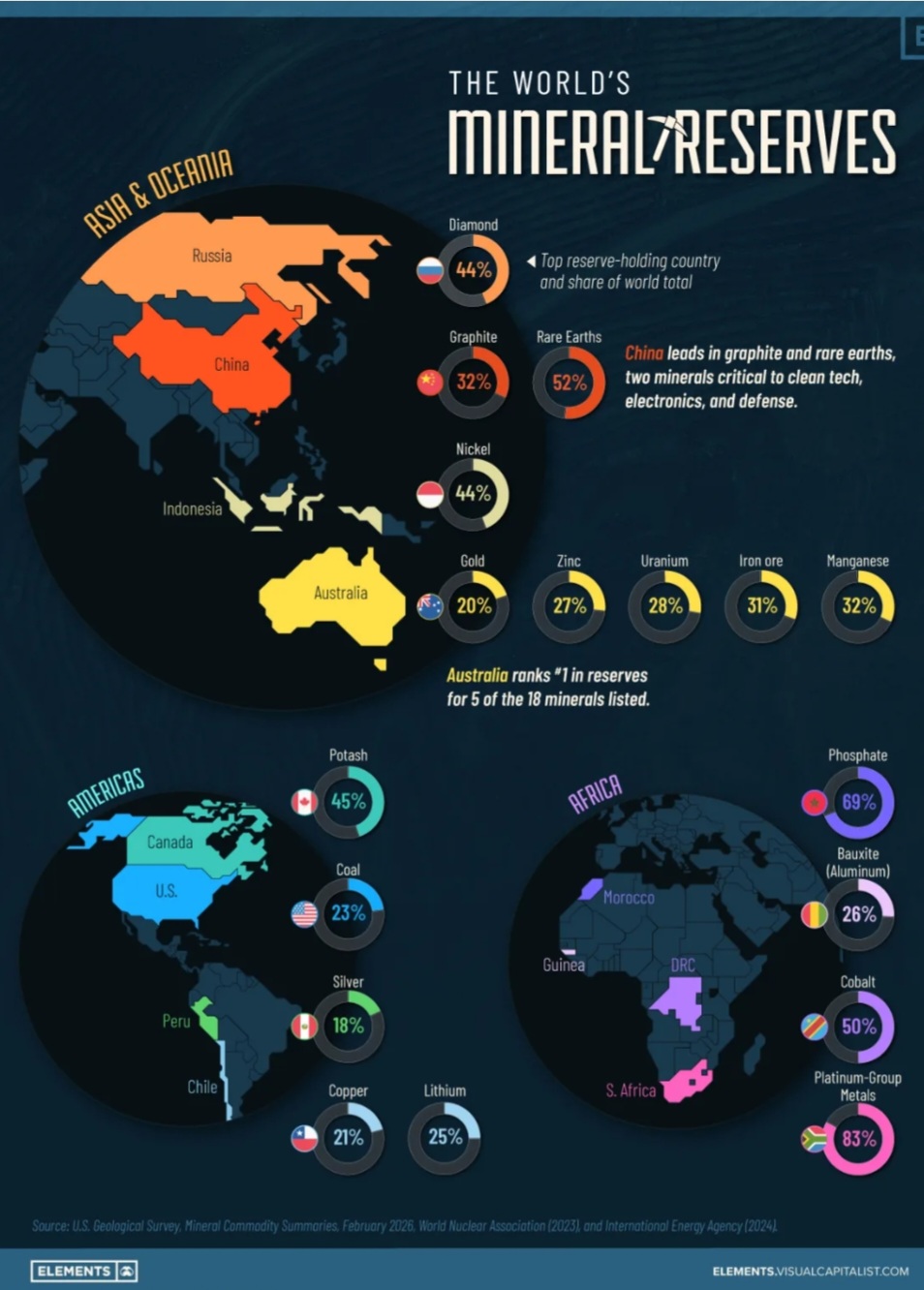
I saw this the other day regarding the world’s mineral reserves, it seems we have the most in the world. On oil, I’m pretty sure we have plenty under the ground in Qld, SA and the great Australian bite, but we rely on other countries for our supply.
It’s a fair accomplishment to be $1 trillion in debt with all our natural resources.
You are right about McFarlane he was the Qlder I mentioned. Nothing I saw in Ferguson profile about what you said. I will have another look.
Your point stands.
Sophie Mirabella did a lucrative stint with Reinhardt, did she not?
It’s not just resource companies. Costello resisted action on the banking sector for years and winds up on the board of NAB or one of the other evil ■■■■■. Pyne gets a cushy job with EY as a “defence consultant” and promises he won’t use his political network to lobby… Uh huh. Because he’s so qualified for that role for any other Farking reason…
It’s a revolving door of corruption.
What do you think people do when they leave Parliament, sit around writing books or just become bigger vegetables ?
Why shouldn’t anyone take jobs that they have skills for, I am unsure why you just immediately think it corrupt.
If you’re being serious here, stop. It doesn’t suit you.