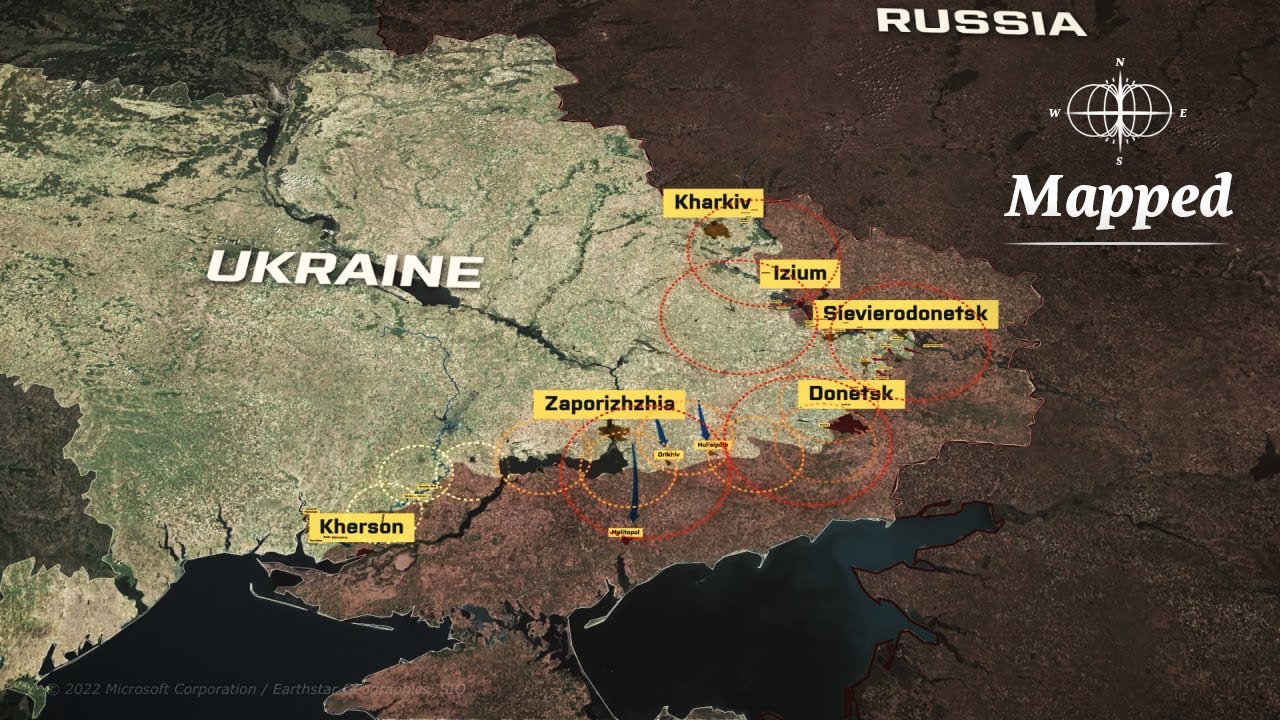
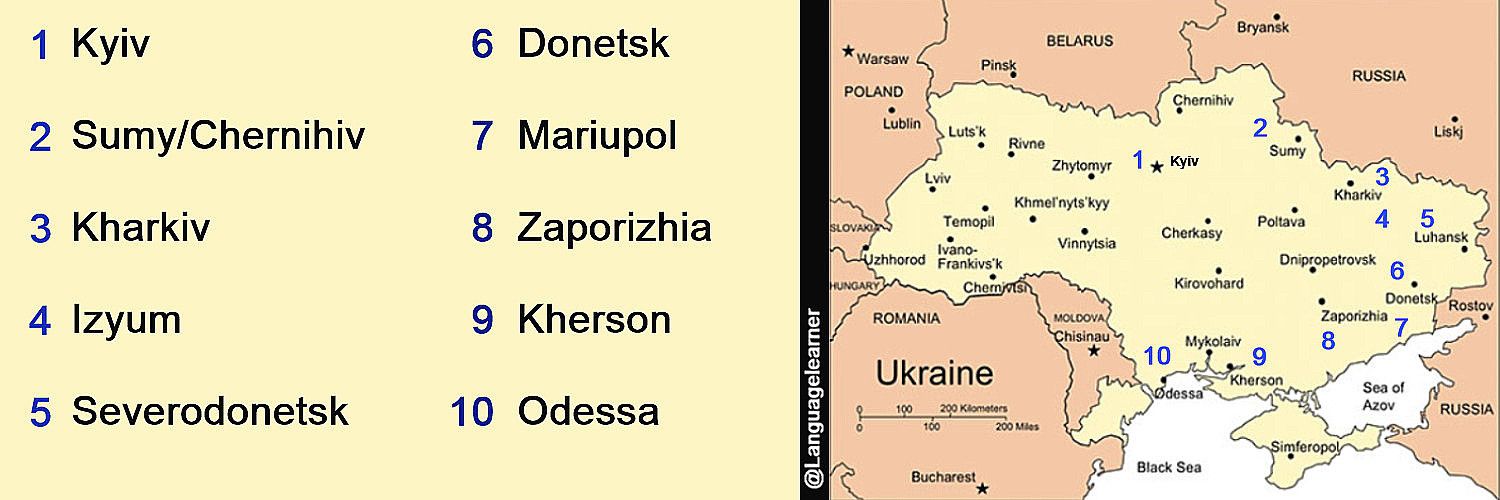
Interesting link!
Also an interesting dialectical flourish in the quote from one of Mao’s favourite classical Chinese novels:
Both remind me of Lenin “On the National Pride of the Great Russians” and its great relevance to the current war waged by Tsar Putin against the peoples of the Ruscist empire:
…
Is a sense of national pride alien to us, Great-Russian class-conscious proletarians? Certainly not! We love our language and our country, and we are doing our very utmost to raise her toiling masses (i.e., nine-tenths of her population) to the level of a democratic and socialist consciousness. To us it is most painful to see and feel the outrages, the oppression and the humiliation our fair country suffers at the hands of the tsar’s butchers, the nobles and the capitalists. We take pride in the resistance to these outrages put up from our midst, from the Great Russians; in that midst having produced Radishchev,[3] the Decembrists[4] and the revolutionary commoners of the seventies[5]; in the Great-Russian working class having created, in 1905, a mighty revolutionary party of the masses; and in the Great-Russian peasantry having begun to turn towards democracy and set about overthrowing the clergy and the landed proprietors.
We remember that Chernyshevsky, the Great-Russian democrat, who dedicated his life to the cause of revolution, said half a century ago: “A wretched nation, a nation of slaves, from top to bottom—all slaves."[6] The overt and covert Great-Russian slaves (slaves with regard to the tsarist monarchy) do not like to recall these words. Yet, in our opinion, these were words of genuine love for our country, a love distressed by the absence of a revolutionary spirit in the masses of the Great-Russian people. There was none of that spirit at the time. There is little of it now, but it already exists. We are full of national pride because the Great-Russian nation, too , has created a revolutionary class, because it, too , has proved capable of providing mankind with great models of the struggle for freedom and socialism, and not only with great pogroms, rows of gallows, dungeons, great famines and great servility to priests, tsars, landowners and capitalists.
We are full of a sense of national pride, and for that very reason we particularly hate our slavish past (when the landed nobility led the peasants into war to stifle the freedom of Hungary, Poland, Persia and China), and our slavish present, when these selfsame landed proprietors, aided by the capitalists, are loading us into a war in order to throttle Poland and the Ukraine, crush the democratic movement in Persia and China, and strengthen the gang of Romanovs, Bobrinskys and Purishkeviches, who are a disgrace to our Great-Russian national dignity. Nobody is to be blamed for being born a slave; but a slave who not only eschews a striving for freedom but justifies and eulogises his slavery (e.g., calls the throttling of Poland and the Ukraine, etc., a “defence of the fatherland” of the Great Russians)—such a slave is a lickspittle and a boor, who arouses a legitimate feeling of indignation, contempt, and loathing.
"No nation can be free if it oppresses other nations,” said Marx and Engels, the greatest representatives of consistent nineteenth century democracy, who became the teachers of the revolutionary proletariat. And, full of a sense of national pride, we Great-Russian workers want, come what may, a free and independent, a democratic, republican and proud Great Russia, one that will base its relations with its neighbours on the human principle of equality, and not on the feudalist principle of privilege, which is so degrading to a great nation. Just because we want that, we say: it is impossible, in the twentieth century and in Europe (even in the far east of Europe), to “defend the fatherland” otherwise than by using every revolutionary means to combat the monarchy, the landowners and the capitalists of one’s own fatherland, i.e., the worst enemies of our country. We say that the Great Russians cannot “defend the fatherland” otherwise than by desiring the defeat of tsarism in any war, this as the lesser evil to nine-tenths of the inhabitants of Great Russia. For tsarism not only oppresses those nine-tenths economically and politically, but also demoralises, degrades, dishonours and prostitutes them by teaching them to oppress other nations and to cover up this shame with hypocritical and quasi-patriotic phrases.
The objection may be advanced that, besides tsarism and under its wing, another historical force has arisen and become strong, viz., Great-Russian capitalism, which is carrying on progressive work by economically centralising and welding together vast regions. This objection, however, does not excuse, but on the contrary still more condemns our socialist-chauvinists, who should be called tsarist-Purishkevich socialists[7] (just as Marx called the Lassalleans Royal-Prussian socialists).[8] Let us even assume that history will decide in favour of Great-Russian dominant-nation capitalism, and against the hundred and one small nations. That is not impossible, for the entire history of capital is one of violence and plunder, blood and corruption. We do not advocate preserving small nations at all costs; other conditions being equal , we are decidedly for centralisation and are opposed to the petty-bourgeois ideal of federal relationships. Even if our assumption were true, however, it is, firstly, not our business, or that of democrats (let alone of socialists), to help Romanov-Bobrinsky-Purishkevich throttle the Ukraine, etc. In his own Junker fashion, Bismarck accomplished a progressive historical task, but he would be a fine “Marxist” indeed who, on such grounds, thought of justifying socialist support for Bismarck! Moreover, Bismarck promoted economic development by bringing together the disunited Germans, who were being oppressed by other nations. The economic prosperity and rapid development of Great Russia, however, require that the country be liberated from Great-Russian oppression of other nations—that is the difference that our admirers of the true-Russian would-be Bismarcks overlook.
Secondly, if history were to decide in favour of Great Russian dominant-nation capitalism, it follows hence that the socialist role of the Great-Russian proletariat, as the principal driving force of the communist revolution engendered by capitalism, will be all the greater. The proletarian revolution calls for a prolonged education of the workers in the spirit of the fullest national equality and brotherhood. Consequently, the interests of the Great-Russian proletariat require that the masses be systematically educated to champion—most resolutely, consistently, boldly and in a revolutionary manner—complete equality and the right to self-determination for all the nations oppressed by the Great Russians. The interests of the Great Russians’ national pride (understood, not in the slavish sense) coincide with the socialist interests of the Great-Russian (and all other) proletarians. Our model will always be Marx, who, after living in Britain for decades and becoming half-English, demanded freedom and national independence for Ireland in the interests of the socialist movement of the British workers.
In the second hypothetical case we have considered, our home-grown socialist-chauvinists, Plekhanov, etc., etc., will prove traitors, not only to their own country—a free and democratic Great Russia, but also to the proletarian brotherhood of all the nations of Russia, i.e., to the cause of socialism.
 Delta Digital Video’s Model 6805R