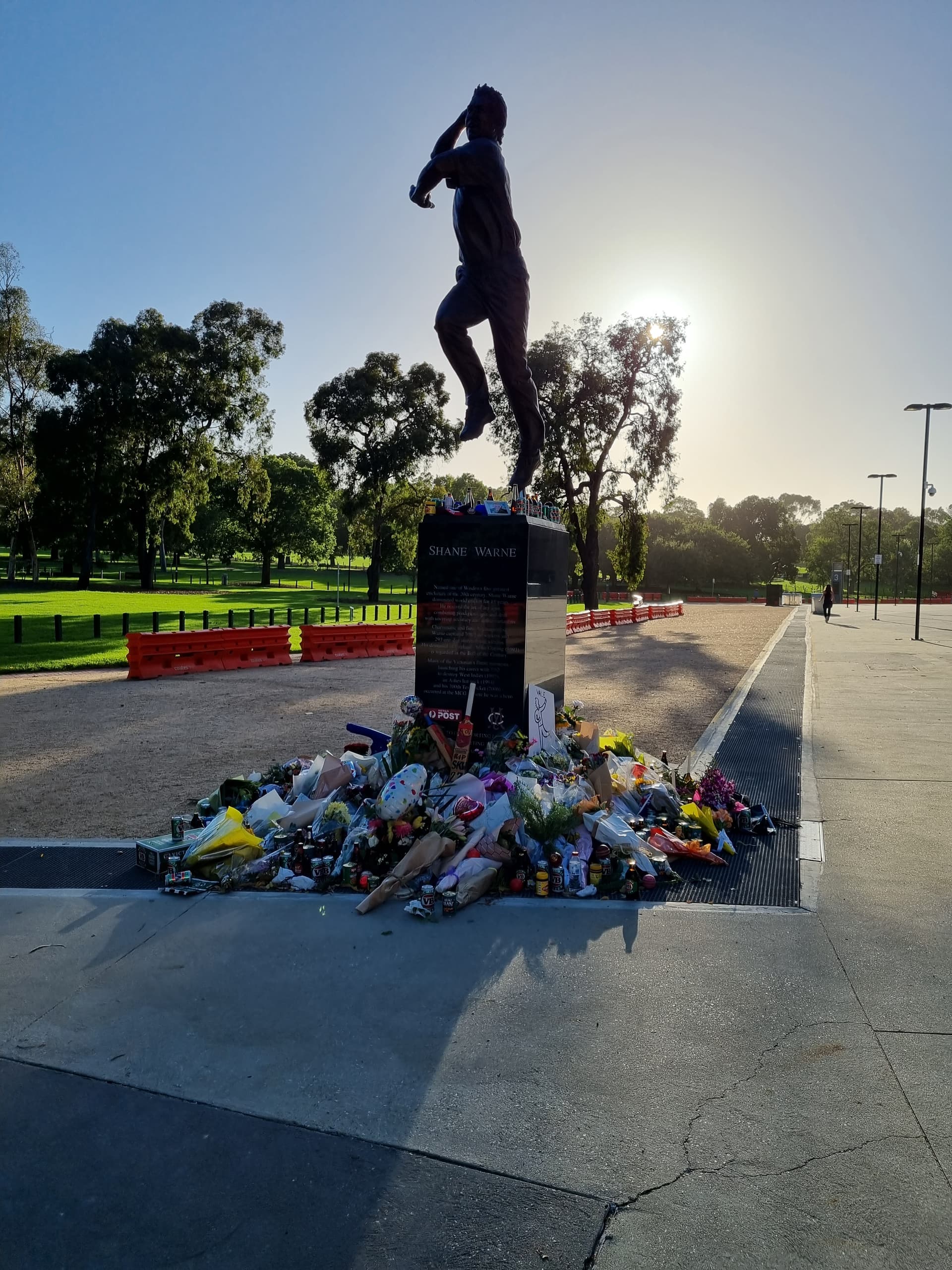
I didn’t know Shane Warne - I never met him - but I feel strangely affected by his death. And this is why…
When you’re a sports lover in Australia, summertime means one thing above all else: cricket. When the dust settles on the Grand Final post-mortems/celebrations, thoughts invariably turn from the MCG to the Gabba. How many days until the first Test? How green will the pitch be? Will the visitors be able to handle the conditions? Then that first day arrives and…well, we all know the feeling. For the last 30 years, Shane Warne has been, without doubt, the central character in our summer obsession.
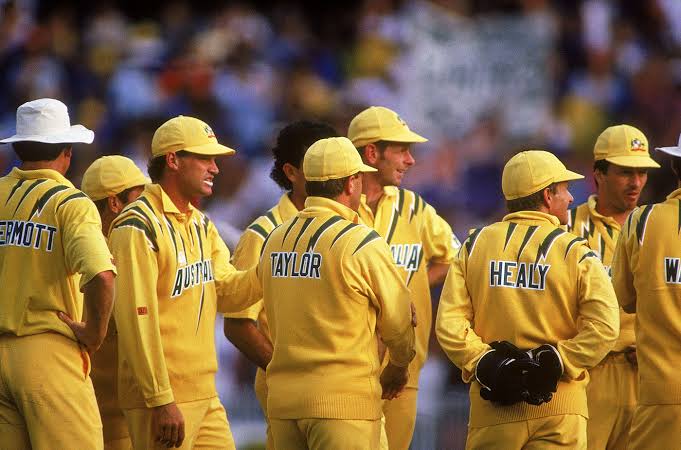
I turned 40 last year. My first cricket memory is of the uber-emotional reporting of David Boon sweeping the boundary that regained Australia the Ashes in 1989. I remember the great wall of Greatbatch at Perth later that year, Dean Jones and Steve Waugh plundering a hapless Sri Lankan attack a few weeks later and Imran and Wasim doing the same to the Australians in Adelaide in early 1990. I remember England’s calamitous batting collapses during the 1990-91 Ashes and marvelling at the bowling of Bruce Reid (how Ian Healy must have loved having him in the team). And I remember the Indian tour of 1991-92; Australia romped to a 4-0 series win and in the Sydney Test we got to see, for the first time, the man who would turn the game on its head.
That debut was famously underwhelming - 1/150 - and he also went wicketless second time out, in the Adelaide Test. Then something happened, during the first Test at Colombo, in August '92, even though no-one here saw it. Sri Lanka were 2/120-odd, needing 180 to win. Warne, who years later conceded that he was very lucky to have been picked for the tour, took 3/11 in his breakthrough spell and Australia won, miraculously, by 16 runs. But the legend was really born, a few months later, when he bowled Australia to victory against West Indies with 7/52 on the final day at the MCG. The flipper that knocked over Richie Richardson put the world on notice. A ball so good that it not only castled one of the world’s best batsman (who’d been at the crease for two-and-a-half hours), but was so seldom seen in those days that Michael Holding and Tony Greig in the commentary box thought it was a case of the pitch playing tricks.
From that point there was no looking back. The Gatting ball (it gets more impressive with every viewing, doesn’t it?), the decimations of NZ, South Africa (poor Darryl Cullinan), England (again), Pakistan, Sri Lanka. In that three year period, he was so good, it seemed grossly unfair on the opposition teams. His brilliance was unquestioned, and unprecedented, and rarely faltered in the ensuing years, despite the bookies, the sex scandals, the surgeries and the diet pills. He somehow managed to make bowling slow, in a slow sport, so exciting that kids from Melbourne to Mumbai wanted to become leg-spinners. During that peak Warnie period, every kid in my team was busting out the leg-breaks (or at least trying to) during our mid-week net sessions. I distinctly remember the silence on a trip home on the school bus in late '94; the cricket was on the radio, and Warnie was bowling.
As a bowler, he was skillful beyond words, in the single most difficult discipline in the game. And he had guile, charisma and the ability to entertain and engross in startling abundance. It was a rare combination, and it’s been said and acknowledged a million times. But the reason his death hurts so much, especially for those in my age group, is not because he was a great cricketer. It’s because he was a character who had a uniquely rare, positive and enduring impact on our childhoods, a guy who was part of some of our best memories from our best years. What a legacy that is.