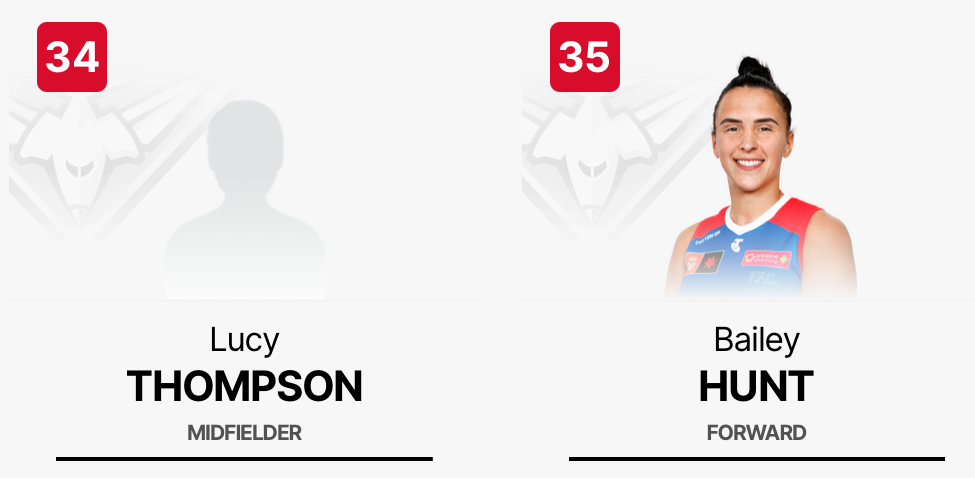
Only 35yo…
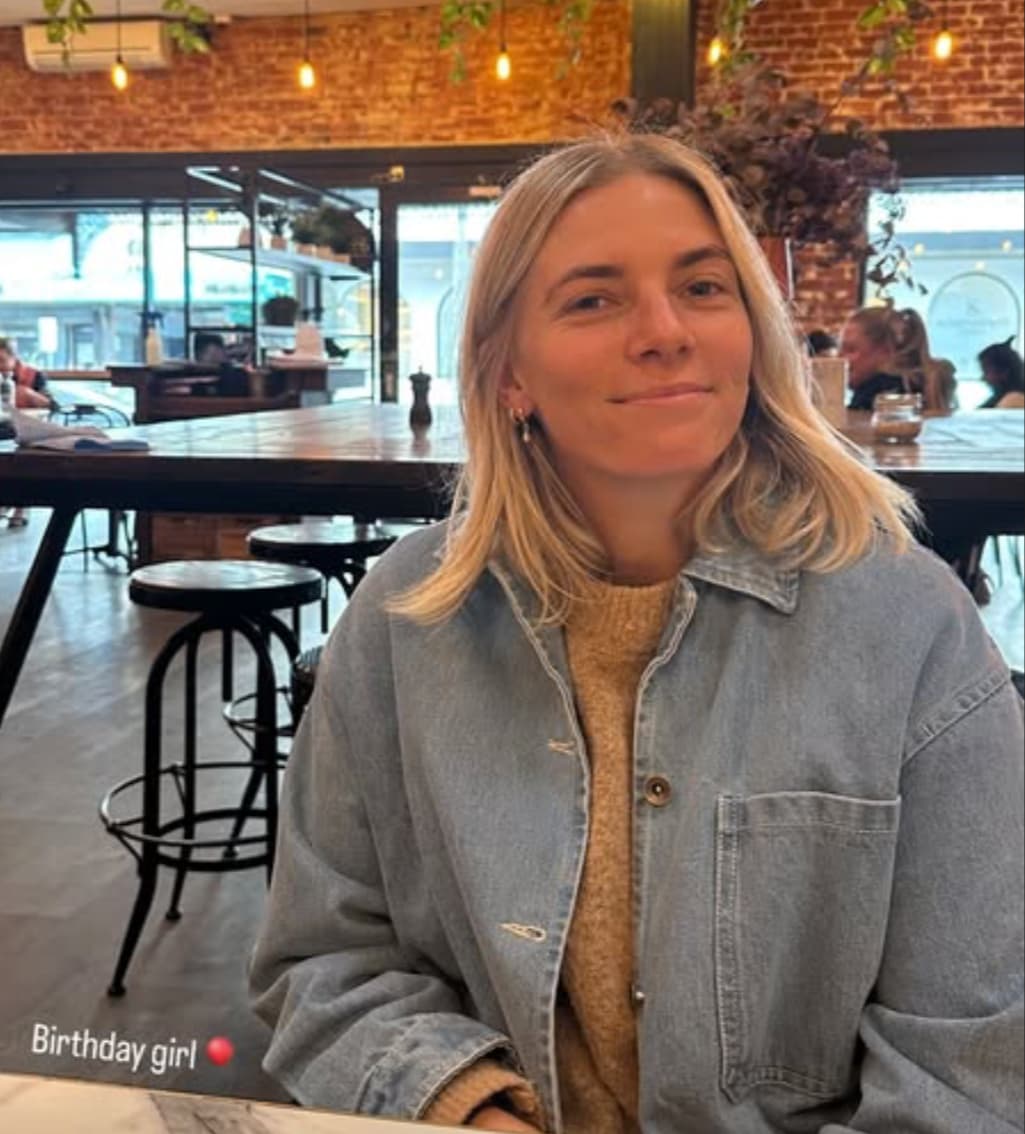
1 Like
Marnie Robinson also reached 20yo this week.
Lucy Thompson 19yo this Saturday.
Chloe Prpic 21yo on Sunday.
Until Saturday, we have just one 18yo VFLW-listed player born in the first half of the year – but SEVEN of them in the second half of the year. Are AFLW drafters really that shallow?
After 11 weeks out due to the MCL injury in the pre-season, Eva is back in action this weekend!
It’s in Darwin vs the Calder Cannons.
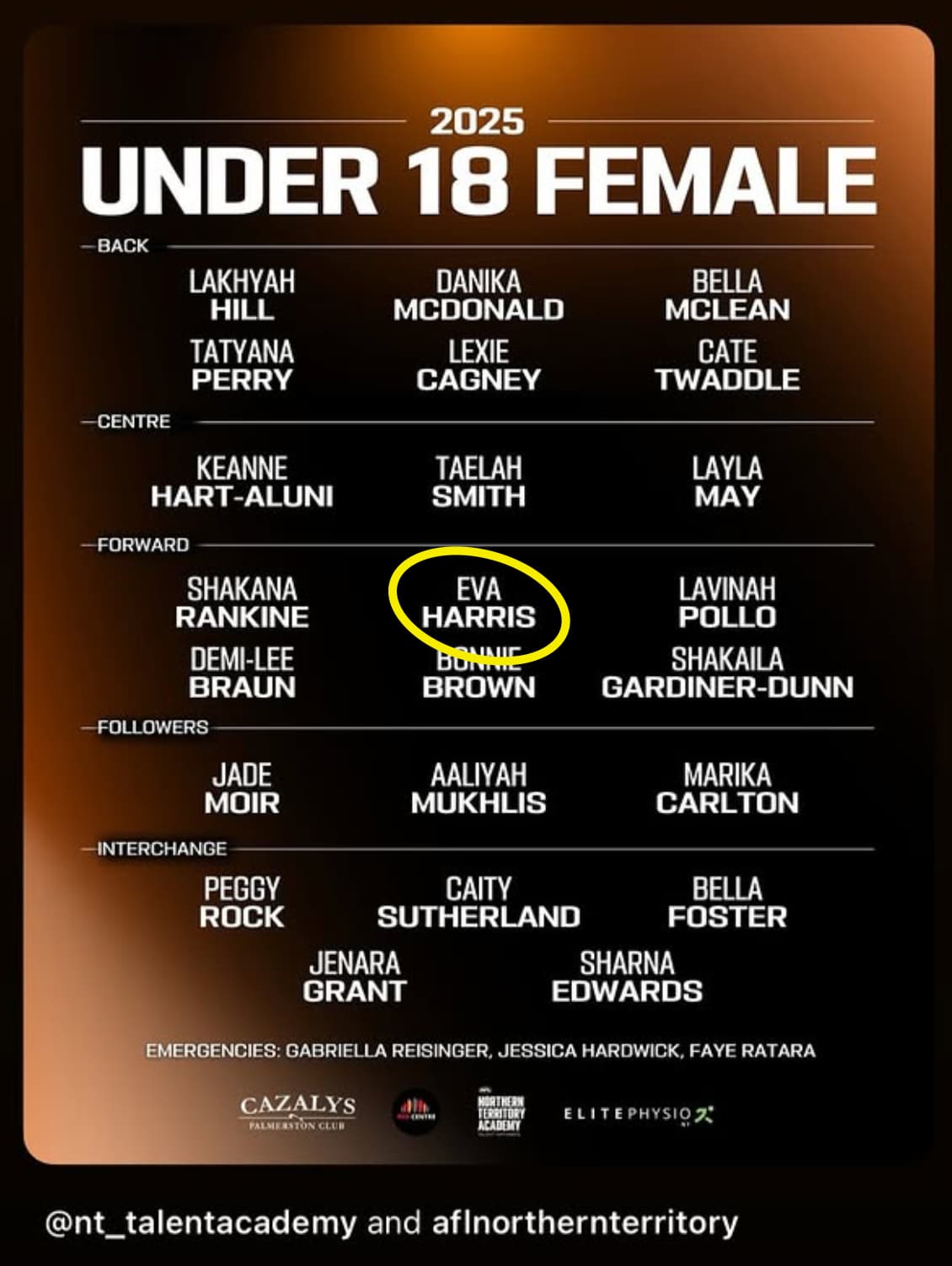
With “White Hat” playing this week and Freya scheduled to be back shortly, our ruck/tall forward options have suddenly markedly expanded.
Calder won the first half of the game vs NT 26-17. Then Eva kicked a goal right at the start of the third quarter, and NT went on to win the second half 5.12.42 vs 0.0.0
What the…
Keanne Hart-Aluni, sister of our Tay, also kicked a goal.
1 Like
Stats out: Harris looks to have been the secondary ruck, with 5 hit-outs, 9 disposals, scoring 1.1, 3 inside fifties… and 9 tackles (second highest across both teams).
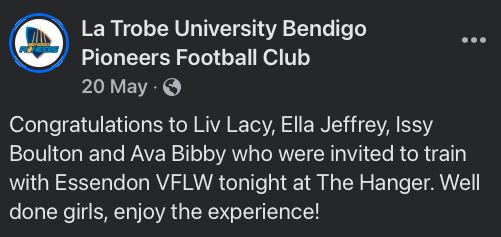
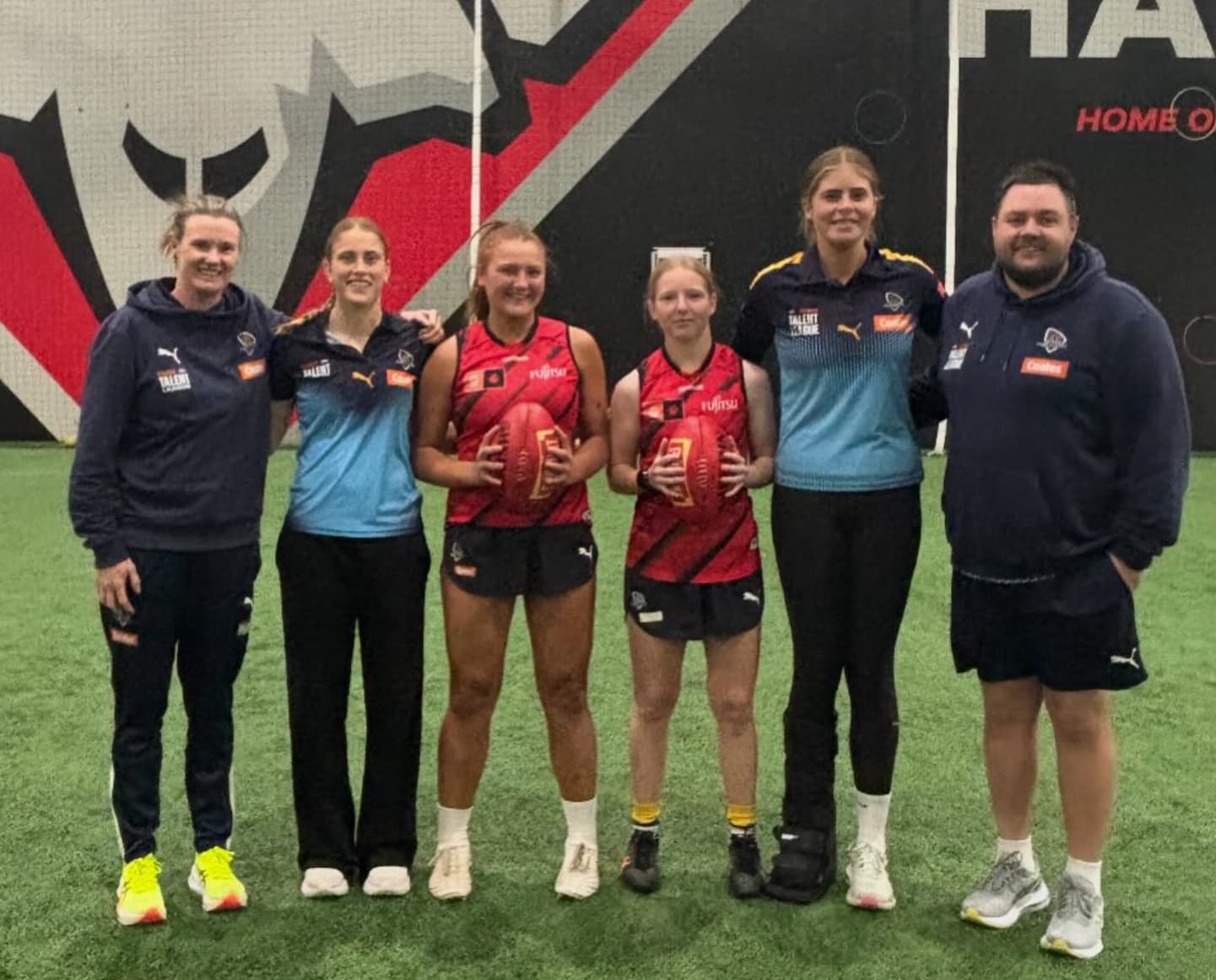
The Messiah apparently unbroken now, has been named for Vic Metro this weekend. Also named is her teammate Jade McLay (but is referred to as injured, so I dunno) – opposing them is 186cm Pioneer Ava Bibby.
Manfre’s biggest score of the weekend was not at Willy:
By Chloe Merrell
Wake up. Eat. Go to class. Train. Sleep.
It’s a simple enough schedule, but it wasn’t so easy for Olivia Manfre in the beginning.
“I would get to kind of Thursday or Friday and my legs would be so tired,” the 21-year-old says with a wry smile over a video link from the United States. “At the start, it was hard to adjust because of the training every day side of things: that wasn’t really heard of back home.”
The Australian, born and raised in Melbourne, is recounting her day-to-day life at Southwestern College in Kansas, where she is currently straddling a Health Science and life as a college flag football athlete.
No one had quite prepared Manfre for the rigours of life as a college athlete in the United States because no woman from Down Under, until now, has ever received a full college scholarship to play flag.
“When I go back home, everyone’s going to be like, ‘What do you mean you train every day?’ And I’m like, yeah, this is the new normal. We’ve got to get onto it.”
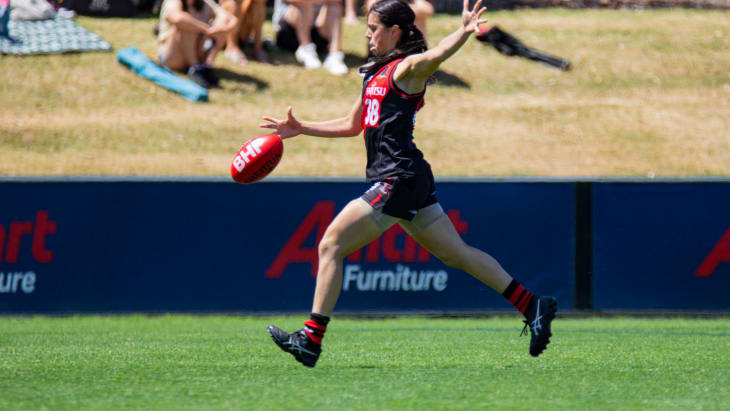
Olivia Manfre: "I need to try this because I feel like I’m gonna love it”
Despite its initial challenges, it’s clear as Manfre speaks, she wouldn’t change her new routine for the world.
The hours in the gym, on the pitch and in the classroom are part of the unexpected life shift that struck the Australian, when she discovered an aptitude for flag.
Before gridiron, Manfre’s first love was Australian Rules Football (AFL), an indigenous Australian sport that shares similarities with rugby and American Football owing to its use of an oval ball with the overarching aim of kicking it between the two tallest goal-posts set at either end of an oval-shaped field.
Her passion for the game all started with her grandfather, or nonno.
“My grandparents came from Italy, and when they migrated over, my nonno developed a love of AFL and specifically he went for the Essendon Bombers, who I ended up playing for. So, I grew up with footy. I’ve been a member of the club for literally 22 years. I went to all the home games,” she explains.
“When the AFLW started, I was probably about 12 at the time. I was like, I’m playing. I always had to watch my brother play. And then I was, like, ‘No, this is my time to play.’ And, I got to wear the Essendon jersey.”
Over the course of eight years of playing, Manfre progressed through the talent pathways and played three seasons in the Victorian Women’s Football League, but things significantly changed one offseason when, in a bid to keep fit, she stumbled upon American Football.
“I joined like a boys tackle football team for a year, and there are photos around somewhere of me in shoulder pads and just my teammates next to me. But I aged out because it was like under-19s and I wasn’t able to play in the men’s league,” she says.
Then she discovered flag football.
“I watched USA versus Mexico at the World Games. And I was, like, I need to try this because I feel like I’m gonna love it. And I played at the national championships back in 2023, and then like a week later, the head coach at the time was like, hey, like you’ve made the national team, and I was just like, Oh my gosh.”
No sooner had she made the national team, Manfre was on a plane to Malaysia to play in the first-ever Asia-Oceania Championships, and much to her surprise, she was part of the Australian team that clinched silver.
But the highs didn’t stop there for the young Australian.
She was then approached about the possibility of playing flag football at a college in the United States, and when the option to go and play in the birthplace of the discipline on a full scholarship came, Manfre - as she would a football - took it with both hands.
From Aussie Rules to Flag Football
With its emphasis on physicality, agility and dominance in the air, it’s not all that surprising that scouts saw enormous potential in Manfre.
And, on some counts, the Aussie certainly sees advantages.
“For AFL, my main role was to mark the ball, so catch the ball and kick goals, and I think, on the flag football field, immediately that translates to catching and because AFL is contact. We have to catch in traffic when there are people who are trying to tackle us.
“I think a big part of my game is going up and taking big catches, being able to catch in traffic and then in terms of like the mental side of things, it’s being able to read the play, finding space in front of you to kind of navigate around opponents to score a touchdown.”
But in the same vein, there are still some significant gaps, particularly as you cross codes. One of the big ones, the Australian concedes, is in the fundamental understanding of the game.
“It’s the technicality: there’s nothing like it. It’s so strategic,” Manfre explains.
“With AFL, it’s very much free play. We have our structures that we need to get into, but it’s never, you need to run this route, it’s like, get open. So that has been the most challenging part for me.
“I think that now I’ve been able to develop kind of this different way of thinking, you know, in terms of offense. It’s like, okay, how can I use my weapons in my toolkit to get around my defender? In college, I’ve also had the opportunity to play defense as well. And so being able to read the play and everything is gonna help build it. So my defense helps my offense, my offense helps my defense.
“It’s a very abstract way of thinking for people who have never picked up the sport. But, and again, that kind of contributes to why America is so good. It’s because they’ve been exposed to it since they were tiny.”
Olivia Manfre: LA28 is a massive goal of mine
While there may be a lot to learn, Manfre has wasted no time soaking it all up.
The consistency of training and playing, she believes, has significantly accelerated her development on the field. And excitement as she considers relaying what she’s discovered as an insider among the US elites back to her national teammates is palpable.
It’s also well-meaning because there is a sense of both the sacrifice and responsibility Manfre feels in being the very first to tread this particular path.
Her family, with their Italian roots, are naturally tight-knit, meaning calls are made every day back home to her mother and grandmother, checking in.
She is also aware that people will be studying her experience closely to see if it is a viable route.
“I know that there’s a lot of responsibility, you know, being the first in these pathways and, you know, I hope that I can inspire and I hope that I’m doing people proud,” Manfre says.
“I know that what I’m doing now is it’s unique and that I’m going to create a pathway for generations. And it’s not a responsibility that I take lightly. I just hope that people can look at my story, and people can look at where I’ve come from, and they can kind of be inspired by that.
"Literally all of this started with a ‘what if?’ What if I get a scholarship? You know, what if I get to play overseas? Like, what if I get to represent my country? I really just hope people can kind of take that on board and just ask those same questions and go for it because you really don’t know what’s around the corner.”
The greatest test of Manfre’s hard work and commitment will be put to the test over the next three years as the Olympic Games Los Angeles 2028 come into view. There, flag football will make its Olympic debut, heralding a new era for the sport, and the Australian is eager to be a part of the occasion.
“It’s one of those things where it’s a once-in-a-lifetime opportunity,” she says excitedly.
“I think in LA, it’ll kind of be the moment where the world gets to see what football really is and what it can be like. It’s fast, it’s dynamic, it is exciting, and it gives kind of countries that aren’t traditional like American football powerhouses an opportunity to kind of like build something from the ground up and like be something that’s big.
“Obviously, it’s a massive goal of mine. I know that I’m doing everything right now, training every day, playing weekly. When I get those opportunities to compete internationally, it’s all geared towards that vision. In three years’ time, I want to be able to say that I was part of the first Australian women’s flag football team to qualify and be part of the Olympics.”
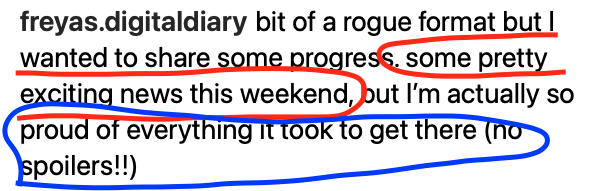
Freya documenting her second comeback from injury (part 1 of 2?) at FREZ 🤍 on Instagram: "bit of a rogue format but I wanted to share some progress. some pretty exciting news this weekend, but I’m actually so proud of everything it took to get there (no spoilers!!) this has been 10 weeks of long graft and whilst putting together the timeline of all my progress it hit me how actually mad it is to me how far I’ve come, and how “easy” (aka pain free) it’s felt, which is a huge testament to the amazing team I’ve had around me at @essendonwvfl so this is the first of a couple posts. EP1 - running in circles 🤩"
A long time ago, I was told she was aiming to return in round 10…
I’m starting to think we’re getting Abbey McDonald-ed… but not convinced we’ll get her regardless after a few years!
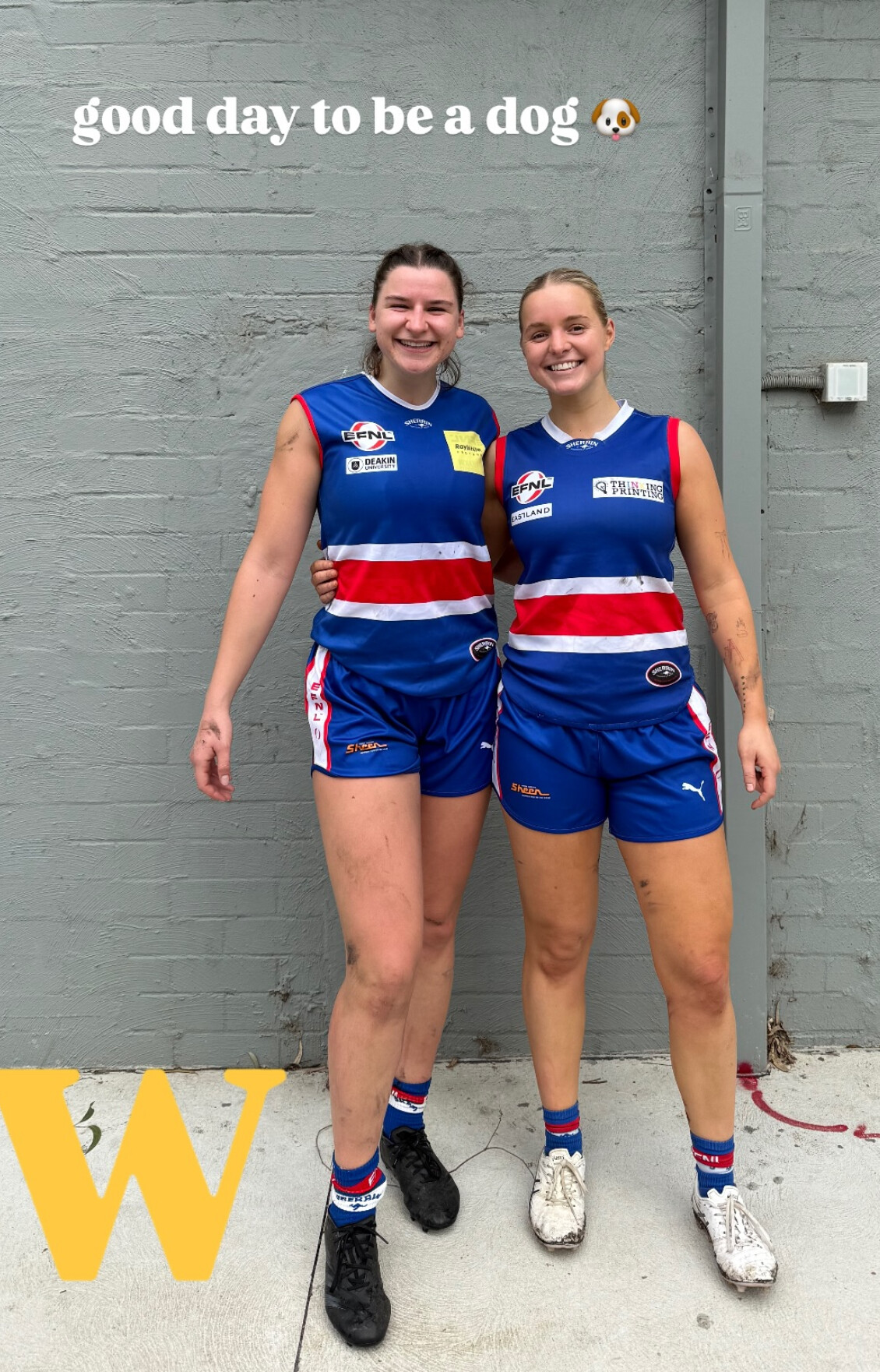
Freya Hibberd makes her comeback/Aussie debut with South Croydon this weekend against the Eastern Devils at Mulgrave Reserve.
1 Like
Is it legal for Essendon VFLW fans to barrack against the Eastern Devils?
The Messiah is back: 44 disposals, 7 marks, 5 tackles, 9 clearances, 6 inside 50s, 13 rebound 50s
Crazy in 80 minutes. Next best by Calder in their 17-43 defeat was McElligott with 18 (and 16 tackles!)

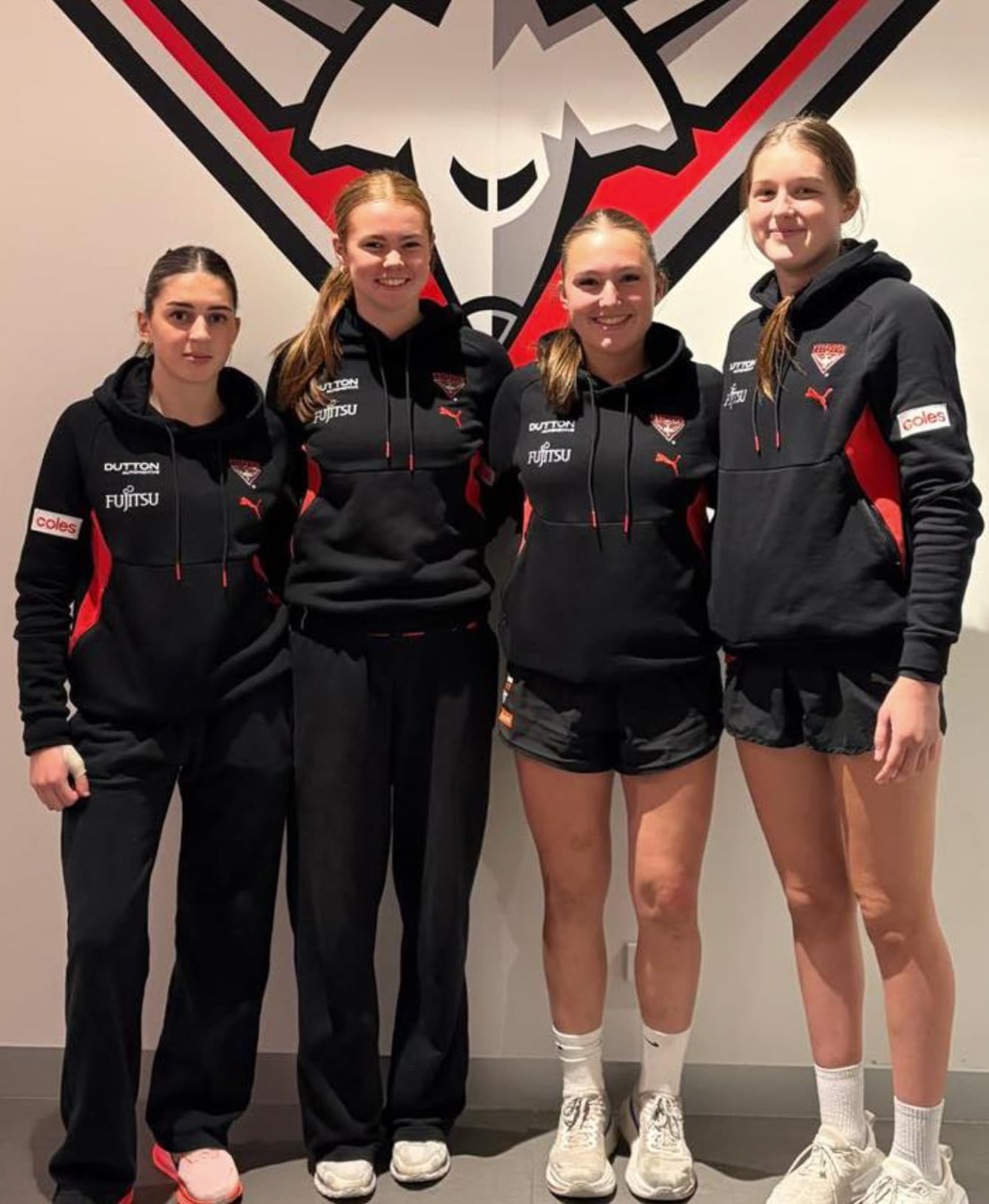
All of the four Cannons above have been added to our Hudl squad listing… but Liv Lacy still not there 

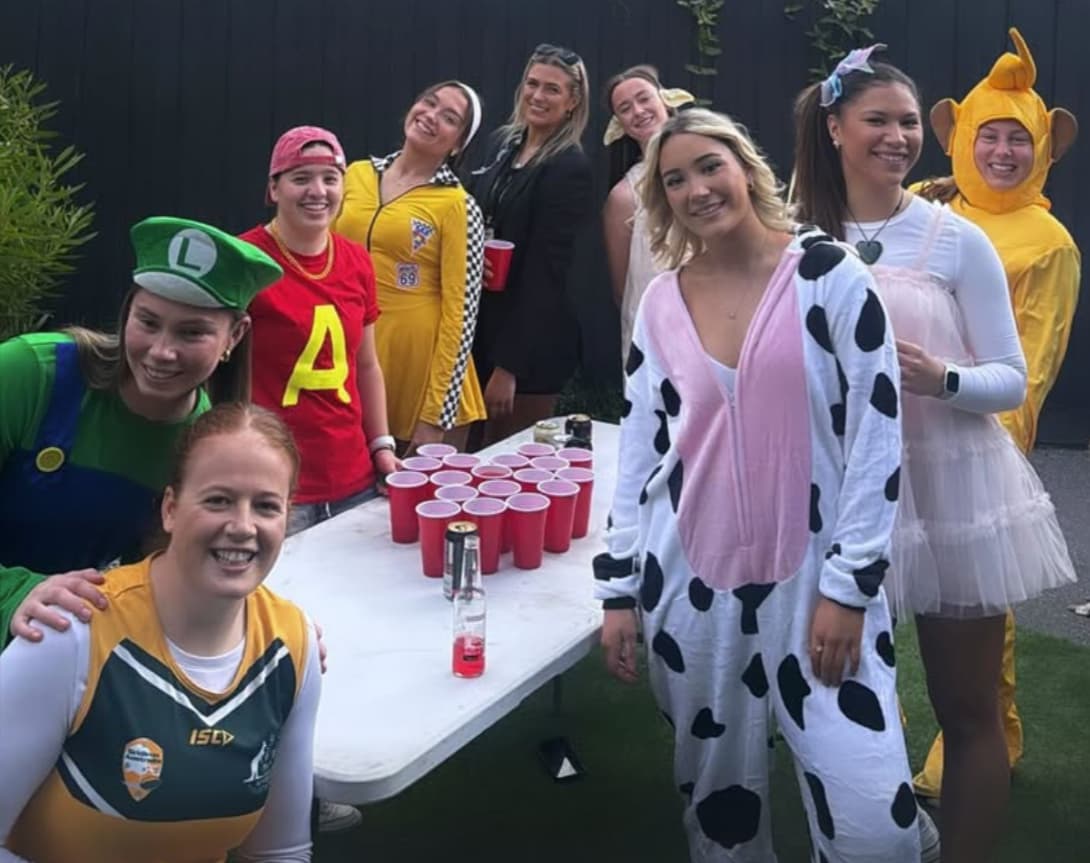
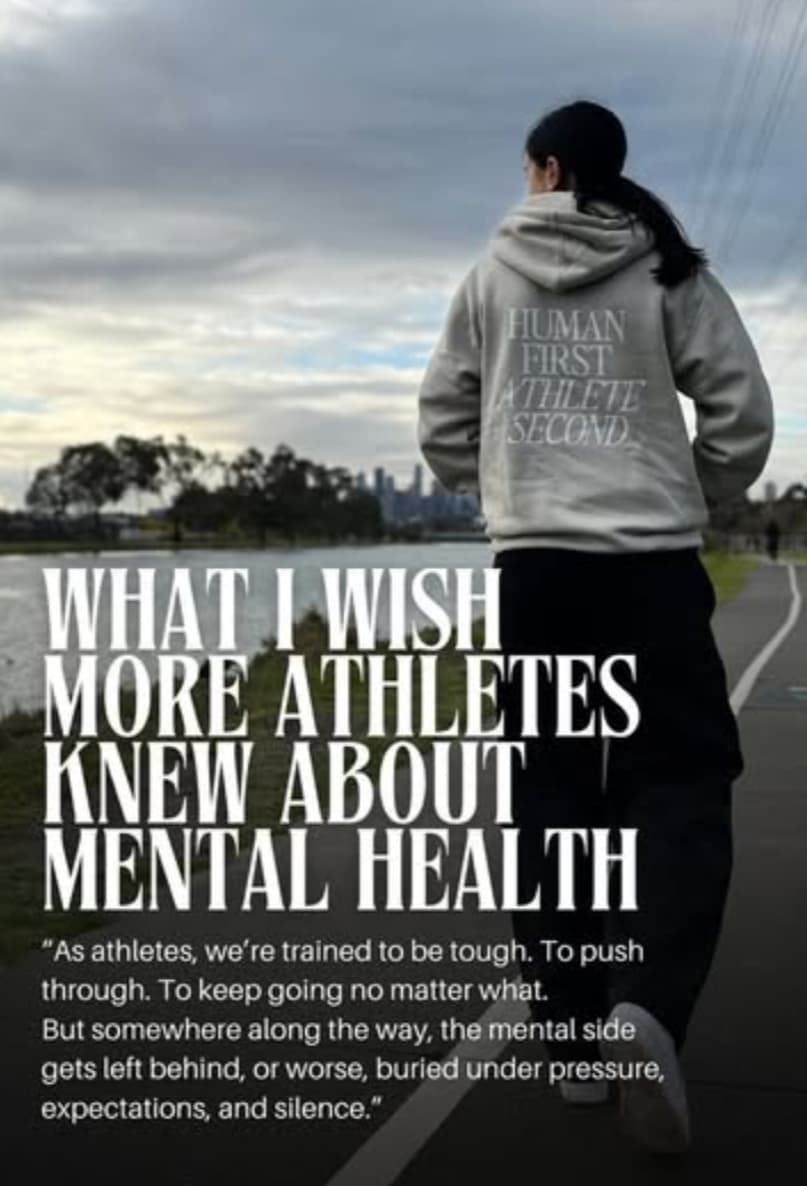
Not just for athletes, but for the humans behind the game.
As athletes, we’re trained to be tough. To push through. To keep going no matter what.But somewhere along the way, the mental side gets left behind, or worse, buried under pressure, expectations, and silence.These are 5 things I wish more athletes (and younger me) knew about mental health in sport.
1. Your worth isn’t tied to performance.
You are more than your stats, your minutes, your wins, or your selections. You still matter on your worst game days, on the bench, in recovery, or when things just don’t go your way. Sport is something you do, not who you are. And your value as a person never changes based on a scoreboard.
2. You’re allowed to struggle, even when you’re achieving.
You can be successful and feel stressed. You can be making a team, winning games, and still feel the weight of anxiety or self-doubt. Just because things ‘look good’ from the outside doesn’t mean you’re not battling something real on the inside. You’re not broken, you’re human.
3. You’re allowed to enjoy sport again, even if it got hard for a while.
Maybe you’ve fallen out of love with your sport. Maybe it became stressful, heavy, or started feeling like a job. But your relationship with sport can evolve, and so can your joy in playing it. Let it look different. Let it feel lighter. Growth isn’t a step back. It’s just a new chapter.
4. Rest is part of the process.
Recovery isn’t a luxury, it’s a necessity. Resting, mentally and physically, isn’t weak. It’s what allows you to keep going. You don’t always have to ‘push through.’ Sometimes, slowing down is what lets you show up stronger.
5. You don’t have to do it all alone.
Opening up isn’t weakness. Having support doesn’t mean you’re soft, it means you’re smart. Friends, teammates, coaches, professionals, they’re not just there when things go wrong. They’re there to help you thrive. You weren’t meant to carry it all by yourself.
The game doesn’t define you but how you care for yourself through it does.
These are lessons I’m still learning and maybe always will be.But if sharing them helps just one other athlete feel less alone, then it’s worth it.
The culture around sport is changing and it should.
Because athletes are human too. And our mental health matters .
Here’s to playing the long game, for your mind and your body.
— Olivia Manfre
Flag Football Player
The Athlete Confidential Ambassador
1 Like