Also let’s not forget that the war is stimulating civilian sector production and investment. Every item donated or lend-leased to Ukraine means more domestic production in the donor country.
We are sending Prague trams to Ukraine! Ukrainian cities need functioning transport to function. Unfortunately, Russian aggression also targets civilian targets, including transport ones. For example, already in March, a Russian attack hit a rolling stock in Kharkiv with trams bought from Prague even before the war in 2011.
Hopefully you’re correct. Given that both Germany and Japan have been able to turn their backs on aggressive expansionist nationalist ideology over the past 80 years, there is hope that Russia can do the same. It seems so improbable today, given the rhetoric emminating from that place, but both Germany and Japan were in a similar position at the end of WW2.
Ukrinform of 23 October has a report by Dan Rice, special advisor to the UA Defence Minister.
He stresses the need for more air defence. For obvious reasons, no reporting on land combat needs.
As the Black Sea is closed to warships except for those at their home ports, there is currently no scope to add to UA naval capacity.
He does however note that Russia has nine vessels, some of which are landing craft, IIRC two with missile firing capacity ( presumably the ones within reach of Odessa)
I was hoping we could offload some older Melbourne trams and get some shiny new ones for a second there, but ours are standard gauge and Ukraine uses either 5ft gauge or metre gauge.
What gauge is used in Melbourne? Looked up Prague, its 1,435 mm (4 ft 81⁄2 in) standard gauge. Kyiv is 1,524 mm (5 ft)
EDIT: Ok, Looked it up. 1,435 mm (4 ft 8+1⁄2 in) - same as Prague
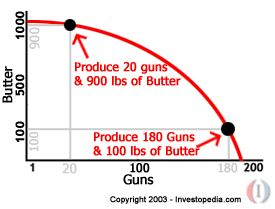
The statement above is often repeated - especially by govt (& their economic advisors) looking for short term consumption stimulus - but the idea that the stimulus from military spending is ‘economically net positive’ is false, as it ignores the basic premise of economics ie scarcity.
We all know that war is socially and environmentally disastrous, but it’s also an economic disaster. The scarce economic resources consumed in the production of the bomb are lost and other resources need to be consumed to produce the butter.
The reality that economies based on military production appear to thrive only reflects their capacity to grow in the short term by extracting scarce resource inputs from other locations, whilst simultaneously removing the resource base on which the global economy depends.
It’s equivalent to being pleased at half time that we kicked 3 goals but ignoring the cats kicked 12.
Yes, good point. I was referring to non-military/civilian aid like for example, Trams, rolling stock, vehicles, generators, tools, construction plant, medical equipment/medicine, Starlink terminals etc, etc, that would leave a gap in the inventories of the donor country that would need to be filled by domestic production later.
That seems less lethal, but isn’t it the same economic problem
ie the war has caused consumption in Ukraine which then leads to consumption elsewhere that would not otherwise have been required?
I am not an economist but I suppose if the increased consumption of (civilian) goods and services due to the war stimulates increased production to meet the ensuing demand then it could be said that the war has stimulated the economy and is a net benefit to GDP and long-term GDP growth. If a nation diverts most of its economic production into guns (eg North Korea) over consumer goods and capital equipment to grow GDP then your point as to it being a long-term net economic negative is spot on.
Some well-thought out analysis and predictions on the broad shape of the path of the War from here. Very bullish on a complete Ukrainian victory. (All territory regained within Pre-2014 border)
This Is the Beginning of the End of the War – Real Context News (RCN)
 Ukrainian cities need functioning transport to function. Unfortunately, Russian aggression also targets civilian targets, including transport ones. For example, already in March, a Russian attack hit a rolling stock in Kharkiv with trams bought from Prague even before the war in 2011.
 - regauging is a PITA.