Russia invades Ukraine - 6 - from 7 August 2024

War with Ukraine is the only thing preventing Russia from entering an immediate recession, economists say

Sep 29, 2024, 4:41 PM GMT+8
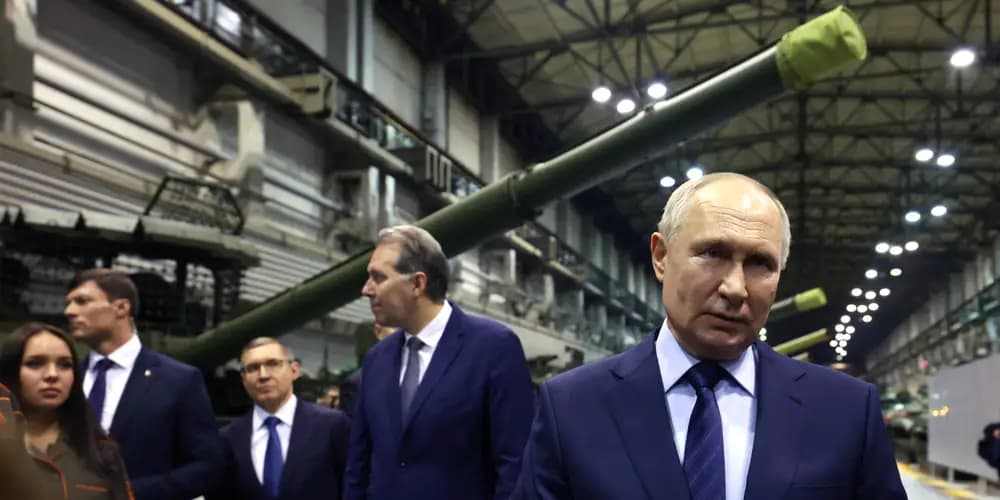
  • Russia would be in a recession by now if it weren’t for the nation’s hefty war budget, economists told BI.
  • War spending is propping up the economy, which is becoming increasingly overheated, they added.
  • But Moscow has big problems on its hands, including soaring inflation and mounting currency issues.

War may be the only thing keeping Russia’s economy afloat.

According to Jay Zagorsky, an economist and markets professor at Boston University’s Questrom School of Business, the Ukraine invasion is likely the only thing preventing the country from slipping into a recession.

That’s because Russia’s hefty military budget is supporting its sagging economy. But that’s a temporary solution for Moscow’s mounting economic problems, he told Business Insider. Dilemmas faced by the Kremlin include spiraling inflation and lingering currency and budget issues.

“The Russian economy right now is being propped up by large amounts of government spending, so there’s not going to be a slowdown in any sector in the economy that the Russia government is buying supplies from,” Zagorsky said, pointing to Kremlin purchasing uniforms, boots, ammunition, and food as part of its war efforts against Ukraine. “So if there was no war, oh yes, I think there’d be an immediate recession.”

While the war continues, the timing of a downturn is uncertain, according to Yuriy Gorodnichenko, an economist and professor at the University of California-Berkeley who also sees trouble ahead for Russia.

The nation is reportedly setting aside a record 13.2 trillion rubles for its defense budget next year, which should help stimulate its economy. However, that kind of monster spending can’t continue forever, Gorodnichenko said.

“With the government money, they can keep the economy afloat, but at some point the government is going to run out of money, so they’ll have to stop, and they’ll have a recession,” he added.

Moscow’s economic issues

There are many red flags waving inside Russia’s economy.

Inflation is one of the biggest problems, Zagorsky said. According to Russia’s official statistics service, consumer prices climbed 9% year-over-year in August.

Yet Zagorsky speculated that inflation could be running way hotter than that. The Bank of Russia hiked rates to 19% in September — the highest they have been since the Ukraine invasion began — which prompted central bankers to take emergency policy moves.

“It suggests to me that inflation might actually be really higher, and they’re a little bit underreporting,” Zagorsky said, pointing to the Soviet Union’s practice of understating its inflation numbers during the Cold War.

Russia’s economy is also being plagued by currency problems, Gorodnichenko said, pointing to Russia’s limited access to the dollar as the result of Western sanctions. That’s crimped Moscow ability to trade, especially for its oil and crude products, which make up a significant portion of its total revenue.

Russia has turned to alternative currencies, like China’s yuan, to bolster its balance sheet and keep trade humming along. But now even the reminibi is in short supply, with Chinese firms increasingly hesitant to do business with Russia in fear of being targeted by secondary sanctions from the US and other Western states.

“Russia is making fewer sales to China, or receiving less for whatever volumes, physical volumes they send to China. All … are contributing factors to economic problems in Russia,” Gorodnichenko said.

Previously, Gorodnichenko predicted Russia could see a severe recession in the next year if the nation ran out of dollars.

It’s unclear if that will happen in the next year, he said, though he noted that the nation’s oil revenue has dropped as military spending has climbed. That’s partially been a result of crude-oil prices falling globally.

“Russia is not only facing a reduction in demand for its product, but a rather dramatic fall in the price. This is kind of a double-whammy,” Zagorsky said. “To me, it’s a pretty simple story. The question is how long can the Russian economy keep going in the face of these big headwinds?”

Neither Zagorsky nor Gorodnichenko could say concretely when a recession could start for Russia. That will ultimately depend on how long the war in Ukraine — and therefore, spending on the war — will last.

Gorodnichenko is keeping a close eye on whether Russia will further raise the signing bonus for recruited soldiers. He says that if it does increase, it will be a sign that the nation is both running out of workers and that its economy is overheated.

“At some point, they will have to make critical decisions — very unpopular decisions,” he said.
3 Likes

War of attrition

Through ever more daring drone strikes, Kyiv is demonstrating its determination to fight Russia for as long as it takes

17:57, 29.09.2024


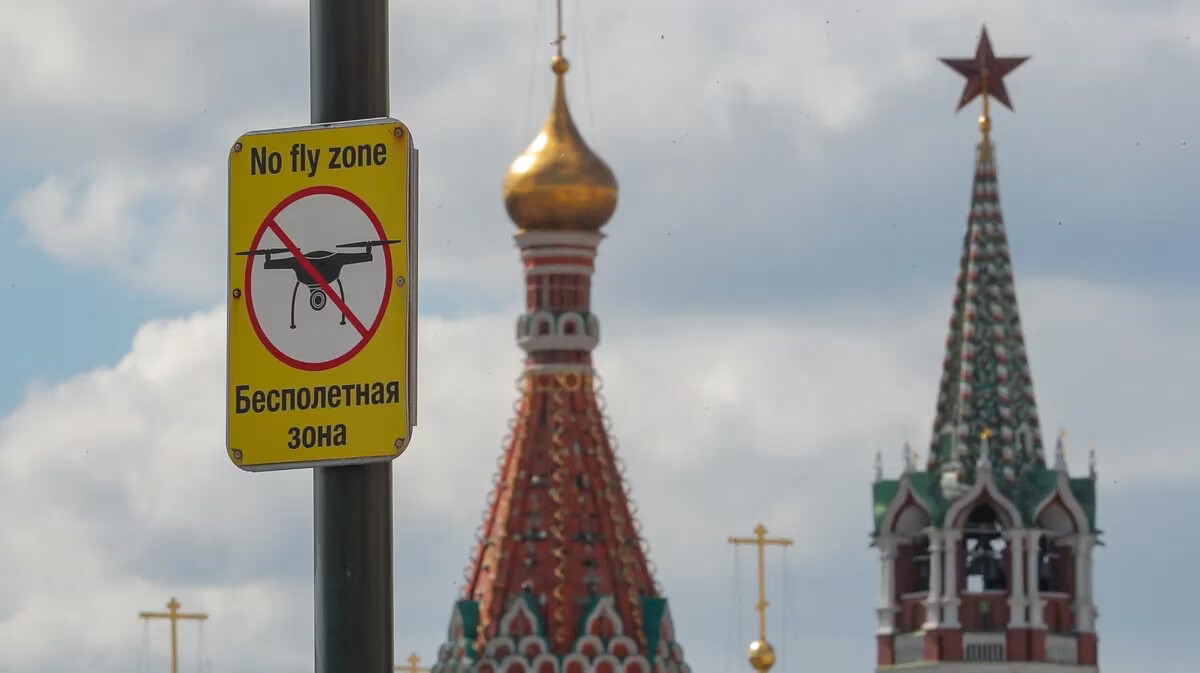
A sign prohibits drone use near Moscow’s Kremlin, 4 May 2023. Photo: EPA-EFE / MAXIM SHIPENKOV

Ukraine recently launched a long-range drone strike on a Russian ammunition depot in the Tver region of Russia, and followed up the strike with additional drone strikes near Tver and Krasnodar.

These strikes were notable for two reasons. First, the destruction may represent Ukraine’s most successful drone strikes in the current phase of the Russia-Ukraine war. Second, Toropets, where the first strike took place, is approximately 480 kilometres from the Russia-Ukraine border. The success of the attack has caused considerable elation among Ukraine’s supporters.

The drone strikes, however, will not fundamentally alter the current battlefield. But they are part of broader efforts by Ukraine to undermine Russia’s ability to wage war. These efforts are unlikely to bear fruit in 2024, but do improve Ukraine’s position for 2025 and potentially beyond.

Both Ukraine and Russia have sought rapid victories in the war. Russia, based on captured documents, believed that its invasion in 2022 would only take 10 days to result in total Ukrainian capitulation. Ukrainian resolve and the weaknesses of Russian armed forces, however, doomed this effort.

Ukraine and its supporters, likewise, placed too much hope in a decisive victory in the 2023 summer offensive. But their hopes were quashed by a Russian army that was not only superior to its 2022 iteration and fighting on the defensive, but also by structural weaknesses in the newly constituted Ukrainian units as well.

The reality of the Russia-Ukraine war is that rapid and decisive victories for either side are impractical. Instead, both Ukraine and Russia are undertaking efforts to win in 2025 and beyond.

Ukraine realised it was in an existential fight from the outset of Russia’s invasion in February 2022. Vladimir Putin’s focus on a rapid victory in Ukraine, however, meant Russia was unprepared for a protracted conflict.

Russia, however, adapted to the prolonged war, using the mercenary Wagner Group to stabilise its position in Ukraine. Russia’s efforts to find soldiers for the war effort included giving the Wagner Group the green light to recruit from Russian prisons.

A Ukrainian serviceman carries a multi-purpose drone through a field near the frontline in southeastern Ukraine’s Zaporizhzhia region, 15 February 2024. Photo: EPA-EFE / KATERYNA KLOCHKO

These efforts, however, were more akin to patching holes in the Russian war effort than addressing its underlying issues. In September 2022, Putin announced a partial mobilisation of Russian reservists, totalling 300,000 additional soldiers.

This mobilisation and subsequent recruitment efforts gave Russia the personnel advantages it had at the beginning of the conflict. The reinforcements have allowed Russia to resume grinding offensive operations in the Donbas region of eastern Ukraine. Notably, Russian forces are now nearing the strategic city of Pokrovs

Economic sanctions have affected Russia’s ability to produce high-end weapons. Nevertheless, it’s still able to acquire arms at scale from its domestic arms industry as well as from countries like Iran and North Korea. Combined with Russia’s diplomatic offensive in Africa, Putin is not as isolated as western countries commonly believe.

The Russia-Ukraine conflict is a war of attrition, and most analyses have assumed that type of war plays to Russia’s advantage, given its material superiority. A factor neglected by many analysts in wars of attrition, however, is the importance of morale.

The Ukrainian government and armed forces have not neglected this crucial point. The recent and ongoing drone strikes help to boost declining Ukrainian morale as the war takes its toll and as hopes of a rapid conclusion have faded, both among Ukrainians themselves and their allies.

Ukrainian efforts over the summer should be viewed through this morale lens. When doing so, it also becomes evident that Ukraine is fighting the long war versus seeking decisive victories.

None of Ukraine’s major efforts over the summer, when viewed in isolation, have a serious chance of changing the war in a significant manner. The Ukrainian army’s occupation of parts of the Kursk region this summer brought the conflict to Russian territory. The amount of territory taken by Ukraine, however, is negligible.


A Ukrainian engineer works on a Airlogix drone in Kyiv, Ukraine, 19 September 2023. Photo: EPA-EFE / OLEG PETRASYUK

Each operation improves Ukraine’s ability to fight a protracted war, however, while simultaneously undermining Russia’s material and moral resources. They also boost the country’s morale while humiliating Putin at the same time.

Russia staked considerable political capital and material benefits in acquiring support in Africa through the Wagner Group. Ukrainian special operation forces efforts in Africa against the Wagner Group undermine Russia’s ability to acquire diplomatic support and other resources.

Ukraine’s drone strikes will not alter Russian military supplies in a permanent way. But the strikes, using domestically produced drones, create pressure on Ukraine’s allies to allow western weapons to be used with potentially greater effect.

The daily news cycle focuses on the importance of individual acts. In assessing how the conflict is developing, however, it’s important to understand how these acts, ranging from drone strikes to ground offensives, are connected to an overall strategy. Each is designed to improve Ukraine’s position while undermining Russia’s during a protracted war.

https://www.google.com/amp/s/novayagazeta.eu/amp/articles/2024/09/29/war-of-attrition-en

6 Likes

Frontline report: Russian forces trapped twice in Kursk as rescue mission backfires

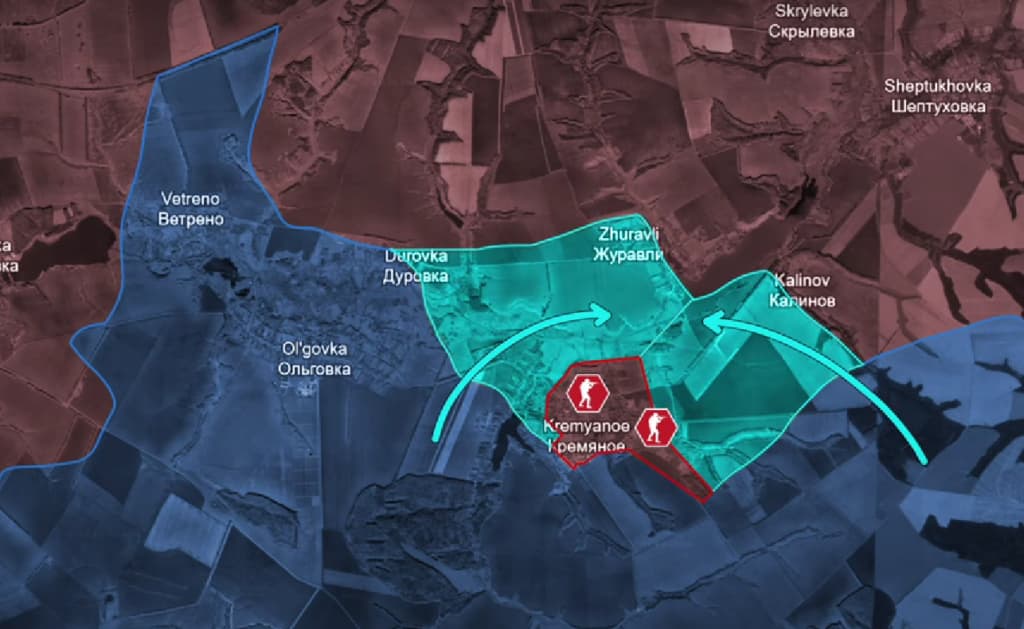
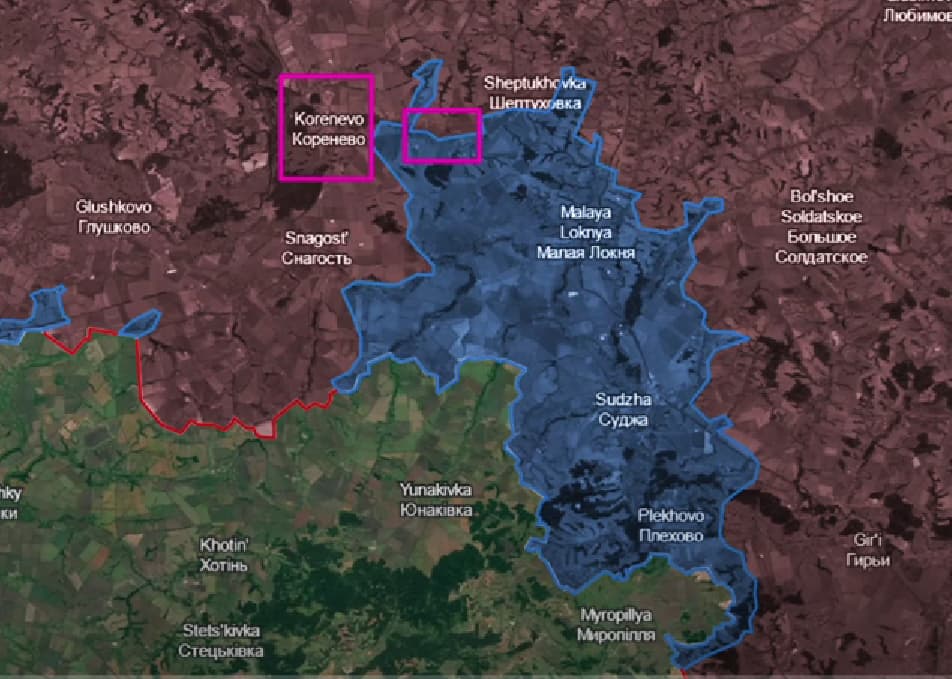
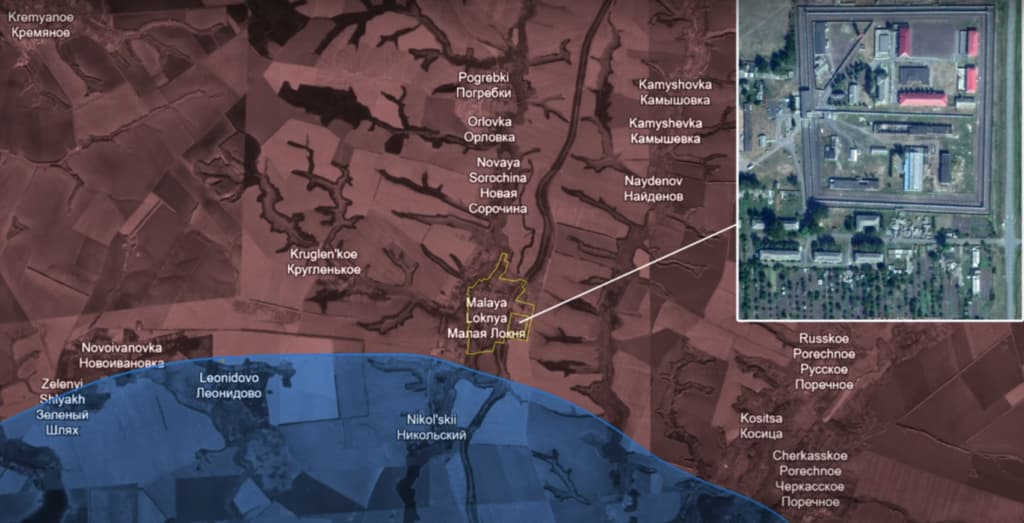
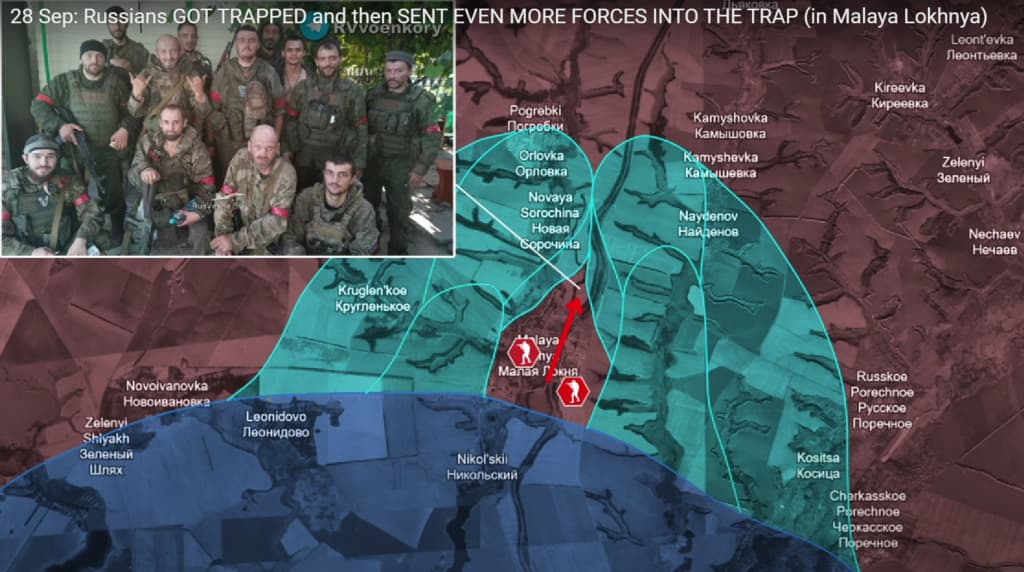
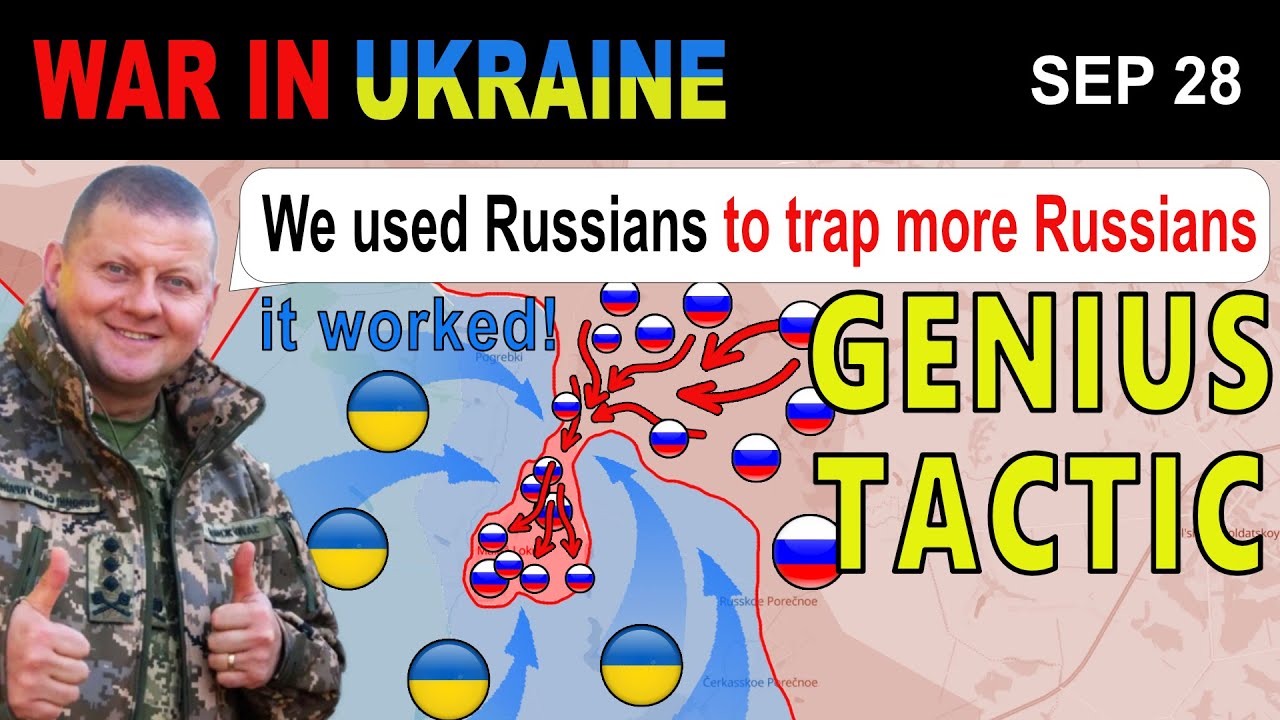
Ukrainian forces have orchestrated a complex maneuver in Kursk Oblast, simultaneously encircling Russian troops in Kremyanoe and near Malaya Loknya

28/09/2024

28 September. Today, Russia’s Kursk Oblast provides significant updates. Ukrainian forces have fully encircled Kremyanoe, east of Korenevo, cutting off key supply routes and trapping Russian troops. As the siege tightens, both sides are bracing for a decisive move that could influence the broader Kursk offensive.

Kremyanoe has been a focal point since August after Russia’s 810th Naval Infantry Brigade moved in following Ukraine’s advance into Kursk Oblast. While most Russian units eventually retreated, a small contingent remained entrenched, only to be gradually isolated by Ukrainian forces systematically cutting off their supply lines.

Ukrainians encircled Russians in Kremyanoe

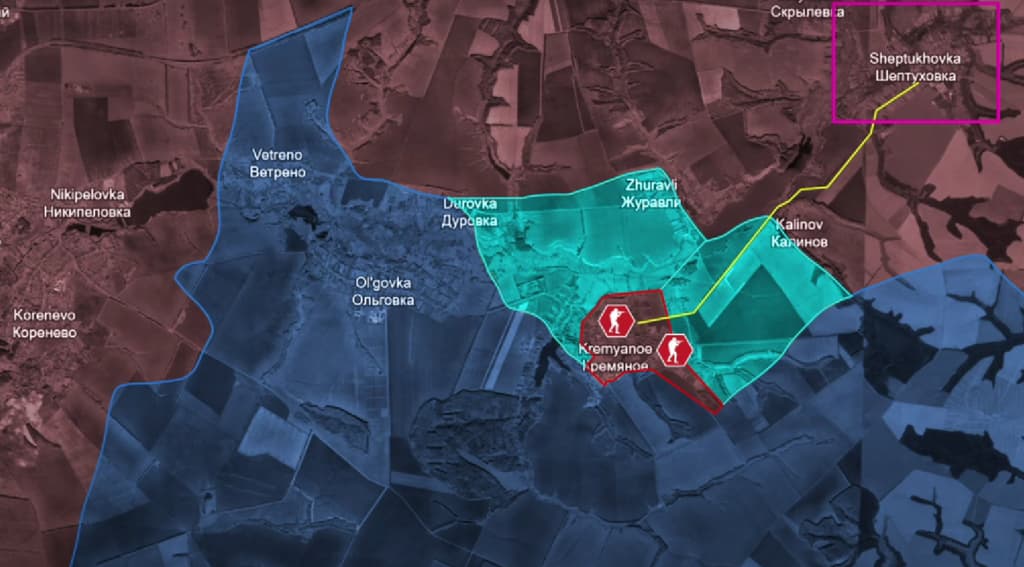
Ukrainian forces have officially completed the encirclement of Kremyanoe, cutting off all major supply routes. Only one precarious supply line from Sheptukhovka remains, partially under Ukrainian fire control, due to a natural choke point in the terrain. The village is surrounded by elevated areas, which further restrict access.

For the past two weeks, Ukrainian forces have targeted Sheptukhovka, advancing from three directions and using drone and artillery strikes to tighten the encirclement. Russian resupply attempts, carried out through hastily assembled convoys, have become increasingly desperate. Though some have succeeded, many have failed, with Ukrainian ambushes destroying or forcing the retreat of several convoys, tightening the siege around the trapped Russian troops.

Desperate Russian resupply

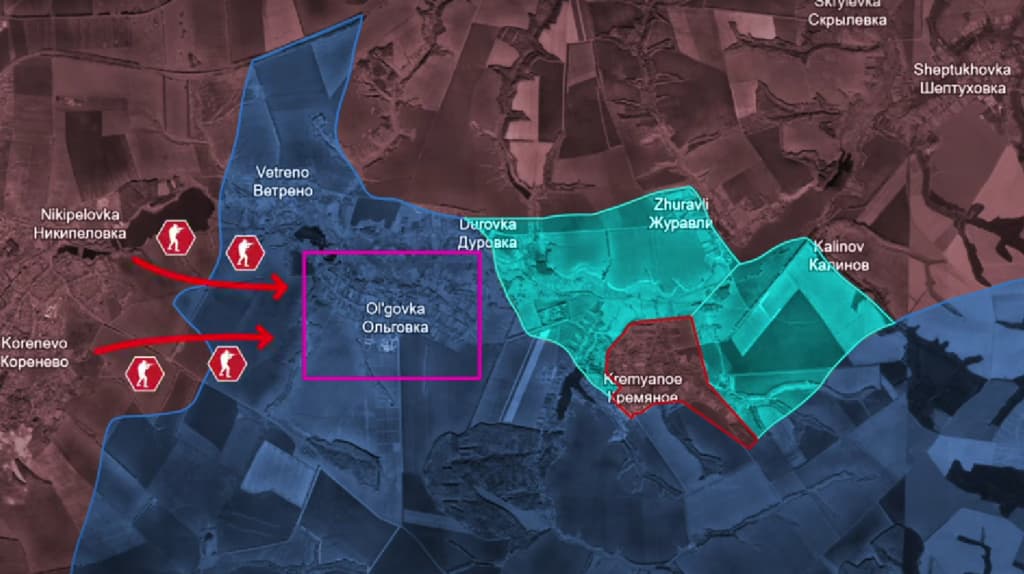
Facing growing danger for their encircled troops, Russian commanders have shifted their focus to Olgovka, seeking a lifeline. However, Ukrainian forces have fiercely resisted these efforts, determined to maintain the encirclement of Kremyanoe. The intense fighting highlights the high stakes, with both sides struggling to control this crucial position.

Despite holding the advantage, Ukrainian commanders have opted against a costly full-scale assault on Kremyanoe, favoring a containment strategy instead. By gradually tightening the siege, Ukrainian forces weaken Russian troops through attrition, limiting them to sporadic defensive actions. This calculated approach conserves Ukrainian resources while creating ambush opportunities to disrupt Russian resupply missions with precision.

Another encirclement near Malaya Loknya

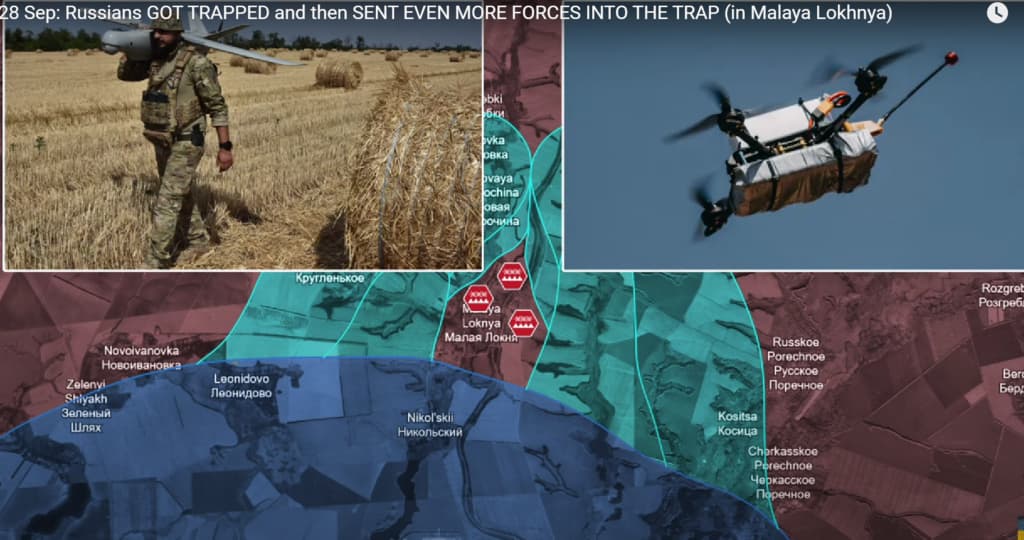
While Kremyanoe remains a focal point, Ukrainian forces are also encircling Malaya Loknya, north of Sudzha. Russian troops initially fortified a local women’s prison as a stronghold, but Ukrainian forces have systematically cut off all escape routes, mirroring their containment strategy seen in other areas of the front.

In a desperate bid, Russian commanders sent a relief team that briefly opened an escape route. However, Ukrainian forces quickly closed the gap, trapping the rescue team along with those they aimed to save, deepening the crisis.

Cut off from supplies and with Ukrainian drones dominating the skies, Russian troops in Malaya Loknya have been left isolated. Ukrainian drones have made resupply almost impossible, detecting and disrupting every attempt. With shifting battlefield priorities, Russian commanders have had to redeploy resources to counter a new Ukrainian offensive toward Glushkovo, leaving their forces in Malaya Loknya even more vulnerable and diminishing any chances of a breakout.

Ukrainian strategic patience

Ukrainian forces employ a patient containment strategy, focusing on ambushes and eroding Russian supply lines. Their superior drone capabilities have been crucial, allowing close monitoring of Russian movements and disrupting supply convoys.

This approach steadily diminishes the enemy’s combat capabilities while preserving Ukrainian resources. Ukrainian forces constantly pressure their isolated adversaries by preventing meaningful Russian counteroffensive.

Overall, these encirclements in Kursk Oblast demonstrate Ukrainian forces’ operational discipline and strategic foresight. Their containment and attrition tactics are proving effective as Russian troops grow more isolated. As Ukrainian forces close in on Kremyanoe and Malaya Loknya, the outcome of this encirclement appears increasingly inevitable.

In our regular frontline report, we pair up with the military blogger Reporting from Ukraine to keep you informed about what is happening on the battlefield in the Russo-Ukrainian war

11 Likes

Bump

1 Like

Thanks @Red_Black_Ops

Ukrainian drones target Russian ammo depot with Iranian missiles - watchdog

29.09.2024 13::02

image

In Russia’s Volgograd region, an ammunition depot that is believed to have stored Iranian ballistic missiles was highly likely attacked overnight Sunday.

This was announced on Telegram by the head of the Center for Countering disinformation at the National Security and Defense Council, Andriy Kovalenko, Ukrinform reports.

“Kotluban, Volgograd Region. The ammunition arsenal run by the Main Directorate of Missile and Artillery Weapons of Russia’s Defense Ministry was attacked,” he wrote.

According to Kovalenko, “a part of Iranian ballistic missiles was stored there, as well as the launchers for them.”

As reported earlier, explosions were reported in at least seven Russian regions overnight Sunday. Russia’s defense officials claimed 125 drones were intercepted and destroyed, including 67 over Volgograd region, 17 over Belgorod region, another 17 over Voronezh region, 18 over Rostov region, one each over the Bryansk, Kursk regions and Krasnodar Territory, and another three over the Sea of ​​Azov.

12 Likes

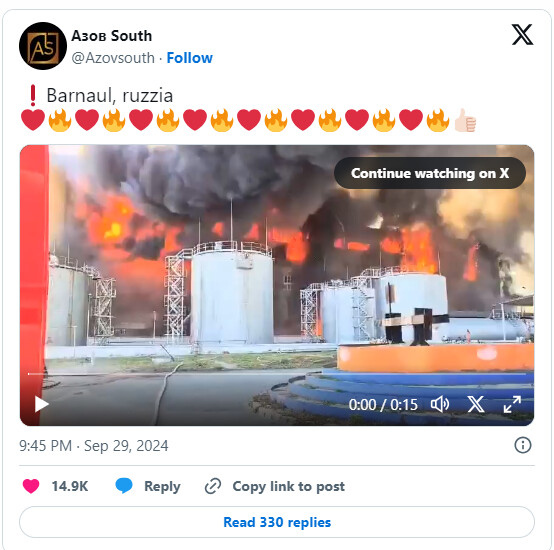
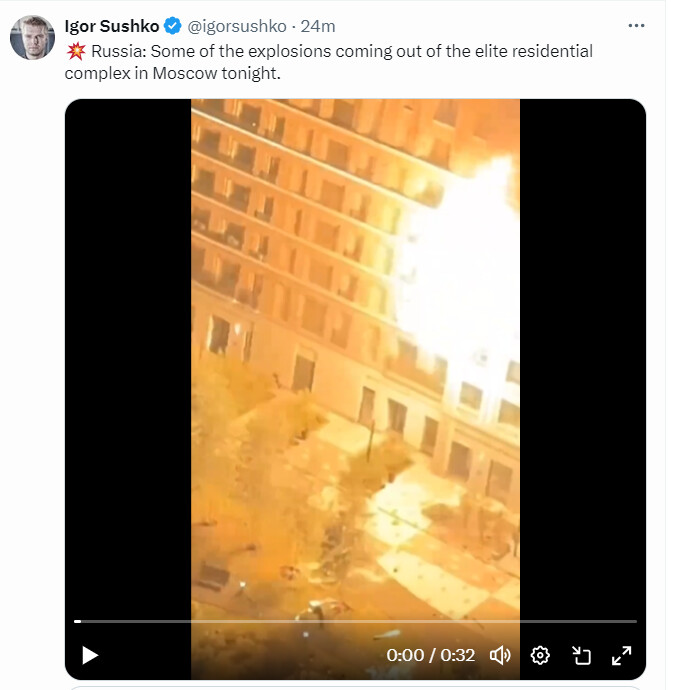
Smokers.

image

4 Likes

From the current info in the press, it’s difficult to determine how successful the overnight Ukrainian drone attack was at this stage.

Russia Engulfed by Fires as Drone Barrage Targets Air Bases, Military Towns

Published Sep 29, 2024 at 11:32 AM EDT

Multiple fires broke out in parts of Russia after an overnight drone barrage that appears to have targeted air bases and military towns.

The Ministry of Defense of Russia said it took down 125 Ukrainian drones in several regions during the night of September 28-29.

Some 67 “Ukrainian aircraft-type UAVs” (Unmanned Aerial Vehicles) were “intercepted and destroyed” over the Volgograd region, 17 over the Belgorod region, 17 over the Voronezh region, 18 over the Rostov region, one each over the Bryansk and Kursk regions, one over the Krasnodar Krai territory and three over the waters of the Sea of Azov, it said in a statement on Telegram.

In the Volgograd Region, at least three fires have been recorded near and around an ammunition depot in Kotluban, according to ASTRA, a Russia-Ukraine war reporting Telegram channel, which cited NASA’s fire monitoring system FIRMS.

https://x.com/Osinttechnical/status/1840245821561856230?ref_src=twsrc^tfw|twcamp^tweetembed|twterm^1840245821561856230|twgr^d2f4f72768bd04caf55c611fd52da1eda328cdbc|twcon^s1_c10&ref_url=https%3A%2F%2Fwww.newsweek.com%2Frussia-ukraine-drones-air-bases-1960907

It is unclear whether the facility has been hit but FIRMS shows several active fires in Kotluban over the last 24 hours.

Before this, ASTRA had already received reports from Volgograd residents who said there was a fire in the village of Sady Pridonya, around 30 kilometers from Kotluban.

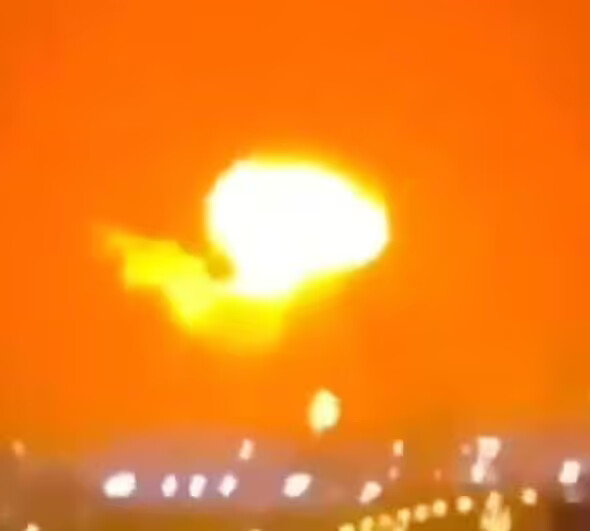
Several videos purporting to show a fire caused by the drone attack in Kotluban are circulating online but this footage is actually from a 2021 blaze caused by a container explosion on a ship in the port of Jebel Ali, in Dubai, ASTRA found. Ukrainian newspaper Strana also debunked the footage.

The Volgograd region’s governor, Andrey Ivanovich Bocharov, said blazes in the area were “dry grass fires caused by falling debris,” according to Strana, adding that “they were quickly extinguished by firefighting units” and there were “no casualties or damage to civilian or military facilities.”

image
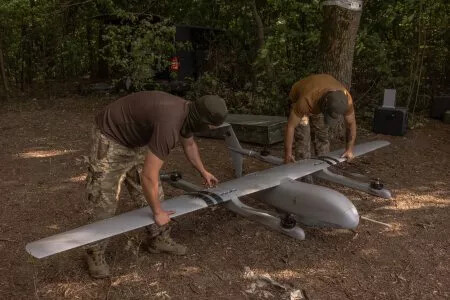
Ukrainian military drone operators assemble a Poseidon reconnaissance unmanned aerial vehicle on the border with Russia on August 11, 2024. Russia said it shot down multiple Ukrainian drones on the night of September 28-29. GETTY

Head of Kotluban, Igor Davydenko also said there were no casualties or damage in Sady Pridonya.

In the Rostov region, Millerovo air base was attacked, according to reports from military blogging channel @oko_gora, which said its analysis showed “the area adjacent to the airfield is burning” and ASTRA. FIRMS shows several active fires near the air base in the past 24 hours.

Rostov’s regional governor, Vasily Golubev, said: “there are no casualties or damage on the ground” in his region, according to ASTRA.

Millerovo, located around 20 miles from Russia’s border with Ukraine, was reportedly attacked by Ukrainian drones in July. It was hit but “without significant damage,” Russian military blogger, Rybar said at the time.

In Krasnodar Krai, there have been reports of explosions in the coastal military town of Yeysk, where a Russian Navy airfield is located, local Telegram groups seen by ASTRA said.

Newsweek has contacted the Russian and Ukrainian Defense Ministries for comment.

3 Likes

Russia burning as massive Ukrainian attack devastates airfield ‘killing Putin’s butcher’

Waves of drones hit multiple targets in Russia in the early hours of Sunday morning, causing extensive damage and sowing panic across the country.

16:40, Sun, Sep 29, 2024 | UPDATED: 16:46, Sun, Sep 29, 2024

image
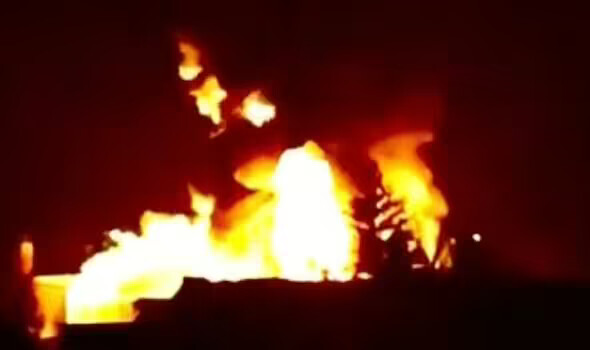
Russian military targets came under attack from Ukrainian drones.

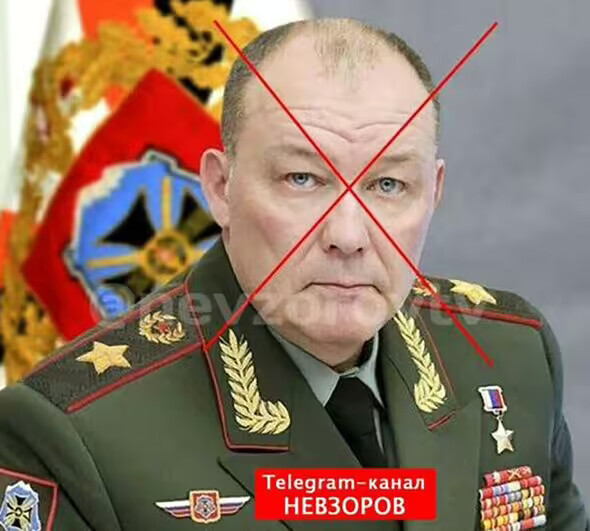
Ukraine launched a devastating drone attack on an airfield deep inside Russia, reportedly killing a notorious bloodthirsty General.

Waves of drones hit multiple targets in Russia in the early hours of Sunday morning, causing extensive damage and sowing panic across the country.

The Yeysk airfield in the Krasnodar region came under attack from UAVS, where lethal Kinzhal - or Dagger - missiles are suspected to be stored.

Unconfirmed reports claim that General Alexander Dvornikov, 63, was at the base when the attack happened and “was liquidated”.

Dvornikov acquired the nickname Butcher of Syria after indiscriminately bombing civilians there during the civil war.


Unconfirmed reports claim General Dvornikov was killed in an attack. (Image: East2West)

Mosques, markets, schools, hospitals and even farms and bread lines were targeted mercilessly by Russian planes.

The bombing campaign against civilians is widely considered to have turned the tide of the civil war in the favour of the Assad regime.

More recently, the General was appointed head of Russia’s army in Ukraine in 2022, before later being replaced.

Drones also reportedly struck an ammunition depot in Kotluban in the Volgograd region of Russia.


Ukrainian drones reportedly hit an ammunition depot storing Iranian missiles. (Image: East2West)

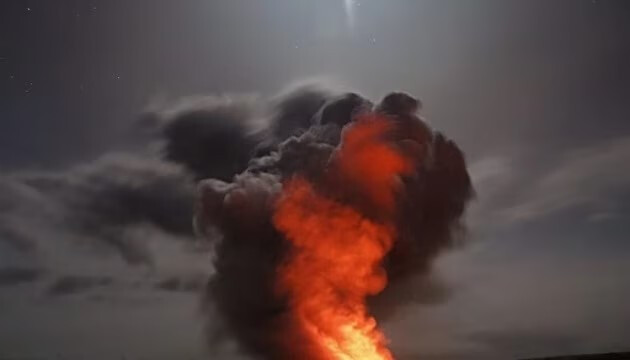
The strike caused a huge explosion, with video images showing a massive fireball rising skywards.

Reports citing Ukrainian intelligence sources claim the attack destroyed Iranian missile launchers and 45 tonnes of ammunition.

A trainload of Iranian missiles reportedly arrived here on the eve of the Ukrainian strike.

Fire was raging at the military site - some 250 miles from the frontline - hours after the attack.

The Millerovo military airfield in the Rostov region was also attacked by more than 20 drones.

NASA’s fire monitoring system showed fires burning near the airfield.

It was previously targeted in July 2024, when a hangar and fuel depot were destroyed.

6 Likes

BRICS : Saudi Arabia shakes Russia with its new oil strategy !

19h05 :black_small_square: 3 min read

Amid global economic volatility, Saudi Arabia has made a decision that could redefine energy and geopolitical balances. As the price of a barrel of oil reached $100, Riyadh chose to significantly increase its oil production, a maneuver aimed at driving down crude prices in international markets.

A Saudi strategy to reduce oil prices

Saudi Arabia, the new member of the BRICS and the world’s largest oil exporter, has announced a substantial increase in its production to put pressure on the price of a barrel, currently at $100. This strategy, described as a response to market instability, aims to ease inflation fears plaguing many global economies. According to official statements, Riyadh justifies this decision by the need to “maintain a balance in energy prices and support global economies.” This move also marks a departure from the current production-cutting policies adopted within OPEC+ and the BRICS to maintain both high prices and absolute control over global oil production.

The Saudi decision is all the more critical as the global economy faces a period of great uncertainty. Such an increase in supply could quickly lead to a drop in oil prices, directly affecting the revenues of other producing countries, notably Russia. For Moscow, whose oil revenues represent an essential part of the national budget, this new price drop could exacerbate the economic difficulties caused by Western sanctions, further reducing its ability to finance its operations in Ukraine.

Russia facing new economic pressure

Indeed, the increase in Saudi production and the subsequent drop in oil prices could be a severe blow to Russia, whose economy heavily depends on hydrocarbon exports. This potential drop in crude prices directly threatens Kremlin revenues, further weakening an economy already strained by Western economic sanctions. Thus, a prolonged drop in oil prices could reduce Russian tax revenues by billions of dollars, posing challenges for financing public expenditure and, in particular, the war in Ukraine.

Faced with this potential loss of income, Russia will need to turn to unconventional alternatives and solutions to maintain its capital flow.

The increase in Saudi oil production and the resulting drop in the price of a barrel are not without consequences for the Russian economy. Already weakened by sanctions and the war in Ukraine, Russia now faces a reduction in its oil revenues, which could further exacerbate its economic difficulties. However, it is hoped that this situation does not further heighten tensions within the BRICS group, to which both of these powerful oil producers belong.

7 Likes

That headline could have been a bit better. Iran suppling Ukraine now? :wink:

3 Likes

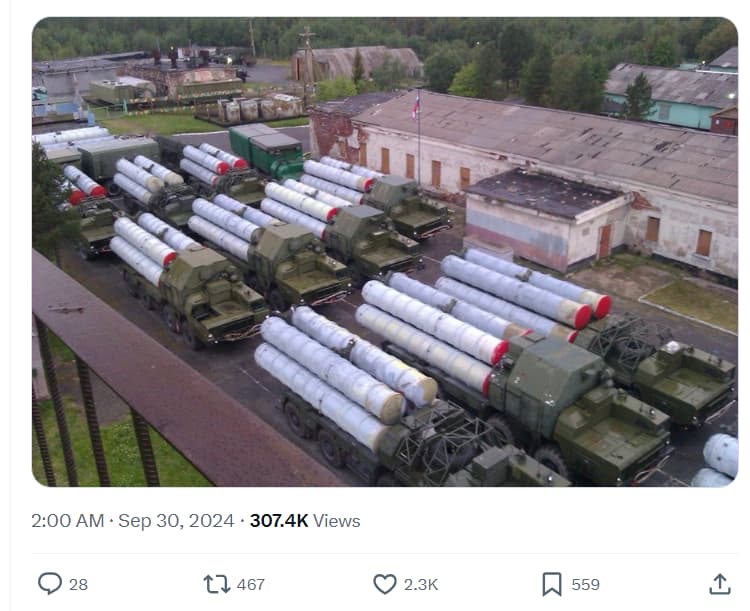
TL;DR: Not “What air defence doing?”, more “What air defence?”

image

Installations hosting inactive units are:

In Private Companies:

  • 502 Factory for Repair of Military-Technical Property.
  • 1015 Factory for Repair of Military-Technical Property.
  • 1019 Military Repair Plant.
  • Khabarovsk Radio Engineering Factory.

In Military Units:
Complex Storage Base (Omsk) - 1062nd Logistical Center
1488th Technical Base
1494th Technical Base
2227th Technical Base

Only the first truly hosts systems, the other ones are technical support units for active duty Moscow AD.

502 Factory.

@AS_22im already did checked this Factory. Most of the systems were already gone by Sept 2023.

1015 Factory.

Most of the equipment have been dismantled and the Factory was refurbishing S-300/S-400 missiles as of 2023.

1019 Factory.

One of the most interesting installations along with the next one. 2 S-300PT and 8 S-300PS/PM batteries are stored here.

Image

Khabarovsk Radio Engineering Factory.

The other big repair plant. 10 S-300PS/PM batteries are stored here.

Image

Switching to Military Units.

Omsk Complex Storage Base of the 1062nd Logistical Center. 2 S-300PT batteries are stored here.

Image

The Remaining 3 Technical Bases of Moscow Defence Rings.
Mostly Support Vehicles : Transporters, Generators, Masts.

Image
Image
Image

As a bonus :
25th Air Defence Forces Arsenal.
Storing Air Defence missiles for S-300/S-400 systems.
Unfortunately, no recent pictures after 2020.

Image

I asked for some Planet updated imagery of both plants to get status as of 2024. Nothing was moved from the Plants.

At the same time, @AS_22im have been tracking depleting of AD Units far away from the front.

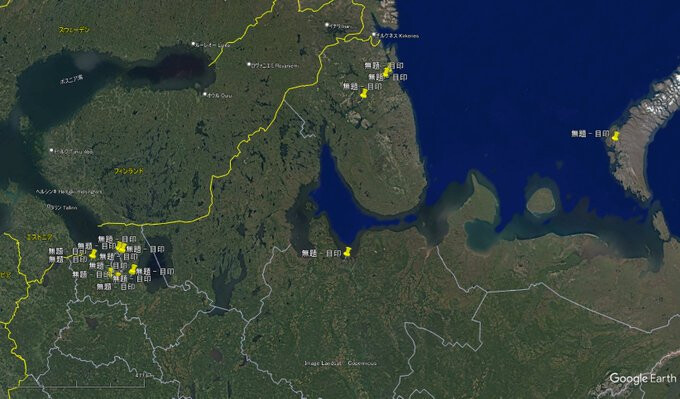
This detailed thread tells us that 105 TEL’s disappeared from AD positions in Eastern Russia.

Unroll available on Thread Reader

This other detailed thread tells us that 134 TEL’s disappeared from AD positions in Northern Russia.

image

This is the current count for Observed reserves. There is about 202 TEL’s in store for 22 batteries, along with their radars and command and control equipment.

Image

So what does it tells us ? That Russian Defence Industry cannot put back into service seemingly operational equipment (especially S-300PS/PM). Reasons might be diverse, lacks of spare, lack of qualified personnel, competing objectives with export market.

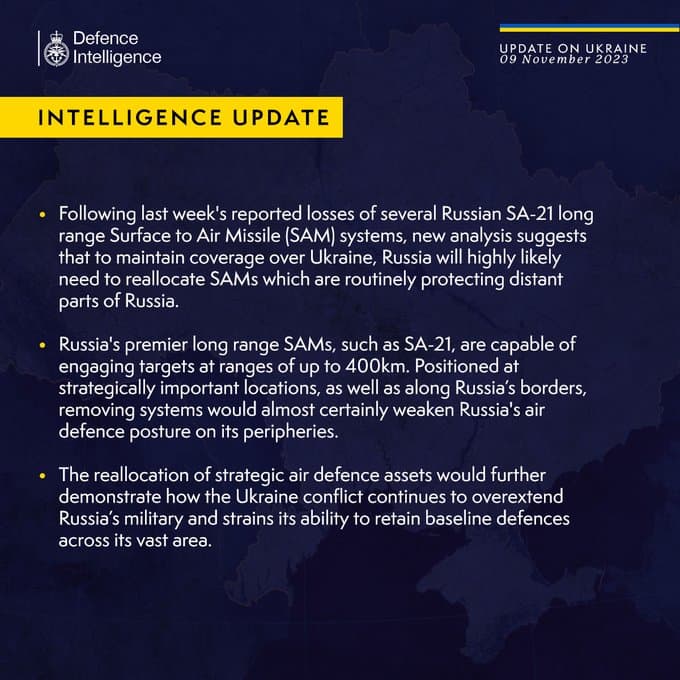
As of 2020, Russia had 57 S-400 batteries (with 456 TEL’s) in operational service. Current needs far outweigh what is available in reserves. The deficit has been ever growing as Russia has to defend against increasingly long range attacks. Defence Intelligence of UK have been forecasting this back in November 2023.
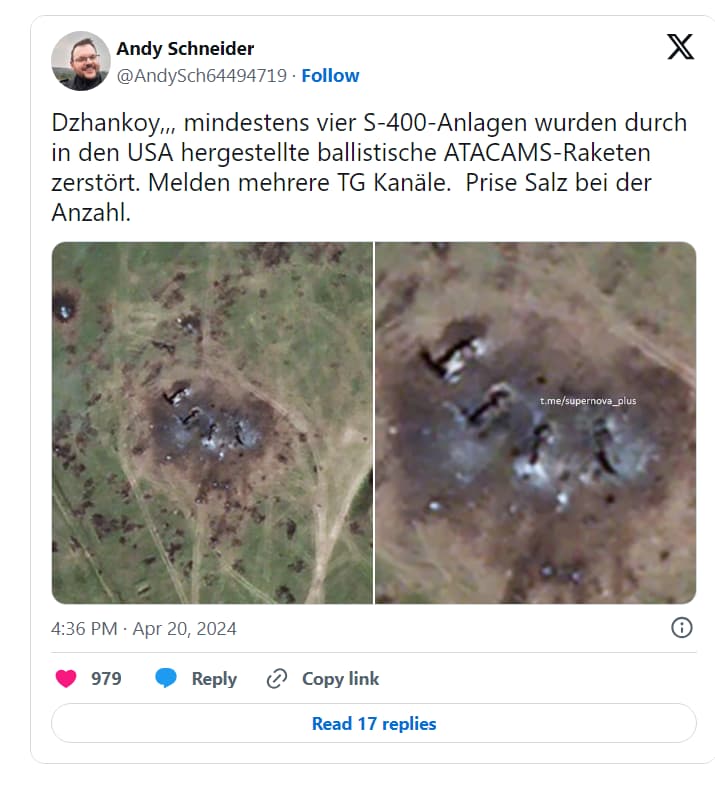
From currently available Ukraine MoD claims, at least 17 S-400 batteries have been affected by Ukrainian strikes, raids or other actions. It involves either radars, TEL’s or both.
This is a conservative estimate as a higher number could be impacted.

Finally what does it means ? That Ukraine can severely impact Russian Air Defence Forces and open up an Air Campaign once the degradation level met a critical point.

Special thanks to @AS_22im for its critical work in tracking AD site status. Thanks to @hizzo_jay for updated satellite imagery.

And thanks to @HighMarsed, @Jonpy99, @waffentraeger and @BAAService for all the support !

8 Likes

image

12 Likes

image

image

4 Likes

Bump

2 Likes

Thanks @Red_Black_Ops!

image

8 Likes

Очі та Жало: Вйо Eyes and Sting: Vyo/day5 (Eng Subs) - Magyar

3 Likes

Captain Jack will approve of this

2 Likes

Mobilized Armed Forces of Ukraine | Zelensky’s victory plan | New deliveries from the USA and Germany | Weekly Military Report (Eng subs) - Ruslan Leviev (Max Katz)

1 Like

Smokers? Or did one of the “elite” offend Putin?

image

image

3 Likes

image

image

9 Likes