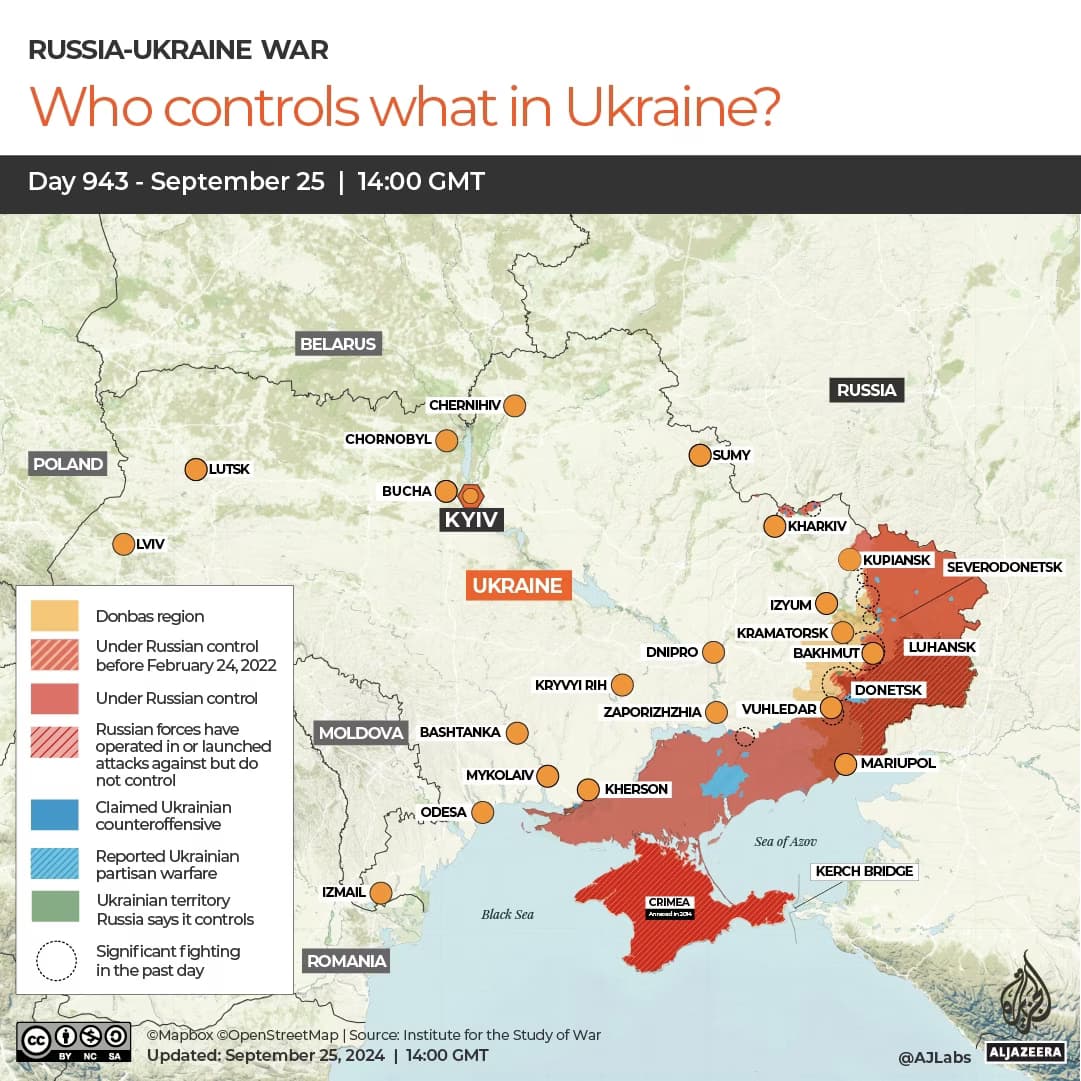
Russia invades Ukraine - 6 - from 7 August 2024

I suspect that these ‘goals’ Putin speaks of are much revised from those that were laid down over two and a half years ago.

[Putin Says Russia Will Achieve ‘All Goals Set’ in War Against Ukraine

2 hours ago


Russian President Vladimir Putin.kremlin.ru

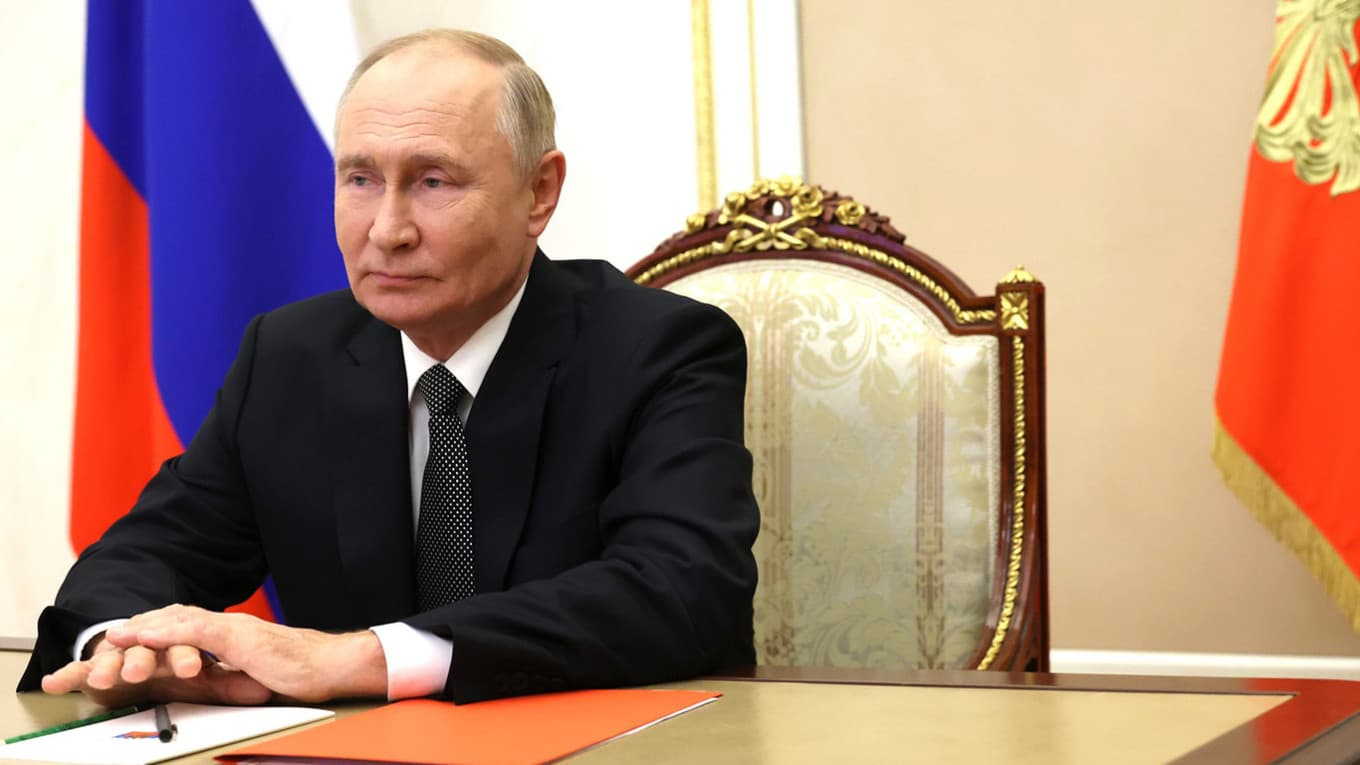
Russian President Vladimir Putin on Monday vowed that Moscow would achieve all the goals it has set for itself in the ongoing war against Ukraine.

“The truth is on our side. All goals set will be achieved,” Putin said in a video message released to mark the second anniversary of what Russia calls “Reunification Day” — when Moscow annexed four Ukrainian regions despite not having full control over them.

Months after the Kremlin leader ordered troops into Ukraine in February 2022, Russia annexed the regions of Lugansk, Donetsk, Zaporizhzhia and Kherson. The annexation followed a sham referendum held in those territories widely condemned by the international community.

In his address on Monday, Putin repeated his justification for launching the full-scale invasion of Ukraine as protecting Russian speakers against a so-called “neo-Nazi dictatorship” in Kyiv that aims to “cut them off forever from Russia, their historic homeland.”

He also slammed “Western elites” who “turned Ukraine into their colony, a military base aimed at Russia” and who fanned “hate, radical nationalism… hostility to everything Russian.”

“Today, we are fighting for a secure, prosperous future for our children and grandchildren,” he said.

1 Like

image

1 Like

Has Russia’s military improved enough to take on NATO?

Al Jazeera’s defence editor on why Russia’s army is ill-prepared for a direct conflict with NATO, a scenario Putin has warned of.


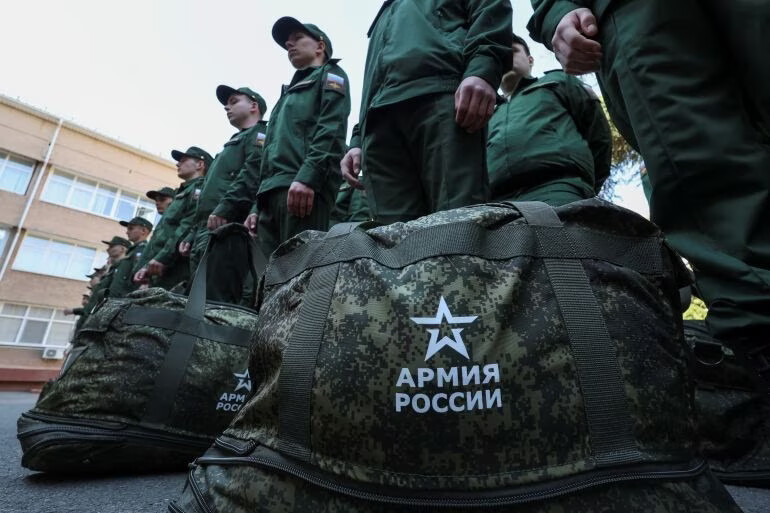
Russian conscripts called up for military service line up before their departure for garrisons as they gather at a recruitment centre in Simferopol, Crimea, April 25, 2023. The signs on the bags read: ‘Army of Russia’ [Alexey Pavlishak/Reuters]

30 Sep 2024

The war in Ukraine has thrown into bold relief the possibility of a future conflict between Russia and NATO.

Not since the Cold War have tensions been so high. Russia is deeply involved in a war that shows no sign of slowing down or stopping.

Russia has learnt and improved from its disastrous start to the invasion. But has it improved enough to be able to take on the largest military alliance in history?

Russia’s army

Russia’s ground forces have seen rapid expansion as a result of the war in Ukraine.

Quality has not kept pace as larger numbers have not offset poor training and huge equipment shortages. For Russia, the only path to a military victory is through attrition and the use of its larger armed forces to ground down the smaller Ukrainian army.

Moscow has slowly absorbed the costly lessons from the beginning of the war. Poor-quality troops are better suited for defence and the adroit use of extensive defensive lines in southern Ukraine’s flat, open countryside helped blunt Ukraine’s counteroffensive in 2023. Russia has learnt that only better-quality soldiers can be used for offensive action.


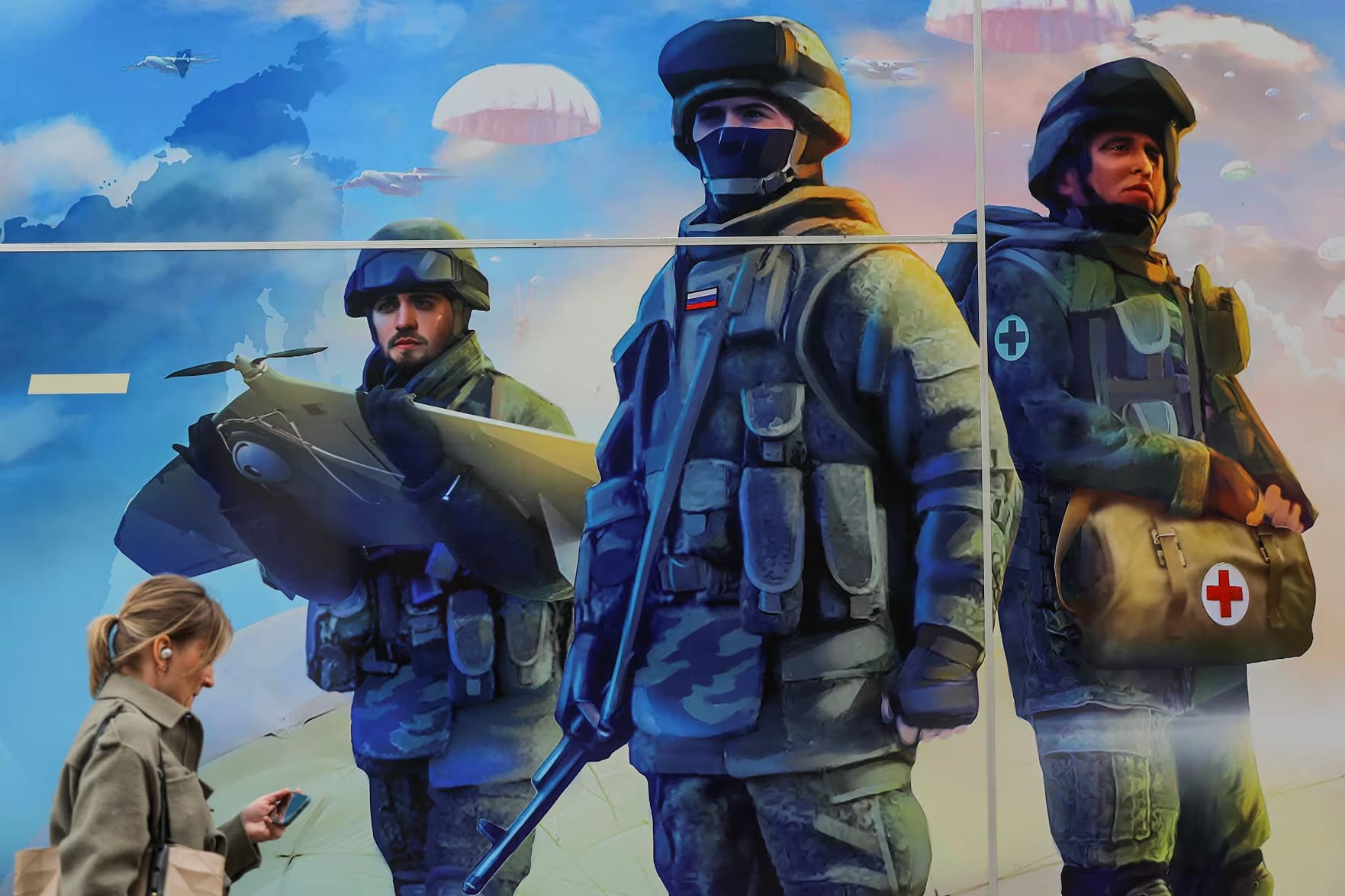
A pedestrian walks past a mobile recruitment point promoting service in the Russian army and inviting volunteers to sign a contract with the defence ministry, in a street in Moscow, Russia, May 3, 2023 [Evgenia Novozhenina/Reuters]

Elite units like the marine infantry, airborne troops known as VDV, and Russia’s Spetsnaz special forces now receive better equipment, longer training and better officer training.

They are also being dramatically expanded. The Marines for example are being increased from five brigades or about 20,000 soldiers to five divisions – meaning about 75,000 soldiers.

Russia’s military planners are moving rapidly away from the brigade as the basic military unit to the division.

The extremely high death rate has taught Russia that a brigade cannot sustain heavy losses and still be effective. A larger division can absorb these losses and fight until replacements arrive.

Tanks, tanks and more tanks

While tanks were almost written off as obsolete before the war, both Russia and Ukraine have leant heavily on tank forces in their battles for territory. But losses on both sides have been high as drones, mines and a lack of an effective air force take their toll.

Losses of Russian tanks have been especially high. According to recent figures from Kyiv, Moscow has lost more than 8,000 since the war began. Western estimates suggest that, with Moscow’s economy now on a war footing, it can manufacture 1,500 tanks a year, although a large portion of these is made up of refurbished older models.

Despite Russian efforts, the production of newer T-90 models remains slow. Frontline units are now expected to cross open ground in tanks that are 40 or 50 years old. Economic projections show this is unlikely to change for the near future.


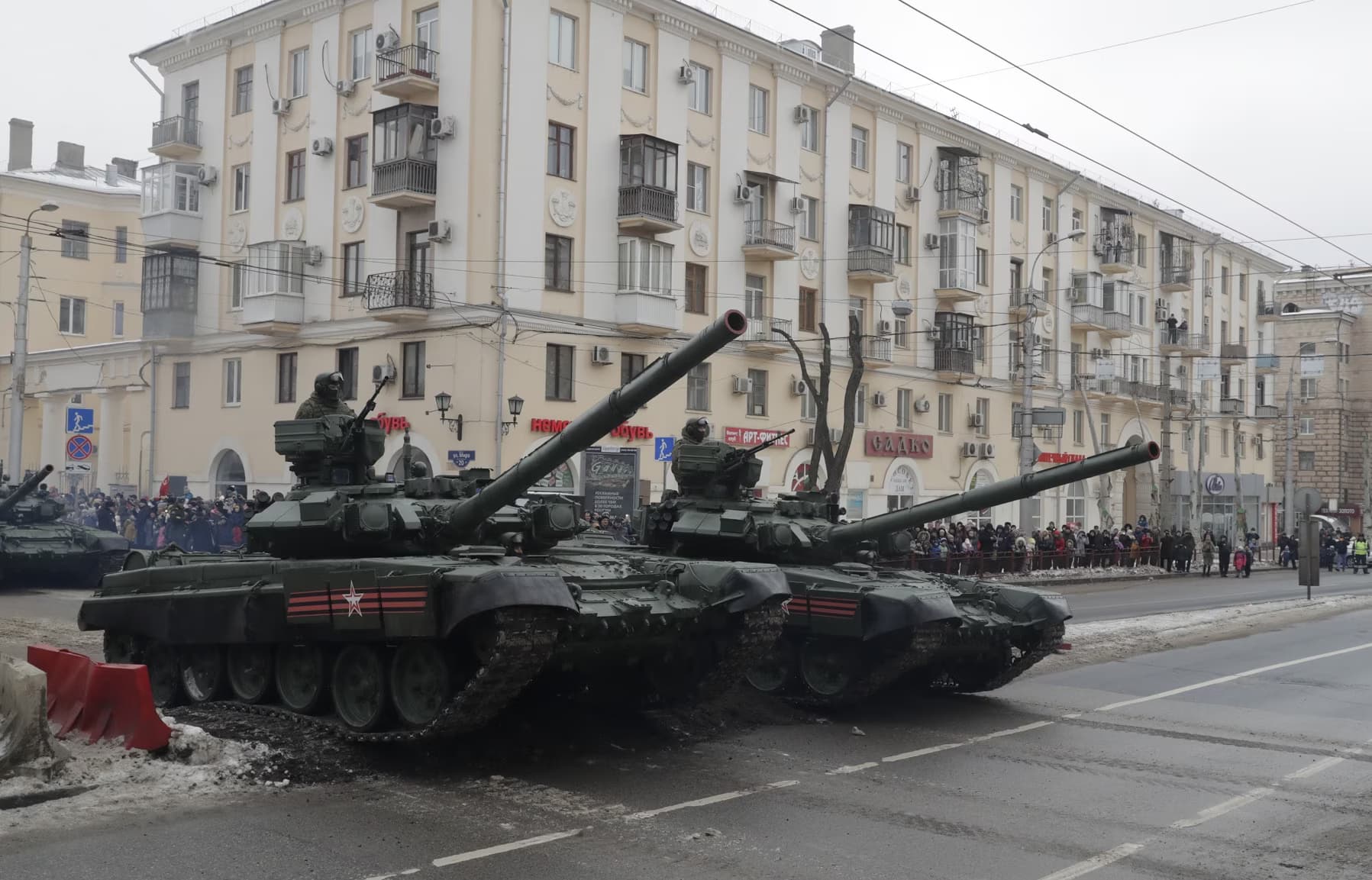
Russian T-90 tanks drive during the military parade to commemorate the 75th anniversary of the battle of Stalingrad in World War Two, in the city of Volgograd, Russia, February 2, 2018 [File: Tatyana Maleyeva/Reuters]

Innovations

Despite this obvious lack in military equipment, some advances have been made.

Russia has finally cottoned on to the fact that drones in all shapes and sizes are vital for 21st century conflict. The adoption of these new technologies has allowed Russian forces to spot Ukrainian military build-ups and attacks far earlier.

Artillery fire can now be adjusted in real-time with devastating consequences.

Russia’s electronic warfare units have been effective in jamming Ukrainian tactical communications networks and spoofing Ukrainian drones, denying Ukrainian officers the information they need to make quick decisions and hampering their offensive operations.

These electronic warfare units have gained experience and are more efficient than they were at the start of the conflict in 2022, giving Russian forces an edge in military operations on the ground. In the air, it’s a different story.


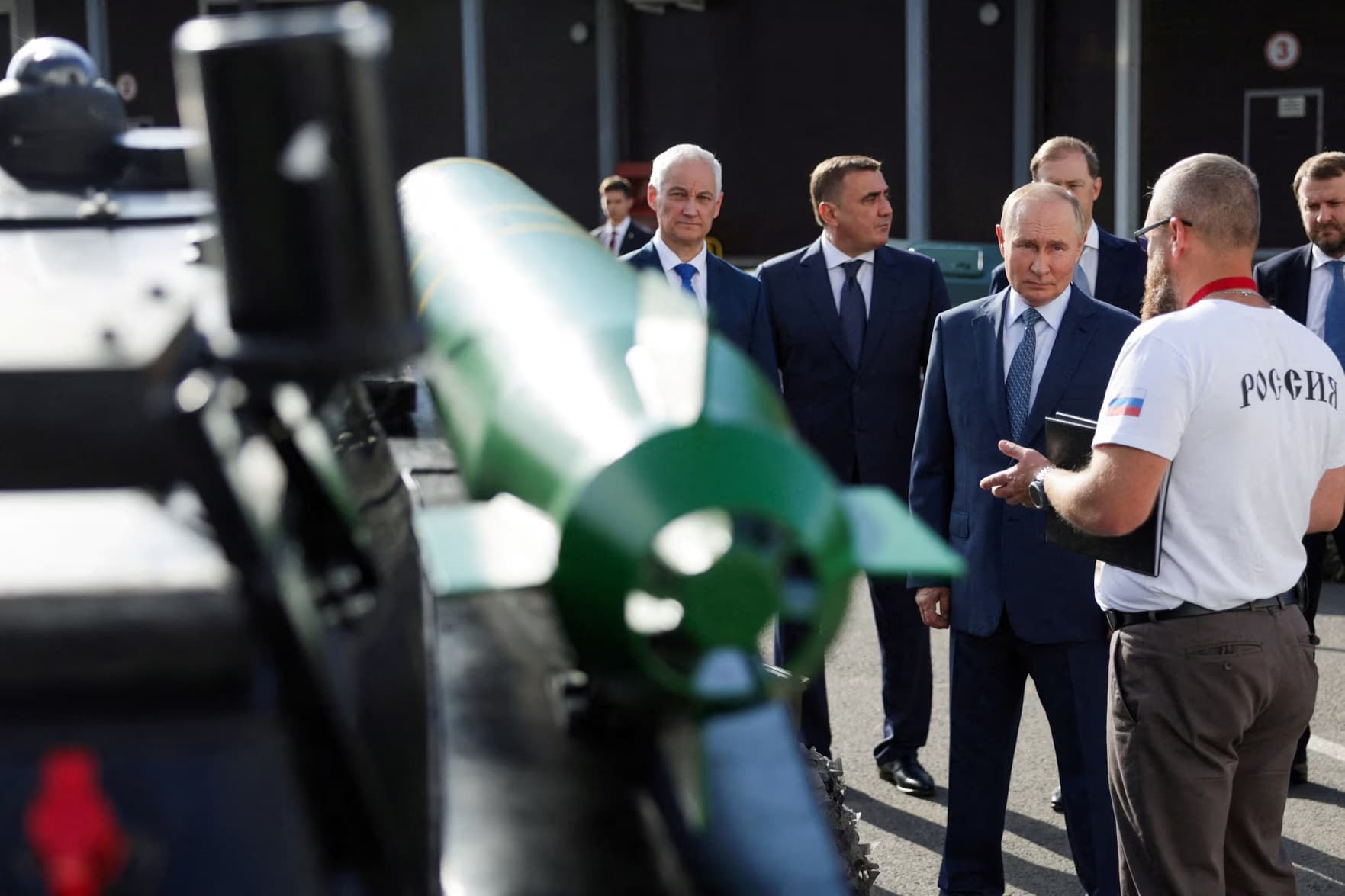
Russia’s President Vladimir Putin, accompanied by Defence Minister Andrei Belousov, Presidential Aide and State Council Secretary Alexei Dyumin, First Deputy Prime Minister Denis Manturov and Deputy Head of the Russian Presidential Administration Maxim Oreshkin, visit a drone production facility of the Special Technology Centre in Saint Petersburg, Russia, September 19, 2024 [Sputnik/Gavriil Grigorov/Pool via Reuters]

Russia’s weak air force

Perhaps the weakest of Russia’s military branches is its air force.

Its consistently poor performance is matched by poor doctrine and equipment losses that have been hard to replace. Unlike Western militaries, Russia’s air force isn’t trained for strategic air campaigns, focusing solely on supporting ground units where needed.

Despite being at least four times the size of Ukraine’s, it was unable to destroy airfields, ammunition dumps, and radar sites in the opening hours of the invasion.

This is very different to Western air forces which, while also supporting ground units, are able to comprehensively blind its enemy, destroying key targets and large formations on the ground. They can cause strategic damage in the opening minutes of any conflict, enabling their forces to advance relatively unhindered.

In an effort to offset this weakness, long-range missiles have been used to great effect, penetrating deep into Ukraine despite Kyiv’s comprehensive air defences.

Iranian drones used as cheap cruise missiles are launched in barrages, soaking up and threatening to overwhelm Ukrainian defences

The air force has leveraged its stand-off capabilities and launches glide bombs, often from within Russia that are accurate down to a few metres, their large warheads easily destroying Ukrainian targets.

Russia’s bomber force regularly takes off from air bases far from the front lines, launching missiles that form part of the ongoing aerial onslaught on Ukraine.

Russia’s navy

The war has touched every branch of Russia’s military and its navy is no exception.

Its Black Sea fleet has seen its ships and submarines steadily sunk, its headquarters destroyed and its commanders killed.

Despite this, Russia’s navy remains a potent force, safe in its northern and eastern ports, out of the range of Ukrainian missiles and drones. Its submarine force is vast and forms a potent part of Russia’s nuclear deterrent.

More units are being built, fielding new and advanced weapons systems.

The naval infantry force is being increased five-fold and more advanced surface ships are being built, although Russia lacks any real functioning aircraft carrier and therefore has limited abilities to project combat power.

The war economy and friends

Russia’s defence budget has been increasing year on year since the invasion and estimates project that in 2025, it will effectively double its pre-war level to $142bn.

While this allows its military-industrial complex to churn out tanks and infantry fighting vehicles, missiles, ammunition and artillery pieces, it still cannot keep up with battlefield losses.

Western sanctions have had a cumulative effect on Russia’s war economy, as the chips needed for high-tech warfare have become increasingly hard to come by. Modern weapons, especially missiles, are complex and can’t be churned out like artillery shells.

The war in Ukraine showed both Russia and the world that anyone fighting an industrial-level war in the future will need vast amounts of missiles that are accurate, cheap and deadly. For that, Russia has turned to its allies.

Iran has helped extensively with the production of long-range attack drones like the Shahed-136, and large donations of tactical missiles, like the Fath 360, to be used against the Ukrainian military.

China, while holding off on sending actual weapons systems to Russia, has been sending large quantities of salt-petre, a white powder used in the manufacture of explosives, and advanced electronic chip sets, offsetting gaps in Russian production of advanced weaponry

North Korea has been allegedly sending vast amounts of artillery ammunition and short-range missiles. There are reports Pyongyang may start to send infantry fighting vehicles and artillery systems, although there have been significant issues with quality control. North Korean weapons have a notorious reputation in Ukraine for failing on the battlefield.

The effect of the war on the Russian military has been profound. While it has learnt from its many mistakes, its armed forces have been exposed to the world as being barely competent at best. Its economy is struggling to keep up with losses even though it receives help from its allies.

There have been some improvements. Its officer corps are now more experienced. The way units are organised has been modernised and military planners now play to Russia’s strengths of defence in depth, long-range attack, artillery barrages and its army’s sheer force of numbers, in order to steadily turn the tide in Donetsk.

NATO on the horizon

Despite these minor improvements, Russia is in no shape to take on NATO.

The Alliance has been revitalised by Russia’s invasion in 2022, and defence spending of its members has soared.

Production of arms in Europe and the United States has spiked dramatically, as the war has given Western military planners an idea of the amounts of weapons NATO forces will need in the event of a major war.

The quality of NATO’s troops is far better in terms of training and equipment.

Differences in command and control between countries have been ironed out after decades of military cooperation and exercises. Western air forces focus on a campaign of complex air operations designed to destroy an opponent’s ability to see, move, produce and sustain itself.

Combined with the notable difference in the quality of Western weapons, all this adds up to the conclusion that NATO would quickly prevail in any conventional war against Russia, a danger being that a series of defeats might force Moscow to use tactical nuclear weapons or face total defeat.

However, a pause in the fighting, brought about by a peace deal, would allow Russia to re-arm.

It will likely keep its defence budget high, having reached its peak of 6 percent of its overall budget spent on defence. Its armed forces will be built up, tank numbers replenished, its doctrine tweaked.

The danger here is one of self-delusion.

It is unlikely President Vladimir Putin would have ordered the invasion of Ukraine had he known just how poorly the Russian military was going to perform. He believed, as did many Western observers, that the Russian armed forces had been modernised, better equipped and now had the ability to win in any industrial-level war, certainly against the inferior armed forces of Ukraine.

He was wrong then, but with a pause in the fighting, the modernisation and re-equipping of his armed forces, it’s possible he may make the same mistake again in the near future, this time against a NATO member. Hubris is a dangerous friend.
2 Likes

Nothing new here, just more Russian inhumane bastardry.

Graphic Video Shows Russians Shelling Their Own Surrendering Troops

Having rebuffed a Russian assault on its positions on Saturday, Ukraine’s 33rd Separate Mechanized Brigade posted footage showing how seven Russian fighters were fired on by their own artillery.

September 30, 2024, 8:04 am

image
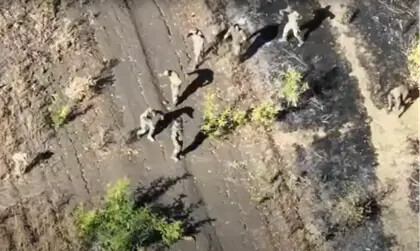
Screenshot from Ukraine’s 33rd Separate Mechanized Brigade of Russian soldiers during their surrender after the Sept. 28 failed assault near Kostiantynivka

On Saturday, Sept. 28, Russian forces launched a major assault using tanks and armored vehicles against Ukraine’s 33rd Separate Mechanized Brigade near the village of Kostiantynivka in the Donetsk region. The attack was halted after the lead elements of the column struck a minefield and were then hit by follow-up strikes by the Brigade’s first-person view (FPV) kamikaze drones, according to statements by Kyiv’s Military Center on Sunday.

Although the main assault was stopped in its tracks it seems that a number of Russian infantry disembarked and took cover in a tree line close to the 33rd’s position, apparently preparing to continue the assault on foot. However, having suffered significant losses and faced with the likelihood of suffering further casualties, seven Russian soldiers decided to surrender.

The soldiers abandoned their weapons and came out of the wooded areas with their hands raised. The Ukrainians dispatched a drone to lead them to the positions occupied by the Ukrainian military defenders.

However, as the Ukrainian military observed the surrendering troops as they walked along a dusty track viewed through the drone’s camera Russian artillery began firing on the soldiers. The first round hit the rear of the line of retreating troops and the rest threw themselves to the floor before getting up and starting to run. As they did a further two rounds struck the group undoubtedly killing or wounding all but one who continued to run towards the 33rd’s position.

The whole incident including the original assault, the attempted surrender of Russia’s military personnel and the artillery strike was captured on video and posted on the Brigade’s Telegram channel.

This is by no means the only instance of Russia’s forces firing on their own personnel after Moscow reintroduced the concept of so-called barrier troops intended to stop retreat.

The most recent report came from the Kursk region following Ukraine’s August incursion. Russian President Vladimir Putin authorized the formation of the so-called “BARS-Kursk” special volunteer unit intended to “ensure security” and “maintain law and order” in the region. According to a number of reports from the region the volunteers were used to open fire on Russian troops attempting to withdraw from the area ahead of the advancing Armed Forces of Ukraine.

2 Likes

Counterattacking In Kursk, Russian Tanks Got Stuck In Russia’s Own Anti-Tank Traps

Ukrainian drones targeted the trapped Russian troops.

Updated Sep 29, 2024, 09:32pm EDT


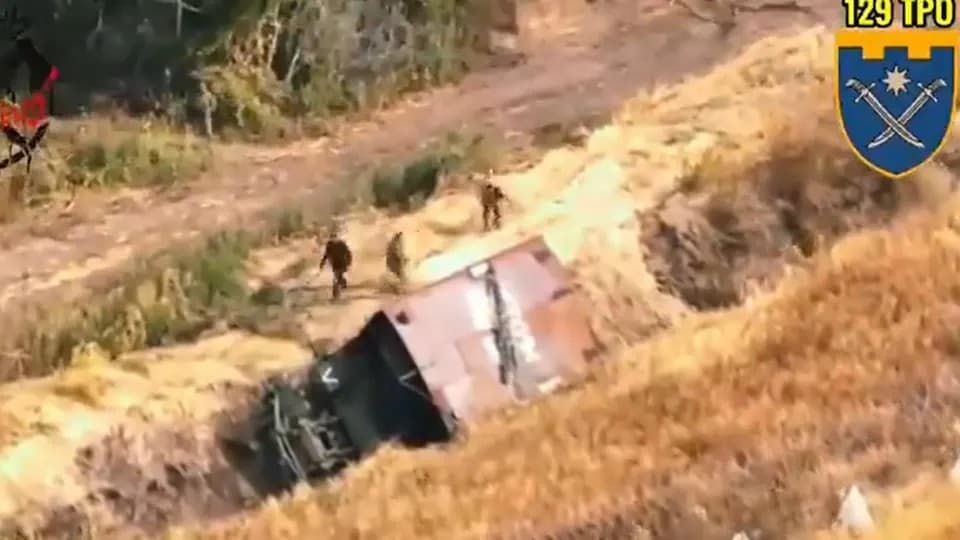
A Russian vehicle stuck in an anti-tank trench outside Plekhovo.

129th Territorial Defense Brigade capture

A powerful Russian force, possibly from the 15th Pyatnashka Brigade, counterattacked the Ukrainian salient in Russia’s Kursk Oblast on or just before Sunday.

The attack, which targeted the Ukrainian-held village of Plekhovo on the southern edge of the salient, didn’t just fail—it failed in the most ironic way possible. The Russian column got stuck in anti-tank traps—a trench and a line of concrete obstacles—that the Russians had built prior to the Ukrainian invasion of Kursk in early August.

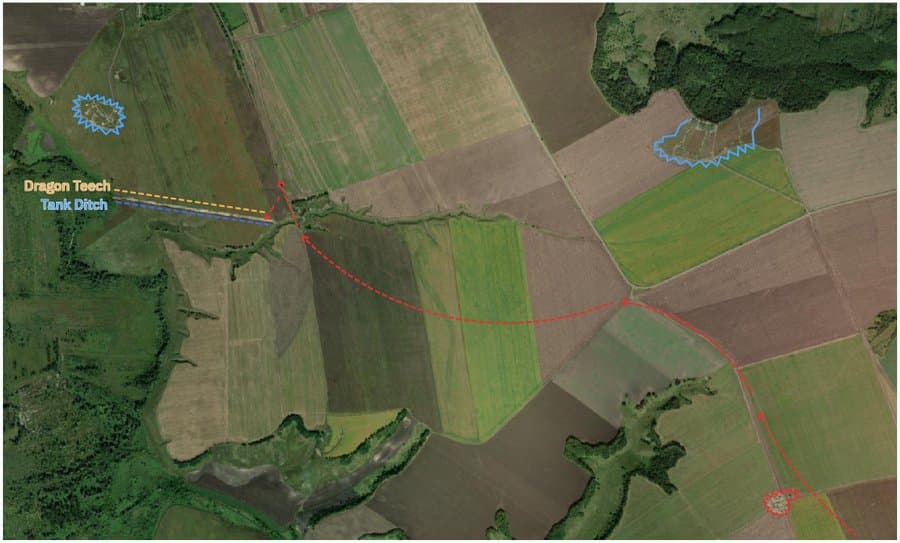
There are two main Russian-built defensive structures outside Plekhovo—the anti-tank traps and a nearby infantry trench complex. The attacking Russians were struggling to get through the anti-tank traps when the Ukrainian 129th Territorial Defense Brigade launched a wave of explosive drones.

"Our soldiers taught a lesson to the Russian occupiers and their equipment, burned dozens of armored vehicles and liquidated the enemy’s personnel,” Ukrainian war correspondent Yuriy Butusov wrote.

https://twitter.com/i/status/1840483802193232382

the main issue Russia has here is that their own fortification belt was very well built, with 360 defense in mind.
from the footage, it looks like they got delayed in the tank ditch area and never got near the two main strongholds in this area

The Russian-made defenses that helped foil that recent Russian assault could’ve been a serious obstacle to the Ukrainian invasion—but weren’t. According to captured Russian intelligence, the defenses outside Plekhovo were garrisoned by several platoons and at least one company, altogether with potentially several hundreds troops.

But the Russian troops in Kursk were caught off guard by the surprise Ukrainian attack on Aug. 6—and couldn’t bring their significant firepower, including nearly 200 artillery pieces, to bear before the fast-moving Ukrainian mechanized troops were upon them.

So the anti-tank traps and circular infantry trenches became Ukrainian assets. And unlike the previous Russian occupants, the new occupants from the 129th Territorial Defense Brigade fully expected a counterattack—and were prepared to take advantage of the well-made defenses.

It’s credit to the Russian engineers who built the defenses outside Plekhovo that these defenses worked as advertised, and slowed an enemy assault long enough for the local defenders to deploy their best firepower. That their comrades built effective anti-tank traps is surely cold comfort to the Russian troops who ultimately got caught in the trap, however.

7 Likes

Bump

3 Likes

Won’t happen without the US involved.

The smart move if Trump gets up would be for the key weapons manufacturers to stake The Donald in, give him some shares and promise him a non executive seat on the board when he finishes up.

Otherwise he’s just going to act in his own interests.

4 Likes

War update: 153 clashes along frontline, hostilities most intense in Pokrovsk, Kurakhove axes

30.09.2024 10:23

image

A total of 153 combat engagements have been reported from Ukrainian battlefields over the past day, with the developments being most tense in the Pokrovsk direction.

That’s according to the General Staff of Ukraine’s Armed Forces, Ukrinform reports.

“In the past 24 hours, 153 combat clashes were recorded. The hottest situation was in the Pokrovsk direction while the enemy was also active in the Kurakhove axis,” the report says.

Yesterday the Russians hit Ukraine’s defense positions and populated areas with a missile and launched 88 airstrikes, dropping 146 glide bombs. In addition, more than 4,400 artillery and mortar munitions were fired were fired, including 141 involving jet artillery.

Ukraine’s Air Force, missile and artillery units launched 14 strikes on Russian manpower clusters and hit two air defense systems and an e-warfare system.

Kharkiv axis: three skirmishes took place near Vovchansk.

Kupiansk axis: 13 battles were fought as Ukraine’s defense forces repelled enemy assaults near Vyshneve, Kucherivka, Kruhliakivka, Novo-osynove, and Lozova.

Lyman axis: 12 combat clashes were reported as the Russians attacked near Makiivka, Zarichne, Bilohorivka, Nevske, as well as in the area of ​​Serebriansky forest.

Siversk axis: a single battle was reported near Verkhniokamianske.

Read also: Ukraine downs Russian missile, 67 kamikaze drones overnight Monday

Kramatorsk axis: eight skirmishes took place as Ukrainian defenders repelled Russian assaults near Bila Hora and Chasiv Yar.

Toretsk axis: 11 battles were recorded near Shcherbynivka, Toretsk, and Nelypivka.

Pokrovsk axis: Ukraine’s defenders repelled 28 assaults in the areas of Vozdvyzhenka, Myroliubivka, Novotoretske, Mykolaivka, Lysivka, Selydove, Zelene Pole, Krutyi Yar, and Zhuravka. The major focus of Russian attacks was near Selydove.

Kurakhove axis: Ukraine held back 25 Russian attacks near Tsukuryne, Oleksandropil, Heorhiivka, Bohoiavlenka, Katerynivka, and Kostiantynivka.

Vremivka axis: Russian invaders went for 17 offensive attempts near Vuhledar, Bohoiavlenka, Katerynivka and Yelyzavetivka.

Orikhiv axis: three skirmishes were reported as Ukrainian defenders repelled enemy assaults near Novodanylivka.

Huliaipole and Prydniprovia axis: the situation has undergone no significant changes.

Volyn and Polissia axes: no signs of enemy offensive groupings being formed were spotted in these areas. On the border with Russia in Chernihiv and Sumy regions, the enemy actively employs guided aerial bombs and attack UAVs, as well as mortars and artillery when attacking Ukrainian settlements.

The General Staff notes that Russia also launches glide bombs in Kursk region, where the Ukrainian Armed Forces are conducting a raid. According to reports, the enemy launched 21 airstrikes in the past day, using 30 KABs. At the same time, Ukrainian forces continue inflicting significant losses on enemy manpower and equipment, exhausting the Russians along the entire line of contact.

As reported earlier, Russia’s war casualty toll has reached an estimated 653,060, including 1,250 killed or wounded in the past day alone.

2 Likes

Denmark Unlocks $194 Mn to Arm Ukraine

The weapons and equipment will be produced in Ukraine but financed by Denmark and frozen Russian assets, the Danish defence ministry said in a statement.

by AFP | September 30, 2024, 8:30 am

image
Ukrainian soldiers take part in a casualty simulation training excercise operated by Britain’s armed forces, as part of the Interflex programme, in southern England, on August 22, 2024. (Photo by Justin TALLIS / AFP)

Denmark on Sunday said it was unlocking 1.3 billion kroner ($194 million) to help Ukraine bolster its under-pressure arsenal against Russia’s invasion.

The weapons and equipment will be produced in Ukraine but financed by Denmark and frozen Russian assets, the Danish defence ministry said in a statement.

The Scandinavian country, a steadfast backer of Ukraine since the war broke out in 2022, also announced the creation of a joint defence hub in Kyiv designed to help develop of new partnerships.

“Wars are not only won on the battlefield, but also in industry,” Trade and Industry Minister Morten Bodskov said in a statement.

In February, Denmark sealed a 10-year security agreement with Ukraine, following similar deals by Germany, Britain and France.

The Scandinavian country, a steadfast backer of Ukraine since the war broke out in 2022, also announced the creation of a joint defence hub in Kyiv designed to help develop of new partnerships.

“Wars are not only won on the battlefield, but also in industry,” Trade and Industry Minister Morten Bodskov said in a statement.

In February, Denmark sealed a 10-year security agreement with Ukraine, following similar deals by Germany, Britain and France.

6 Likes

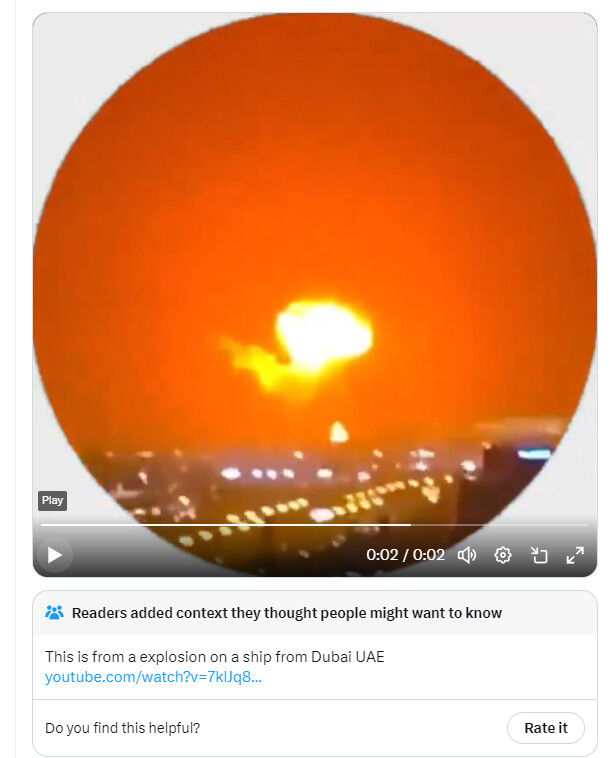
maybe, there are many differences in those pics?

1 Like

Muskova spent many hours being berated by his inevstors that night, poor kent

1 Like

The original post is a video, the screenshot posted was just at a different point in the video to the other screenshots. The person who posted it on twitter reversed the video as well, assume it was to try to confuse people.

I just did a screenshot below at a point that was a closer match:

3 Likes

A Few Long-Range Strikes by Ukraine Could Shift Tide of War: ISW

September 30, 2024, 6:06 am


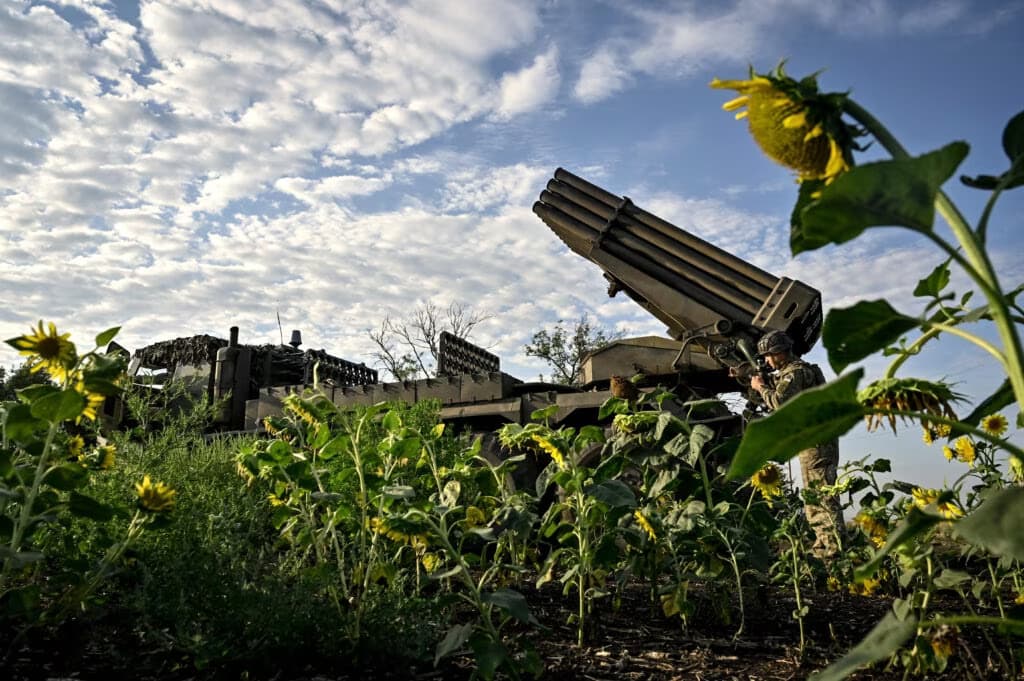
Ukraine’s RM-70 multiple rocket launcher at a firing position in Donetsk region. Photo: Dmytro Smolienko/AFP

Ukraine’s ability to launch long-range attacks on Russia is so effective that even a few successful strikes could alter the course of the war, an analysis by the Institute for the Study of War (ISW) has claimed.

In its recent assessment of the ongoing Russia-Ukraine conflict, the American think tank noted that successful long-range strikes deep inside Russia would compel invading forces to reposition significant assets outside the range of Western-supplied weapons.

This could also mean that strategic enemy assets would be away from the frontline, further complicating Russian military logistics.

The ISW cited a series of Ukrainian strikes using US-made HIMARS rockets in 2022, which “prompted Russian forces to disperse ammunition storage facilities and degraded the efficiency of Russian logistics.”

A White House national security advisor previously downplayed the effectiveness of some long-range weapons, arguing they have had less impact because Russia likely moved its most immediate threats beyond their range.

Attempting to Influence Western Debate

Discussions are ongoing regarding whether to grant Kyiv greater freedom to use Western-provided weapons.

While some countries have expressed their support, the US remains hesitant due to concerns of war escalation.

The ISW reported that Russian authorities are now trying to engage in a “significant rhetorical effort” to sway these debates unfavorably for Ukraine.

“This Russian effort suggests a deep concern with the operational pressures that such strikes into Russia would generate on Russian offensive operations in Ukraine,” the report noted.

Earlier this month, Russian President Vladimir Putin warned that any long-strike strike into Russian territory using Western weapons would be viewed as direct involvement in the conflict.

It would also force Moscow to make “appropriate decisions” about the countries that supplied the weapons, he said.

Associated Risks

US intelligence agencies recently pointed out that granting Ukraine’s request presents a high-stakes decision with uncertain outcomes.

Such an action could reportedly provoke Moscow to retaliate with greater force against the US and its allies.

They said these reasons may be affecting President Joe Biden ’s reluctance to give the greenlight to Ukraine.

5 Likes

Russia targets 11 Ukrainian regions as it steps up its drone attacks

Updated 7:03 PM AWST, September 30, 2024

https://apnews.com/video/ukraine-war-and-unrest-d15964fd4d1d458999f21ff17c471dbb

KYIV, Ukraine (AP) — Russia fired missiles and drones at 11 regions of Ukraine, the Ukrainian air force said Monday, in a 33rd consecutive night of aerial attacks behind the front line and set a new monthly record of drone barrages.

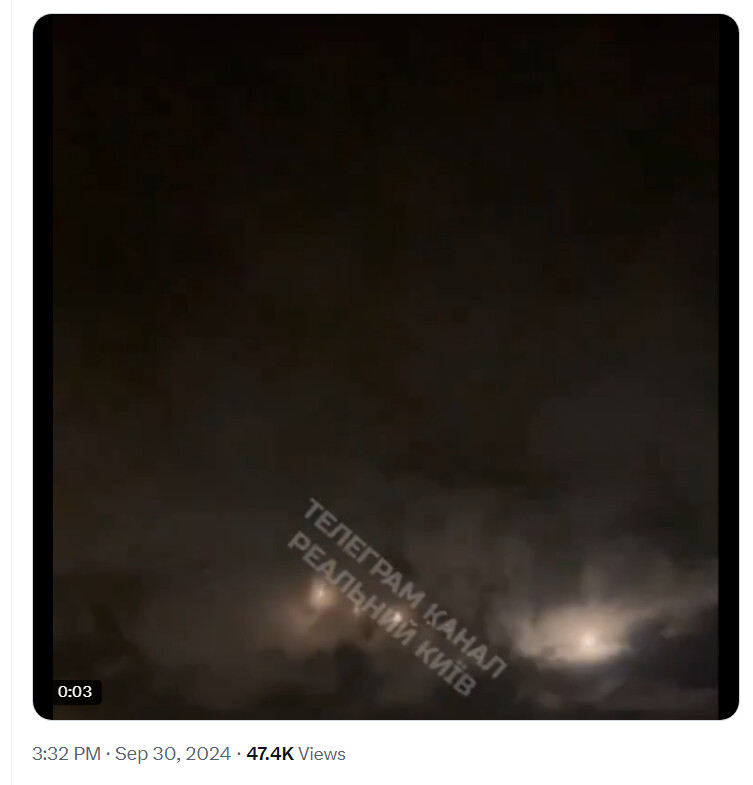
In Kyiv, multiple explosions and machine gun fire could be heard throughout the night as the Ukrainian capital’s air defenses fought off a drone attack for five hours.

No casualties were reported in Kyiv or elsewhere, though a “critical infrastructure object” caught fire in the southern Mykolaiv region, Gov. Vitalii Kim said, without elaborating.

Russia has increasingly deployed Shahed drones, rather than more expensive missiles, in its aerial bombardment of Ukrainian cities since its full-scale invasion of its neighbor in February 2022.

It launched more than 1,300 Shahed drones at Ukraine in September alone — the highest number of drone attacks in a single month since the war began.

Ukraine, too, has developed a new generation of drones for the battlefield and for long-range strikes deep inside Russia. More than 100 Ukrainian drones were shot down over Russia on Sunday, Russian officials said.

https://apnews.com/article/russia-ukraine-drones-missiles-attack-kyiv-b971c84a5a303f7d6849de0b303c8244

2 Likes

Run Ivan, run.

Putin signs decree to hold autumn conscription and call up 133,000 Russians

MONDAY, 30 SEPTEMBER 2024, 11:53

image

Russian leader Vladimir Putin has signed a decree regarding an autumn conscription campaign to be held from 1 October to 31 December. It is planned to call up 133,000 people for military service.

Source: Interfax, a Kremlin-aligned Russian news outlet; Vladimir Tsymlyansky, Deputy Head of the Organisational and Mobilisation Department of the General Staff of the Russian Armed Forces; a decree signed by Putin

Details: Putin’s decree states that 133,000 people are to be called up for military service, and this conscription must be held from 1 October to 31 December.

This refers to Russian citizens aged 18 to 30 who are not reservists and are subject to military service, according to Russian law.

In addition, soldiers, sailors, sergeants and sergeant majors whose conscripted military service has expired must be discharged from military service.

Quote from Tsymlyansky: “The term of military service under conscription will not change and will be 12 months, and the dispatch of conscripts from the military enlistment offices is planned from 15 October 2024.”

Details: Tsymlyansky said that “all conscripts would be sent for military service to the permanent deployment points of military units on the territory of the Russian Federation”.

Tsymlyansky said that conscription for military service would be carried out from 1 October to 31 December 2024.

“The exception will be citizens living in certain areas of the Far North and certain areas equivalent to them, where conscription will be carried out from 1 November to 31 December. This is due to the climatic characteristics of these areas,” he said.

Tsymlyansky noted that about a third of the recruits would be assigned to training units and military units.

Quote from Tsymlyansky: “After completing their training, they will be allocated to army units according to their skills.”

For reference: Russia usually conducts conscription campaigns twice a year – in the spring and in the autumn.

Background:

  • UK intelligence believes that Russia will continue to force conscripts to sign contracts after completing their service in order to send them to war against Ukraine.
  • Bloomberg reported, citing sources, that the Russians were facing a shortage of soldiers to wage war against Ukraine, which could force Russia to launch a new conscription campaign by the end of 2024.
  • In September 2022, Putin announced a partial mobilisation of Russian citizens in an address to the nation. The autumn conscription campaign in Russia was postponed to 1 November, and Putin signed a decree that 120,000 people would be called up for military service.
3 Likes

Bump - back on top where it belongs

1 Like

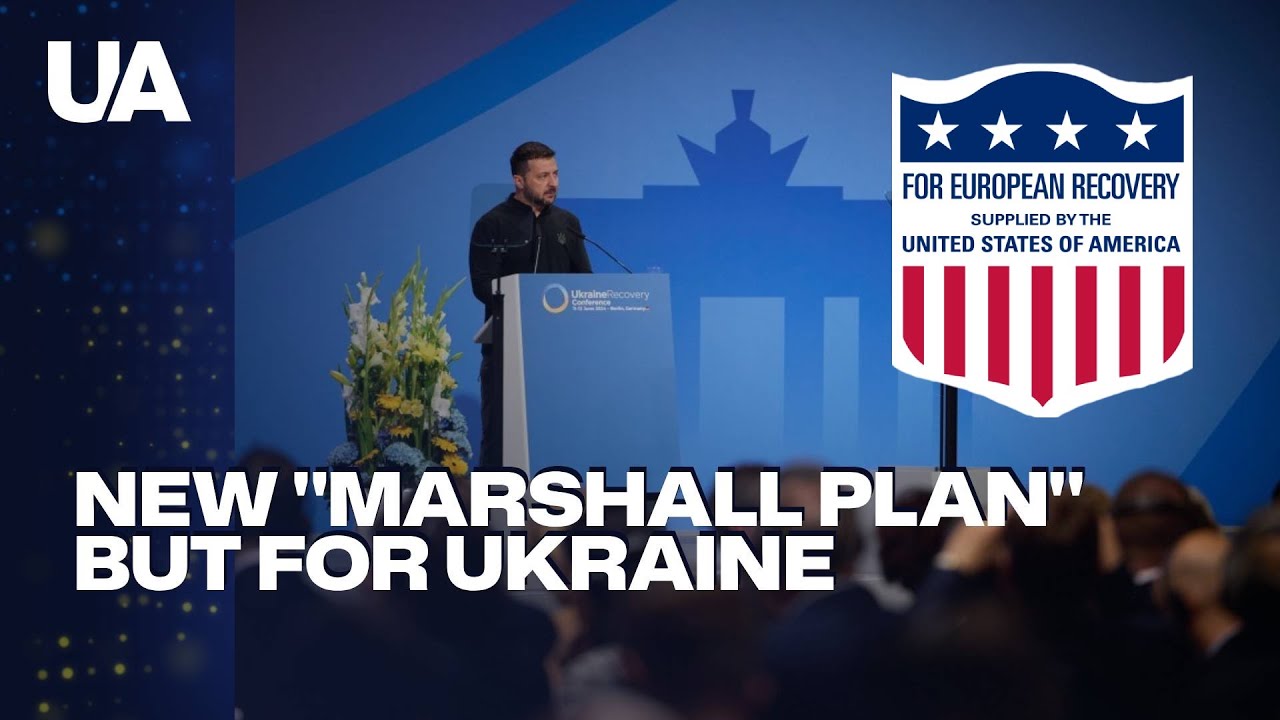
Russia Will Pay: G7 and EU Pledge $50 Billion for Ukraine’s Recovery, Backed by Russian Assets

7 Likes

image

3 Likes

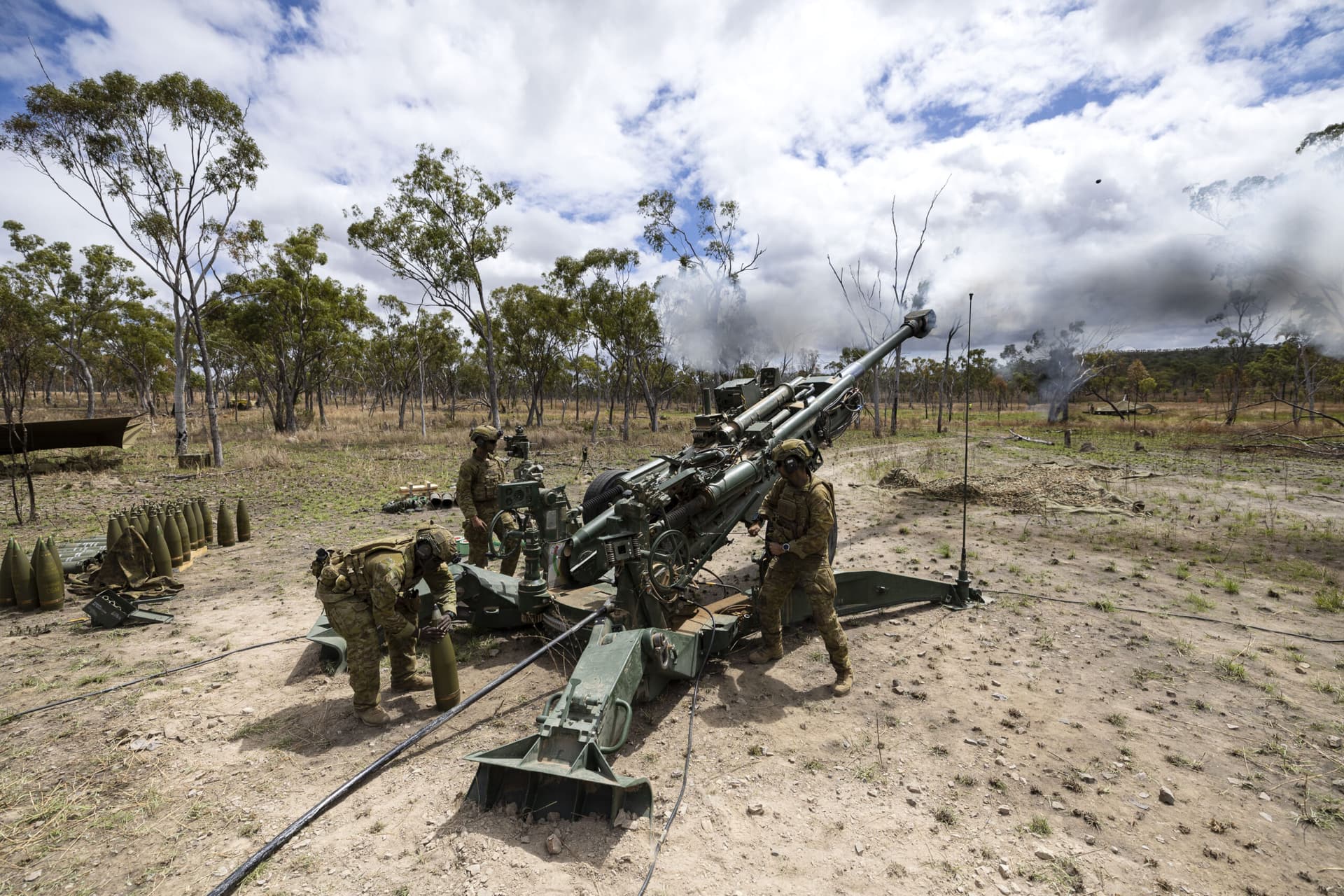
Australian 155mm artillery shells destined for Ukraine

30/09/2024

The shells are being manufactured at a new plant in the rural Queensland town of Maryborough and exported to Germany. Once there, they will be filled with explosive material and receive a fuse – and after that they go into the pool of ammunition to be transferred to Ukraine. While it is impossible to track each individual shell, some – or all – of the Australian production run will be fired against Russian invaders.

This is not being done via the Australian government – indeed 100% of the factory’s current output is going to Germany. This is a consequence of the ownership of the plant, which is a 51-49 joint venture between industrial giant Rheinmetall Waffe Munition and family-owned Australian company NIOA. While the JV is currently producing German DM121 shells at a rate of 20,000 per year, this will progressively increase because of global demand to an annual total exceeding 100,000.

CEO Rob Nioa explained during a media visit that the decision to build the Maryborough factory in 2020 was a mixture of practicality but also sentiment. The business case to warrant investment from Rheinmetall, the Queensland and Federal governments – and NIOA itself – had to be rock solid to reach a collective target of $90 million.

However, the town – with a population of 25,000 – is also the home of the Nioa family and at the time regional unemployment was stubbornly high. Now the plant employs 150 people working three shifts a day for five days a week. The company has expansion plans not only in Maryborough but also Benalla in Victoria where it produces medium calibre ammunition and a variety of pyrotechnics.

At the moment, Australia imports all 155mm rounds from another member of the industrial family, Rheinmetall Denel Munitions (RDM) of South Africa – which the author has also visited. Known as the Assegai – Zulu for spear – this is a modular approach to ammunition with the ability to mix and match projectiles, propelling charges, fuses and primers.

Even though there is huge global demand for 155mm ammunition, the Australian Army has future proofed supply with a series of 5-year contracts, the most recent of which came into effect in June 2023. At the time the company said:

“Over the past five years, NIOA and supply partners JUNGHANS Microtec GmbH, Nitrochemie Aschau GmbH and Rheinmetall Denel Munitions have worked in close collaboration with Defence to deliver and integrate this artillery system into the Army’s M777A2 howitzers and are preparing for integration into K9/AS9 Protected Mobile Fires platforms.

“Projectile variants include conventional HE, Insensitive Munition High Explosive (IHE), IHE Pre-Fragmented (PFF), screening smoke, illumination (infrared and visual), base-bleed and Extended Range Velocity Enhance (V-LAP), practice and inert projectiles.

“A key recommendation of the recent Defence Strategic Review (DSR) was to accelerate and shore up supply of critical munitions and projectiles which have been included in a $2.5b investment in Guided Weapons and Explosive Ordnance (GWEO).”

Australia could move to local production of Assegai, which would involve investment to produce fuses – especially one with the ability to guide the round – and increase capacity to fill shells and make the explosive charges necessary to fire the shell.

Another recent development is that Canberra and Washington are considering the local manufacture under licence of a standard US Army 155mm round known as the M795. This seems to be based on the fact that US factories alone cannot meet the demand for 155mm ammunition, especially as Ukraine needs to have the ability to fire at least 5,000 rounds per day if it is to have a realistic chance of fighting back against Russia.

If this progresses, it seems logical that NIOA will be involved since they operate the only 155mm shell press in the country.

Manufacturing shells is a blend of precision engineering and mass production techniques. They have to be churned out at a rapid rate to meet demand, but at the same time must be produced to exact tolerances for reasons of safety, reliability and performance.

The Maryborough plant was designed by NIOA – with the invaluable assistance of Rheinmetall – and has a number of unique features. These are protected by patents but include things such as the use of water-based lubricants for the forge – which has to operate continuously at 1,200 Celsius – and the spin-balancing of each shell. Those that don’t pass – about 10 percent – can then be re-machined if necessary, so that each one is delivered to the highest quality standards.

The production process is very exacting and starts with a steel blank weighing 65kg – each one cut from a 2.5 tonne section imported from Germany. Australia used to have the ability to manufacture steel of the requisite quality and produce it in the necessary size and shape, but those days are long done.

After being heated, an industrial robot places each section in the forge with everything glowing red hot, and in a series of steps squashes the metal into a very precise steel tube. As it moves through the carefully monitored production process, the nose is tapered and the outside is machined so the finished shell is gradually produced, etched, painted and then batched for delivery. The end product weighs 32kg – so about half of the steel is lost in the process – and can be filled with 8kg of explosive.

Mr Nioa explained the background to establishing the forge, which alone cost $17 million:

“First of all, in 2017 we won the future Army artillery contract to supply their new shells – and at that time Australia had lost the ability to forge an in-service shell. We thought it was an important capability to bring on-shore – and we put some proposals to government that were ultimately supported, originally through a regional jobs program.”

This was before the Russian invasion of Ukraine when everyone assumed that the warning time for a major conflict would be around 10 years, so the original rate of production was modest. He continued:

“Now we are ramping up production – and we have proposals for further expansion involving extra equipment and additional facilities. When everything comes together as we have recommended, we will be able to produce more than 100,000 rounds per year.”

This would more than double the current capacity of the factory. According to Mr Nioa, all of the IP is available to move to the production of the entire round, not just the shell. He believes that investment in guided fuses in particular would be worthwhile because it greatly increases the accuracy of each round. He said:

“We also need to increase the capacity to fill shells, particularly with a higher rate of production – which means additional plant and equipment. We also need to consider the nature of the explosive. At the moment we make low-cost TNT, which is fine for training munitions. It’s also a satisfactory war shot for some nations, but it is not the preferred fill for Australia because of our need for insensitive munitions (IM).”

“To that can be added things such as double based propellants and combustible cartridge cases. We also need to make the primer, which is a bottleneck in the production not only of 155mm artillery rounds but a number of other things, including 120mm tank ammunition and 5” shells for naval gunfire.”

The Defence Strategic Review is prioritising long range strike, but as the fighting in Ukraine is showing on a daily basis, conventional artillery is still playing a dominant role at the front line. The Guided Weapons and Explosive Ordnance (GWEO) is looking at ways of industrialising the production of weapons to increase Australia’s sovereign capabilities and the full domestic production of 155mm ammunition would seem logical.

Such a move would mean Australia could contribute to the allied pool – particularly in the Indo-Pacific region – and possibly export directly to countries such as Ukraine.

8 Likes

I can’t decide whether Oscar Schindler would be either proud or horrified at this development.

2 Likes