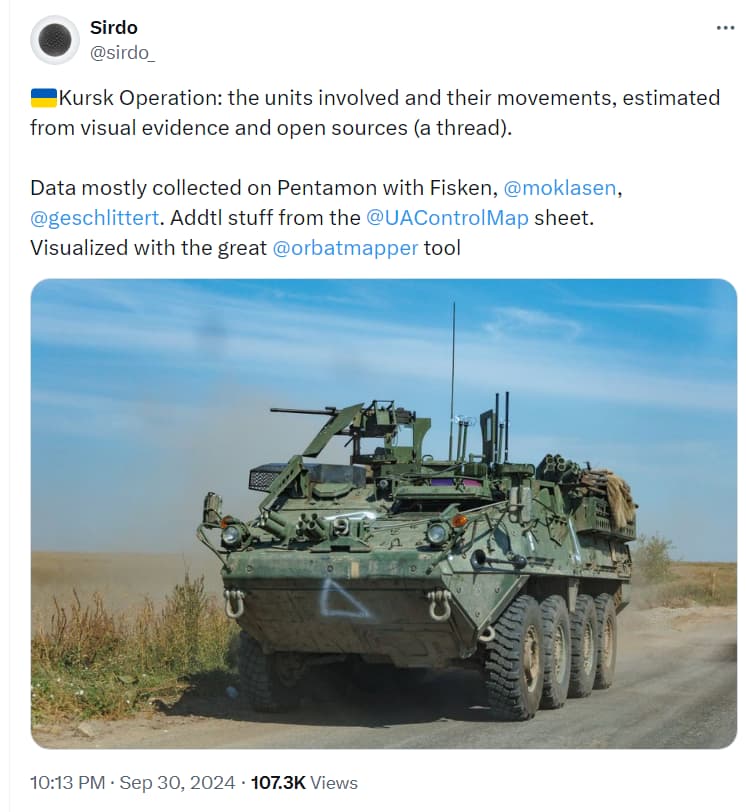
3 Likes
Not pleasant reading unfortunately.
Hundreds of Ukrainian soldiers ‘trapped’ after Russia surrounds fortress city in rapid advance
Tue, October 1, 2024 at 12:59 AM GMT+8
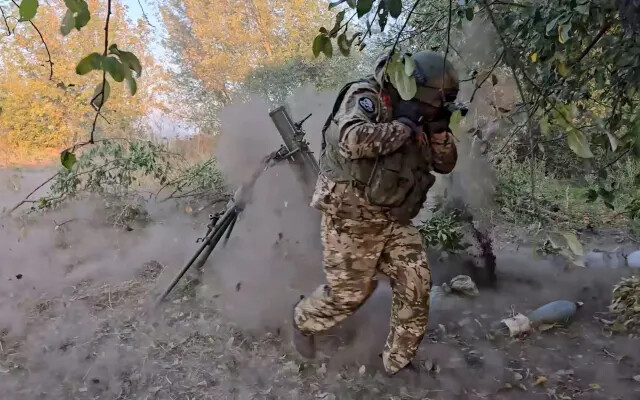
Russian servicemen fire heavy mortar systems towards Ukrainian positions - SHUTTERSTOCK
Hundreds of Ukrainian soldiers could be trapped in a besieged town as Russian forces complete their encirclement and close in.
In a desperate plea, one Ukrainian soldier described how evacuation routes out of Vuhledar had been cut and food, ammunition and fuel were running low.
“The situation in Vuhledar is, to put it mildly, difficult,” the unnamed Ukrainian soldier told Stanislav Bunyatov, a Ukrainian soldier and blogger. “The attack is now coming from three sides.”
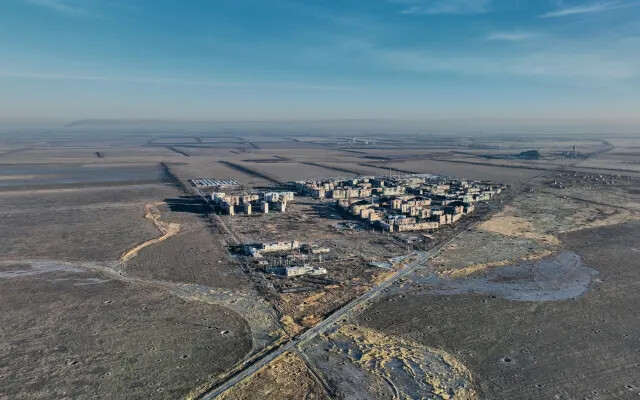
Capturing Vulhedar would be a significant victory for Valdimir Putin - GETTY
The soldier said that it was too dangerous for Ukrainian armoured personnel carriers to drive towards friendly lines because of Russian artillery and drone attacks.
Instead, he described how individual units were trying to quietly slip out of the Russian encirclement at night in fighting retreat formations.
“On average, if 10 people leave the city in groups, four to six make it out,” he said.
The soldiers’ complaints were published the day after senior Ukrainian commanders withdrew the commander of Ukraine’s 72nd Brigade that has been defending Vuhledar.
Colonel Ivan Vinnik is reportedly highly regarded and has been tipped for a promotion but some commentators said that he had been withdrawn because he needed to be “saved” before the town was lost.
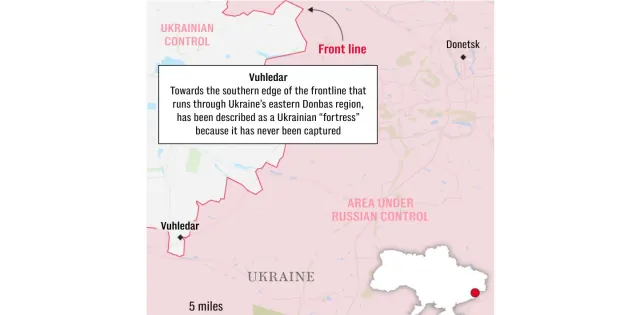
Vuhledar, towards the southern edge of the front line that runs through Ukraine’s eastern Donbas region, has been described as a Ukrainian “fortress” because it has never been captured.
Now, though, Russian military bloggers confirmed that the Kremlin’s forces have nearly surrounded it and have started to predict that Vuhledar will fall.
“The commander of the 72nd Brigade of the Ukrainian Armed Forces, responsible for the defence of the city, has been removed from office. Our troops are methodically destroying enemy firing points in the city,” said the Two Majors Telegram channel, which has almost 1.2 million subscribers.
Other Russian officials have said that 5,000 Russian soldiers have been transferred to the battle for Vuhledar and that a major push is planned.
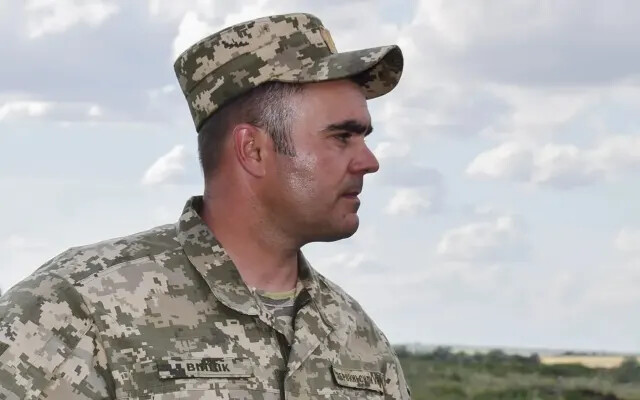
Colonel Ivan Vinnik is reportedly well-regarded and tipped for promotion - FACEBOOK
Even Ukrainian and neutral information sources have said that Vuhledar, positioned on high ground overlooking an important east-west road, is likely to fall.
DeepState, a pro-Ukraine Telegram channel, confirmed that Russia has sent “regular forces and special forces” as reinforcements to the area and OSINT Aggregator said Ukraine “may have tried to hold Vuhledar longer than operationally feasible”.
The town had a pre-war population of about 14,000 people. If it falls, it will be Vladimir Putin’s most significant battlefield victory since he captured Avdiivka in February.
2 Likes
It sucks. Fighting retreats always do. But the city stood for years and the brigades who defended it all that time took a massive toll on the russian army with their countless suicidal zerg attacks. The place will go down in history as a bulwark for Ukraine.
4 Likes
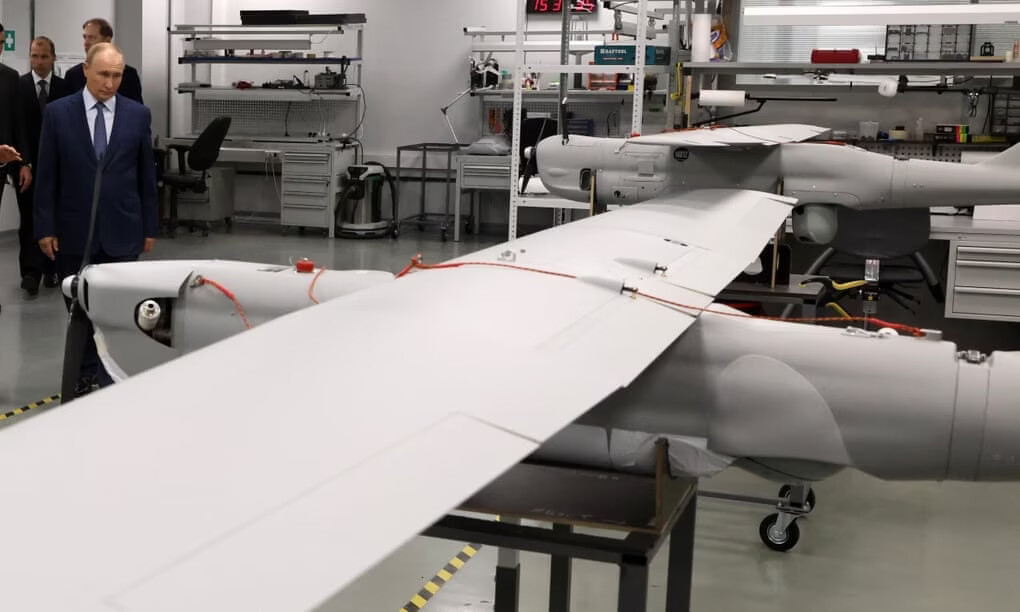
Russia to raise defence budget by 25% to highest level on record
Draft documents say defence and security will make up 40% of government spending as Putin continues war against Ukraine
Mon 30 Sep 2024 16.23 EDT
Russia is to increase its spending on defence by 25% to its highest on record, as Vladimir Putin vows to continue his war efforts in Ukraine and further escalate his standoff with the west.
The latest planned increase in spending will take Russia’s defence budget to a record 13.5tn rubles (£109bn) in 2025, according to draft budget documents published on Monday on the parliament’s website. That is about 3tn rubles more than was set aside for defence this year, which was the previous record.
Taken together, spending on defence and security will account for about 40% of Russia’s total government spending – or 41.5tn rubles in 2025.
The 2025 budget suggests Putin has embraced what economists have dubbed “military Keynesianism”, marked by a significant rise in military spending, which has fuelled the war in Ukraine, spurred a consumer spending boom and driven up inflation.
"This increase is confirmation the economy has switched to a war footing, and, even if the war in Ukraine ends soon, channeling money to the army and a bloated defence sector will remain a top priority,” the Bell, a leading Russian outlet specialising on the economy, wrote in its newsletter.
“It’s clear that spending on the military and security will exceed combined expenditure on education, healthcare, social policy and the national economy,” it added.
According to the draft budget, social spending is expected to decrease by 16% from 7.7tn rubles this year to 6.5tn rubles next year.
The massive Russian investment in the military has worried European war planners, who have said Nato underestimated Russia’s ability to sustain a long-term war. Meanwhile, Ukraine is facing uncertainty over the level of future support from its closest allies.
This has increased confidence in Moscow, where on Monday Putin boasted that “all goals set” in what Russia calls its special military operation “will be achieved”.
Putin’s speeches over the last year have been marked by growing confidence as Russian troops make creeping gains in eastern Ukraine.
Recently, he has taken a hardline stance, demanding Ukraine’s unconditional surrender and calling for the “denazification of Ukraine, its demilitarization, and neutral status”.
Analysts believe the long-term economic outlook for Russia is far gloomier than it was before the invasion.
The Kremlin’s pivot toward China and other markets, sanctions-busting and other workarounds cannot make up for direct access to western markets or technology.
Russia’s military spending boom has sent inflation surging at home, forcing the central bank to raise borrowing costs, while the country struggles with acute labour shortages as Moscow pumps fiscal and physical resources into the military.
2 Likes
1 Like
A wordy article from the NY Times on political manoeuvring and national alliances, for those interested in this type of thing.
U.S. and Allies Sound Alarm Over Their Adversaries’ Military Ties
The Biden administration is struggling to halt cooperation among Russia, China, North Korea and Iran. It feels urgency over the wars in Ukraine and the Middle East while also aiming to protect Taiwan.
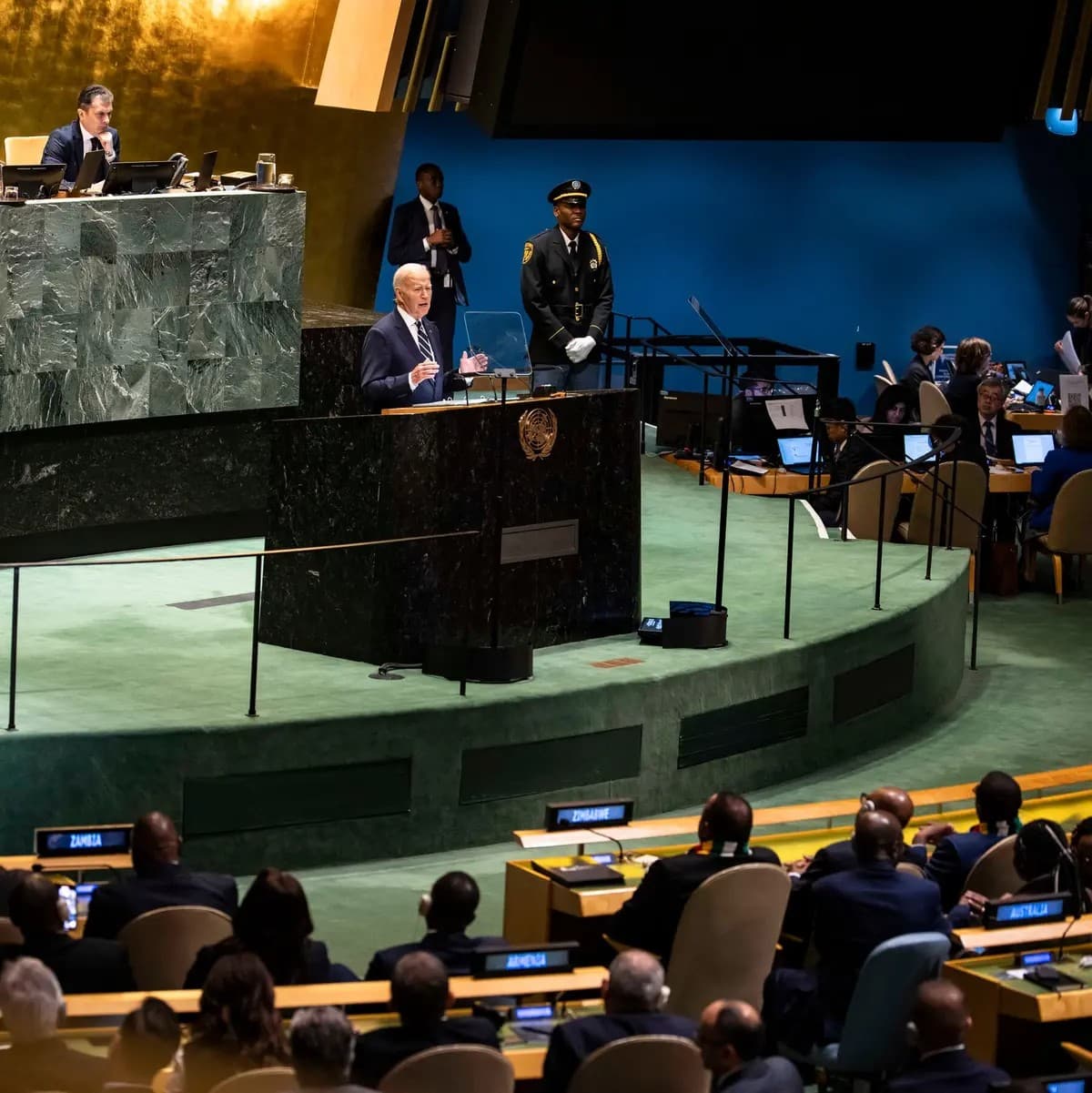
In speeches and closed-door talks, most recently at the United Nations General Assembly in New York, U.S. officials have been sounding the alarm on the coalition of powers working to strengthen one another’s militaries to defeat America’s partners.Credit…Dave Sanders for The New York Times
Sept. 30, 2024Updated 2:19 p.m. ET
Call it the Axis of Anger.
It is ripped from the pages of the World Wars or the Cold War: a coalition of powers working to strengthen one another’s militaries to defeat America’s partners and, by extension, the United States.
That is how the Biden administration characterizes Russia, China, North Korea and Iran, as those nations align more closely. U.S. officials have been sounding the alarm in speeches and closed-door talks around the world, most recently at the United Nations General Assembly in New York that ended over the weekend.
As the conflict in the Middle East widens — and as the world watches for whether Iran will retaliate against Israel for the killing on Friday of Hezbollah’s leader, Hassan Nasrallah, and its strikes across Lebanon — U.S. officials feel an even greater sense of urgency.
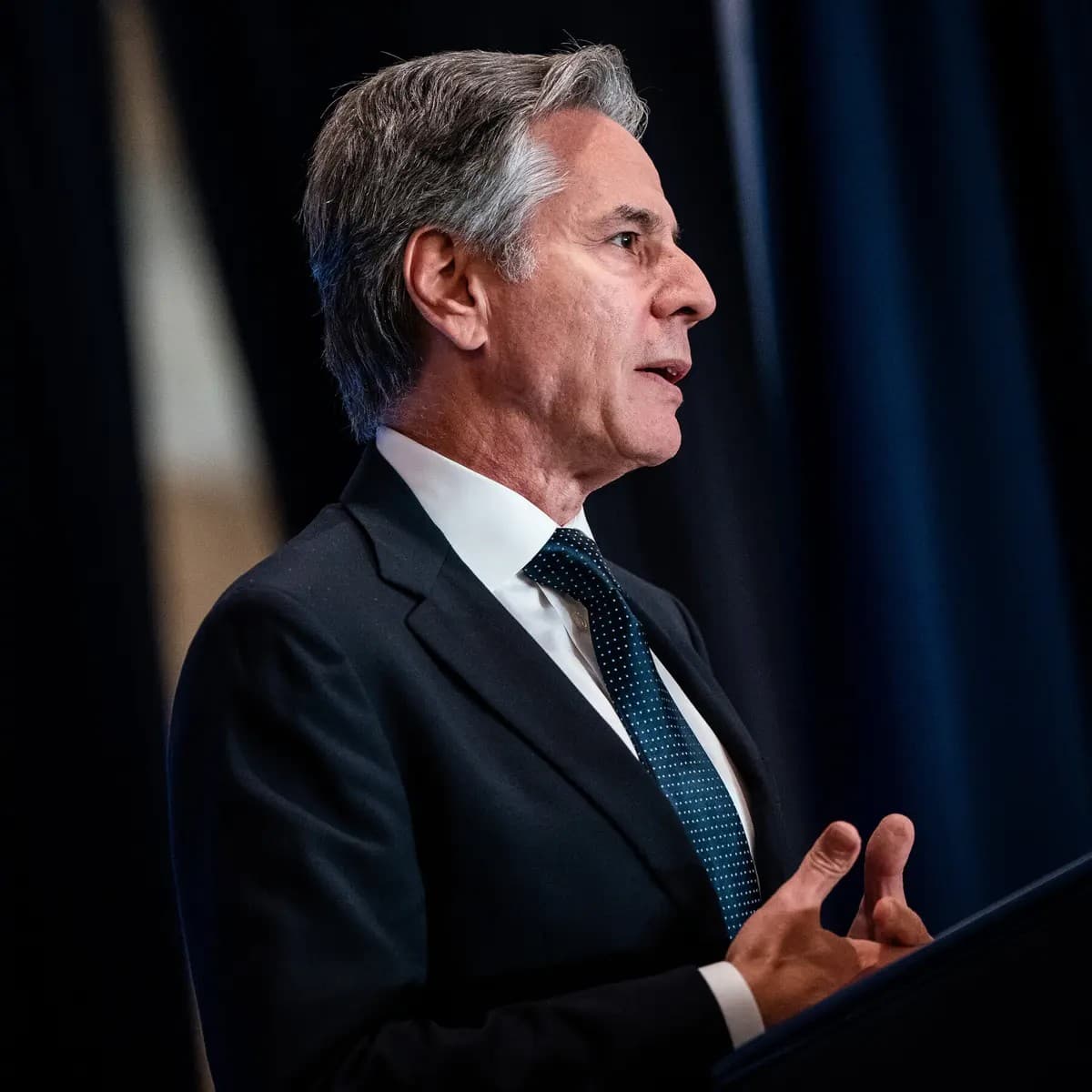
Secretary of State Antony J. Blinken said the United Nations Security Council’s priority should be stopping the stream of military aid from North Korea and Iran to Russia.Credit…Haiyun Jiang for The New York Times
Yet the partnerships are not as unified as they might appear, and U.S. officials say they still see ways to slow that trend.
At a Security Council meeting on Tuesday, Secretary of State Antony J. Blinken said the council’s priority should be stopping the stream of military aid — including ballistic missiles, drones and artillery shells — from North Korea and Iran to Russia. And he noted that China had sent machine tools, microelectronics and other supplies to Russia’s defense industry as President Vladimir V. Putin presses his invasion of Ukraine.
“If countries stopped supporting Russia, Putin’s invasion would soon come to an end,” Mr. Blinken said.
Russia, in turn, is helping those nations meet their ambitions, including by sharing nuclear technology and “space information” with Iran, Mr. Blinken said. Another senior U.S. official said that while the nuclear aid to Iran seemed to be for use in its civilian nuclear program for now, the space information was more alarming — it could eventually allow Iran to develop capable intercontinental ballistic missiles.
Russia is also considering arming the Iran-backed Houthi forces in Yemen with advanced anti-ship cruise missiles, U.S. officials say.
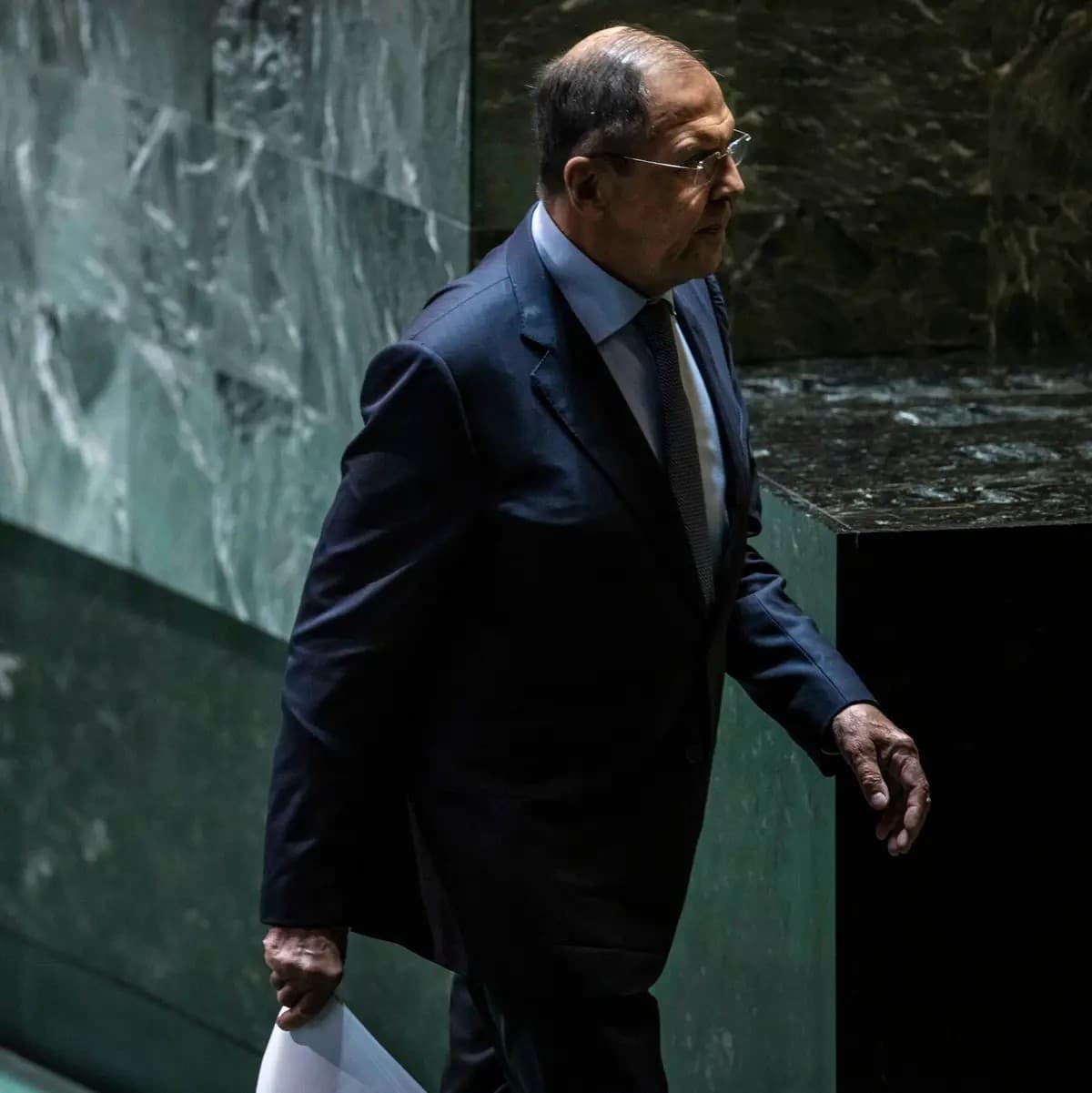
At the United Nations on Saturday, Foreign Minister Sergey V. Lavrov of Russia accused the United States of wanting to “preserve their hegemony and to govern everything.”Credit…Dave Sanders for The New York Times
Those nations have denied some of the specific American assertions. And they say it is the United States that is forming blocs around the world to maintain dominance. On Saturday at the United Nations, Sergey V. Lavrov, the foreign minister of Russia, said the Americans were “merely seeking to preserve their hegemony and to govern everything.”
But there is no doubt those powerful countries seeking to counter the United States have grown their military, diplomatic and economic cooperation.
Leaders of U.S. partner nations are quick to point out the growing threats. In an interview with The New York Times at the United Nations last week, President Volodymyr Zelensky of Ukraine denounced the shipments of arms to Russia from North Korea and Iran.
Sitting next to him, the prime minister of Denmark, Mette Frederiksen, said, “This is a global issue, because the closer cooperation between North Korea, Iran and Russia is a challenge for all of us, of course, including the U.S., and with China helping one way or the other.”
Some of the leaders of the adversarial nations are making flashy displays of their alliances, as if throwing a gauntlet down at the Americans. In June, Mr. Putin revived a Cold War-era mutual defense pact with North Korea’s leader, Kim Jong-un, during a visit to Pyongyang, the capital. Those two nations are “all in” on anti-American cooperation, said the senior U.S. official, who spoke on the condition of anonymity to discuss intelligence.
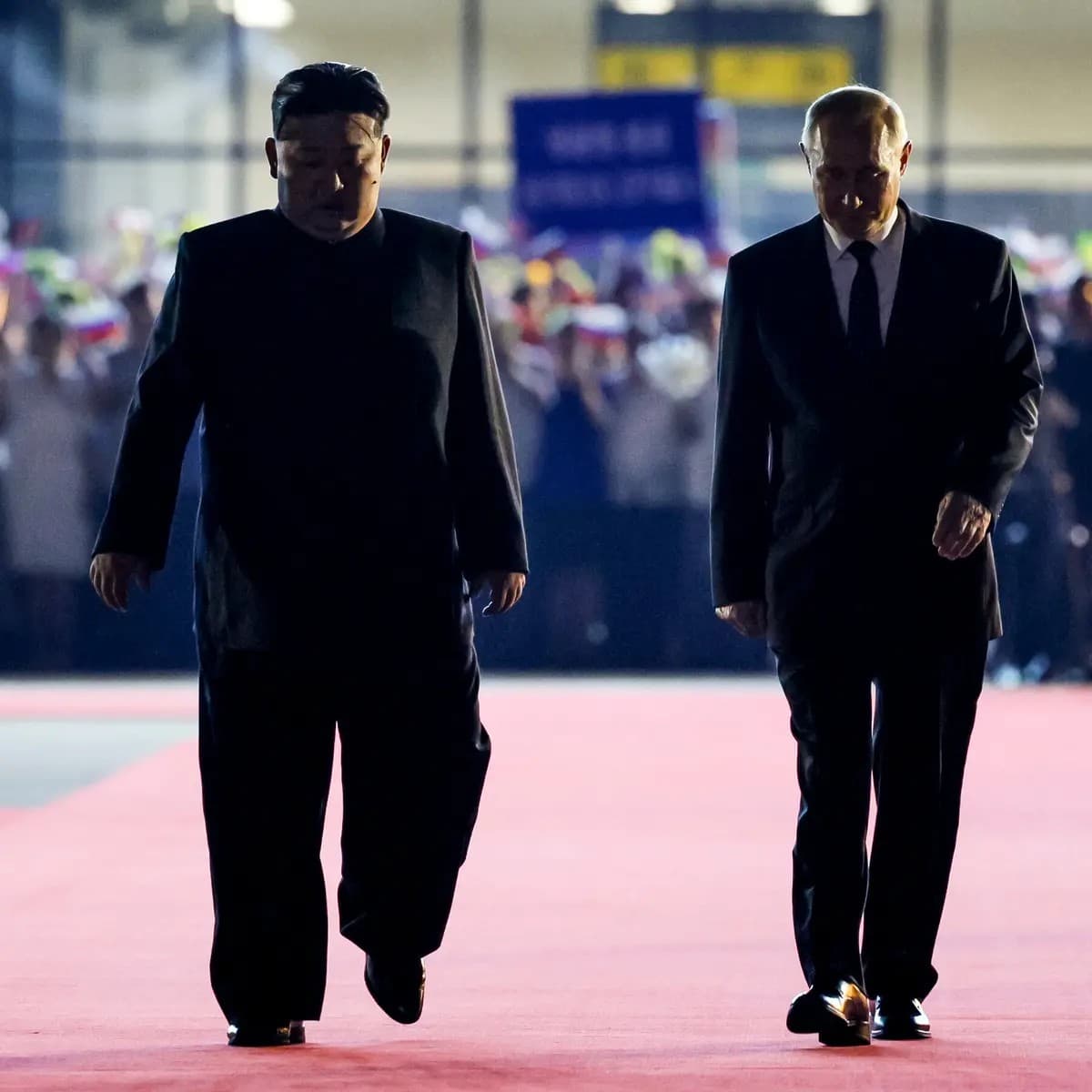
Kim Jong-un of North Korea and Vladimir V. Putin of Russia revived a mutual defense pact in June.Credit…Gavriil Grigorov/Sputnik Kremlin, via Associated Press
Two weeks before Russia’s full-scale invasion of Ukraine in February 2022, Moscow and Beijing announced a “no limits” partnership in a 5,000-word joint statement when Mr. Putin visited President Xi Jinping in China.
“The militarization of these relationships is very remarkable,” said Michael Kimmage, a former State Department official and a professor of Cold War history and U.S.-Russia relations who is a fellow at the American Academy in Berlin. “The overt part is the most worrying aspect for the U.S.”
Mr. Kimmage cautioned that “it’s possible to over-interpret the degree of political alignment,” and that “what the U.S. got wrong during the Cold War is that they interpreted more homogeneity in this than was the actual reality.”
In important ways, the current alignments are a continuation of the Cold War. Now, as then, the center of gravity of the anti-American partnerships is Russia. That nation has pitted itself against an American and European partner — Ukraine — and is trying to wipe it out. Russia is attracting aid from North Korea, Iran and China.
In fact, Ukraine has become the kind of proxy-war battlefield that was common during the Cold War, in places like the Korean Peninsula and Vietnam. The shadow of the Korean War, which never officially ended, is even at play here: While North Korea is giving weapons to Russia, South Korea has done the same with Ukraine, via the United States.
But coalitions are not as hardened as they appear, which the United States discovered in the sprawling conflicts of the 20th century, sometimes belatedly. And today they are based not so much on a shared ideology — communism was a unifying factor for much of the Cold War — as on opposition to U.S. power rooted in each autocratic nation’s specific interests. Analysts say the partnerships now are marriages of convenience or pragmatism.
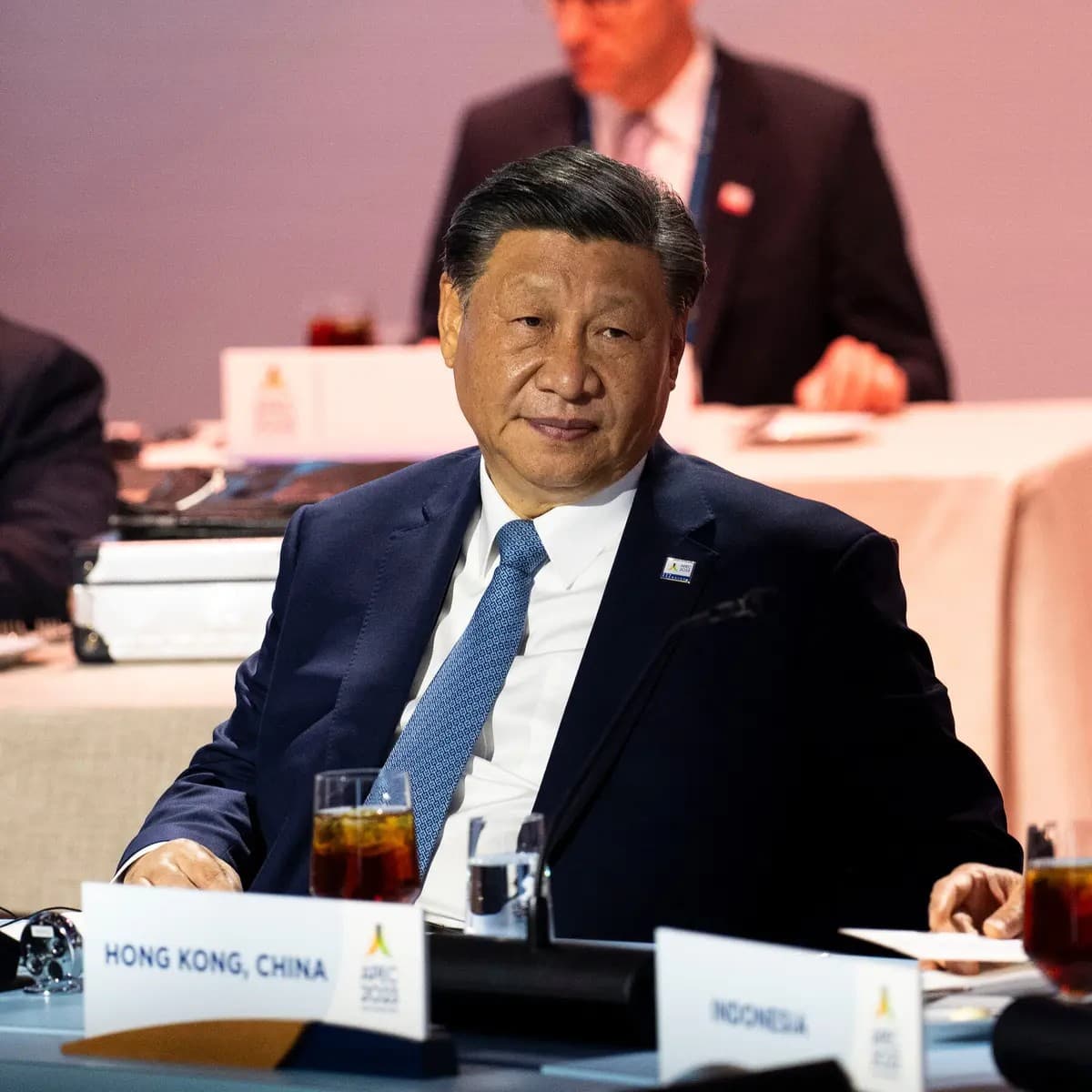
American officials note that President Xi Jinping appears to want to keep China within the global network of institutions and commerce that the United States has dominated for decades.Credit…Doug Mills/The New York Times
For instance, the theocratic leaders of Iran obviously have a different ideological perspective than do the leaders of Russia, China or North Korea, known formally as the D.P.R.K., which all share a communist history.
China, the most powerful of those nations and the greatest challenger to American power, does not seem intent on knitting together a cohesive coalition based on a grand ideology, the way the Soviet Union once tried to do.
“China’s foreign policy is drawing the dividing line using the U.S. as the criteria,” said Yun Sun, the director of the China program at the Stimson Center. “What it means is that when China looks at Russia, D.P.R.K. and Iran, it sees anti-U. S. partners.”
“China believes it doesn’t have an alliance or axis with these countries, as the very thing that anchors their alignment is the U.S.,” she added. “But for the end result, the motivation matters much less than the substance, and the relationships come across as an axis. When it walks like a duck and quacks like a duck, it is a duck.”
For months, the Biden administration has warned China against commercial trade that allows Russia to rebuild its defense industry. The Biden administration has imposed sanctions on more than 300 Chinese entities. But U.S. officials also say China has not given direct weapons aid to Russia.
China has the world’s second-largest economy and does robust trade with the United States and its allies. American officials note that Mr. Xi appears to want to keep China within the global network of institutions and commerce that the United States has dominated for decades. They say he believes that America is in terminal decline, and that his aim is to displace the United States within that network rather than build a rival global system.
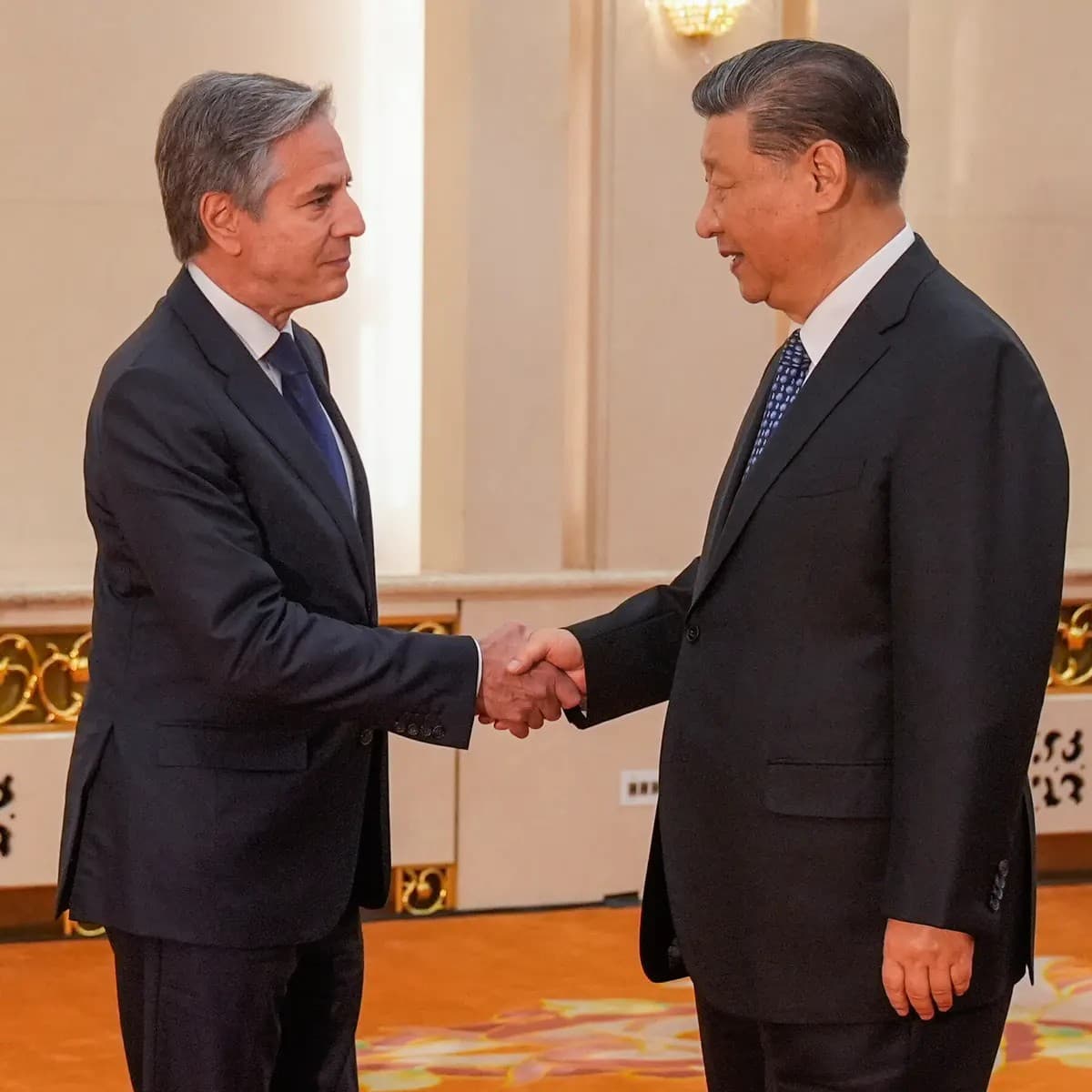
Mr. Blinken met with Mr. Xi in Beijing in April.Credit…Pool photo by Mark Schiefelbein
Mr. Blinken and Jake Sullivan, the national security adviser, often meet with ■■■■ Yi, China’s top foreign policy official, and occasionally with Mr. Xi. Their idea is that keeping up high-level diplomacy, along with bolstering U.S. military power in Asia, will help deter China from invading Taiwan or making other aggressive moves. On Friday, Mr. Blinken and Mr. ■■■■ met in New York and talked about areas of both cooperation and concern.
“Our intent is not to decouple Russia from China,” Mr. Blinken told reporters afterward. “But insofar as that relationship involves providing Russia what it needs to continue this war, that’s a problem, and it’s a problem for us and it’s a problem for many other countries, notably in Europe, because right now Russia presents the greatest threat, not just to Ukrainian security, but to European security since the end of the Cold War.”
U.S. and allied officials say the kind of Sino-Soviet split that began between the late 1950s and early 1960s is unlikely. But European officials are calling out China’s aid to Russia in the hopes that Chinese leaders will realize they are placing their economic ties with Europe in jeopardy.
On a trip to Ukraine with Mr. Blinken this month, David Lammy, the foreign secretary of Britain, said, “We’re seeing this new axis — Russia, Iran, North Korea; we urge China not to throw their lot in with this group of renegades, renegades in the end that are costing lives here in Ukraine.”
U.S. and allied officials are also carefully watching Iran to see whether there is a diplomatic opening, perhaps through future nuclear negotiations, to try to get it to limit its cooperation with Russia. They are wary, because Iran has a decades-long history of hostility with the United States and Israel. But analysts say Iranian leaders are intent on getting the United States and its allies to lift sanctions on Iran.
In a speech on Tuesday at the United Nations, the country’s new president, Masoud Pezeshkian, used conciliatory language, saying, “We want peace for all and seek no war or quarrel with anyone.”
After leaving New York, Mr. Pezeshkian wrote on social media that his government “is seeking political and economic diplomacy from west to east, from New York to Samarkand.”
https://www.nytimes.com/2024/09/30/us/politics/us-axis-china-iran-russia.html
1 Like
Support or Condemnation | What Russians think about the war (Eng subs) - Max Katz
1 Like
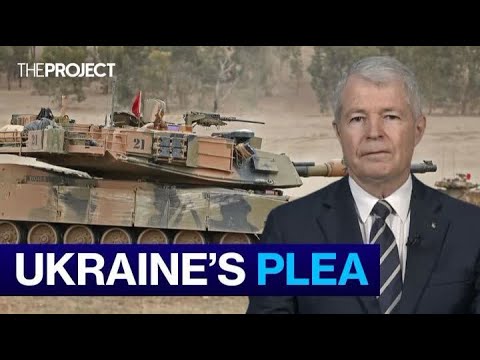
Good to see that the Australian media is giving some publicity to provision of aid to Ukraine and that they reference the Senate inquiry report that just came out. Also proud of the contribution any and all Blitzers made to the enquiry, however small.
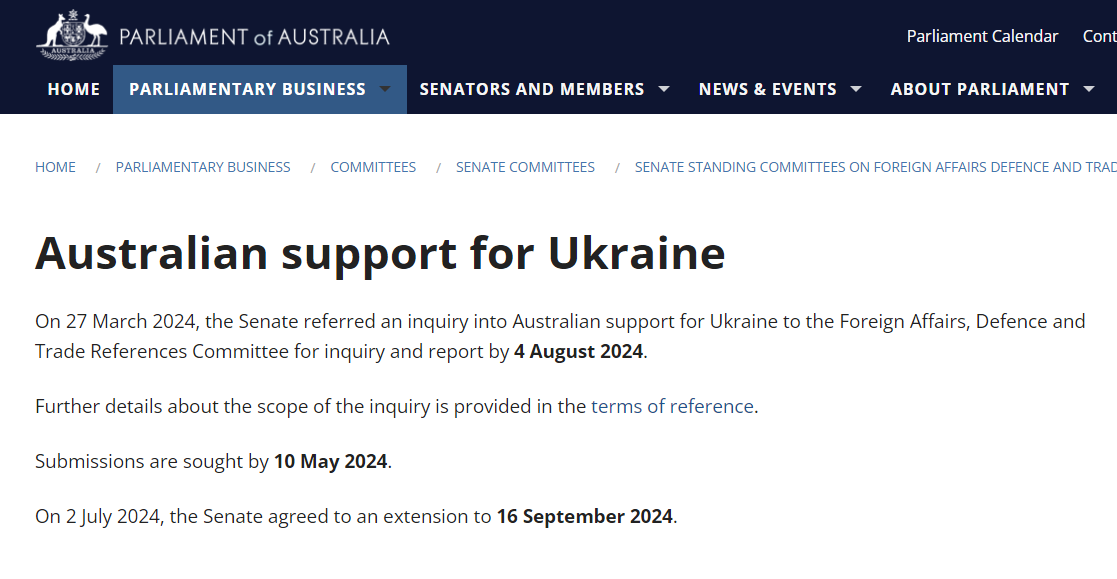
Here is the Report
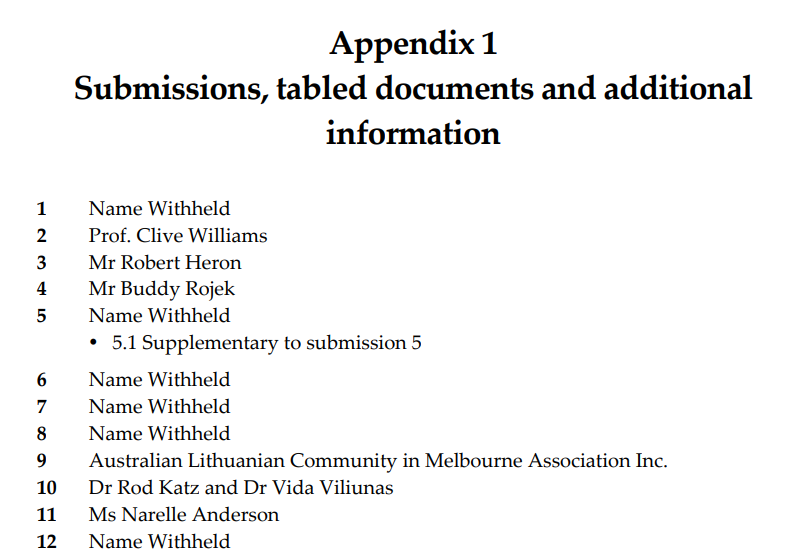
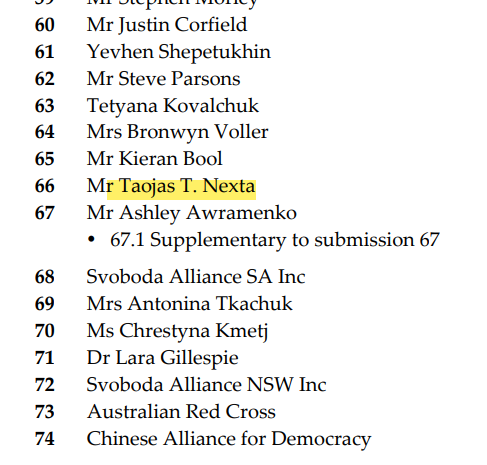
Australian support for Ukraine – Parliament of Australia (aph.gov.au)
22 Likes
You’re a bloody legend @Nexta
We are not worthy.
Well done.
6 Likes
Actually, @Benny40 is the legend for giving us a heads up that the senate was having an enquiry. I also assume that there were more submission contributors from Blitzers but they are too reserved to ‘go public’ with it or too modest to ‘take’ any ‘credit’ for having made one…not like yours truly because I am a shameless publicity hog although I like to do it Pseudonymously lol.
10 Likes
What is funnier is that I procrastinated and so left writing my submission until the last day (they subsequently extended the deadline) so I ended up copy and pasting most of Mick Ryan’s recommendations. I was scathing of the ABC coverage of the Ukraine war and advised the Australian Senate to follow this thread (with link) to keep up to date with what was going on in the war:
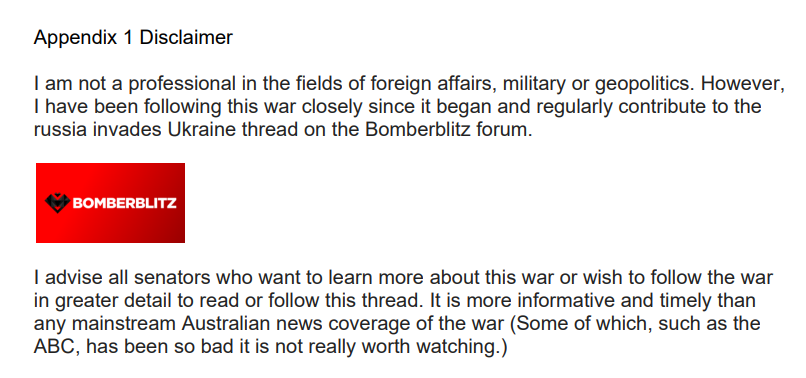
I hope some Australian Senators took my advice.
18 Likes
5 Likes
Bump!
2 Likes
Hey @sweatyman, you actually deserve this:

10 Likes
Penny Wong can perhaps drop in for the latest news and provide a few bumpskis
4 Likes
She’s not on that Committee. Van is, but not Lidia Thorpe.
If any members of that Committee are Essendon haters, Blitz could be in trouble.
Hope they don’t dip into the politics thread.
It’s chaired by a Tasmanian
1 Like
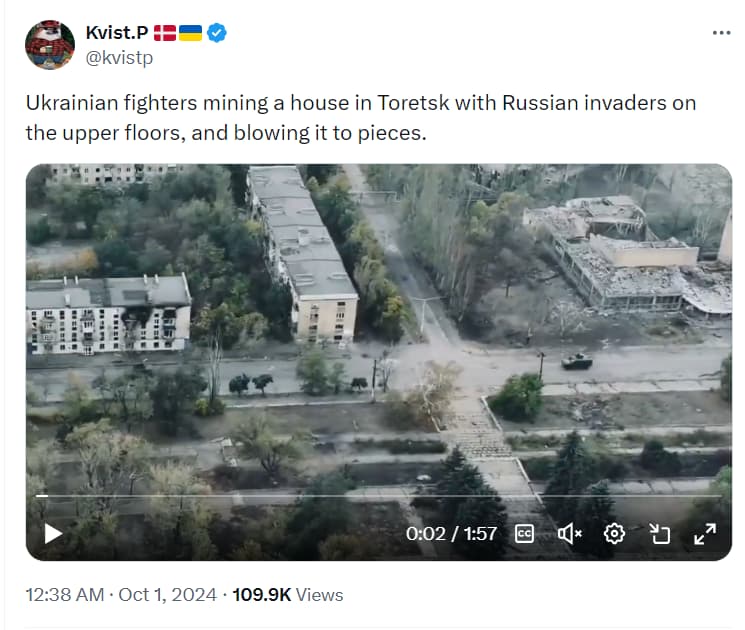
4 Likes
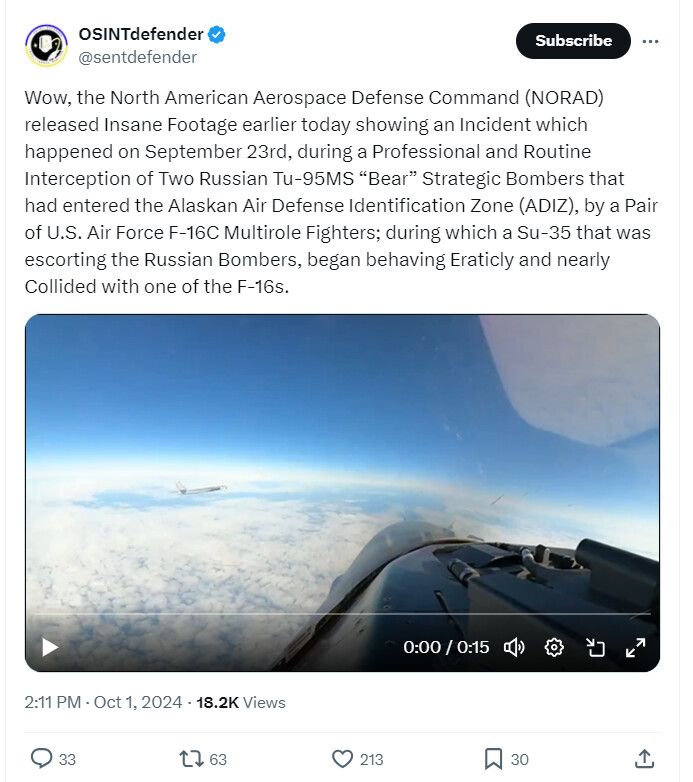

5 Likes
oh fark no ASIO are going to be all over us now and try to shut down our trade thread.
someone keep tabs on nexta’s writing style and if his punctuation degenerates we know it’s now an ASIO burner account.
5 Likes