He’s been so busy losing court cases and posting and reposting replacement theory stuff based around the casting of a black woman as Helen of Troy in Nolan’s new film about a myth which will feature cgi monsters. He is the guy who made the salute, there is simply no doubt about it.
It staggers me that anyone would sign up for this unless they are members of a cult.
The Secrets Revealed in SpaceX’s IPO Filing
SpaceX’s IPO filing sheds light on the finances and operations of the world’s largest private company. It is expected to set a record for the biggest stock debut and could make its founder, Elon Musk, the world’s first trillionaire.
The company is aiming to go public in June on Nasdaq under the ticker symbol “SPCX.” Wednesday’s filing doesn’t disclose the proposed share price or initial valuation. Here are some key takeaways from the IPO documents.
$4.9 billion loss
SpaceX, which is expected to target an initial valuation of $1.5 trillion or more, has a financial picture that is notably worse than any other megacap U.S. company. It lost $4.9 billion last year on revenue of $18.7 billion.
The losses widened this year: In the first quarter, SpaceX lost $4.3 billion on $4.7 billion of revenue.
The financials tell two stories. The first is an established business launching satellites and astronauts to space on the company’s original Falcon rocket as well as growth of its Starlink satellite internet business. The space business had $4.1 billion in revenue last year, though it is unprofitable. Starlink pulled in $11.4 billion in revenue.
The second is that of losses brought on by the February merger with artificial-intelligence startup xAI, which has burned up massive amounts of cash building out large data centers in an effort to catch up with the competition. xAI had $3.2 billion of revenue last year.
The company recently signed a deal with Anthropic, whose Claude AI tool competes with SpaceX’s Grok. SpaceX will rent out compute capacity across its two large data centers for $1.25 billion a month, in a deal that stretches through May 2029.
Total capital expenditures came in at $20.7 billion, much of which came from xAI, which spent $12.7 billion. The launch and satellite businesses spent $8 billion combined in capex last year.
Musk has 85% control
Musk, who founded SpaceX in 2002 with the goal of colonizing Mars, has a firm grip on the leadership and ownership. The CEO is the biggest shareholder and controlled 85% of the voting power on May 1 thanks to supervoting Class B shares that get 10 votes for every 1 vote held by Class A shares being sold to the public.
Musk holds 849 million Class A shares, and 5.6 billion Class B shares.
Together with other board members and executives, insiders owned about 20% of the Class A shares and 94% of the Class B shares, giving them 86% of the combined voting power. The structure will make it all but impossible for investors to kick Musk out of his role as chief executive.
IPO documents show SpaceX is unprofitable and CEO Elon Musk controls 85% of the vote
Mars-or-bust pay package
Musk took home $54,000 in salary in 2025 but most of the billionaire’s compensation is made up of two massive equity packages.
In January, SpaceX gave Musk a package worth 1 billion Class B shares, which vest if the company establishes “a permanent human colony on Mars with at least one million inhabitants” and hits a series of market-cap goals that expand the company to $7.5 trillion.
In March, the board granted him another 302.1 million shares, replacing an earlier xAI award, which vest if the company completes “non-Earth-based data centers” as well as 12 market capitalization goals that expand the value of the company to $6.6 trillion.
This SpaceX package comes just months after Tesla shareholders approved a separate compensation package for Musk that could be worth around $1 trillion if he hits ambitious targets at Tesla, where he is also CEO.
Eight board members
SpaceX has eight directors, with Musk serving as the board chair and selecting who serves with him. The boardroom is filled with Musk allies.
The other directors include longtime SpaceX President Gwynne Shotwell, Google executive Donald Harrison, as well as investors Antonio Gracias, Steve Jurvetson and Luke Nosek. Randy Glein, a longtime board observer, joined the board in February, as did Ira Ehrenpreis, a longtime Tesla board member.
Gracias, the founder of Valor Equity Partners, has served on the board since 2010 and his firm is one of the company’s biggest investors, with a 7.3% stake. That would be worth more than $100 billion based on an expected valuation of $1.5 trillion.
As a controlled company, SpaceX said it doesn’t need to have a majority of independent board members. Still, it classifies some directors as independent, including Jurvetson and Nosek, who have made their fortunes investing in Musk companies, and Ehrenpreis, despite his role on Tesla’s board.
SpaceX’s top executives hold stakes in the company that could make them billionaires. Shotwell, who made $86 million last year, mostly in the form of stock options, owns 5.5 million Class A shares and 7.1 million Class B shares.
Many related parties
Musk’s companies are helping each other out, including sharing corporate aircraft and buying each other’s products or services. For example, SpaceX bought $131 million of Cybertrucks from Tesla in 2025 at the “manufacturer’s suggested retail price.”
The SpaceX prospectus provided the first glimpse of the dollar figures for those payments to Musk’s other companies. In 2025, SpaceX also purchased $506 million worth of Megapack energy storage products from Tesla. Meanwhile, Musk’s xAI has paid Tesla about $731 million since the beginning of 2024 through February 2026.
SpaceX and Tesla are also collaborating on a massive chip factory called Terafab and on an artificial-intelligence project called Macrohard. In total, Tesla is mentioned 87 times in the SpaceX prospectus. “We plan to explore other areas of strategic collaboration with Tesla in the future,” the document said.
Government contracts
Spending by U.S. federal agencies accounted for about 20% of SpaceX’s revenue last year. Clients across the federal government include NASA, but also the Pentagon and intelligence agencies.
The company didn’t spell out many details about its national-security work but noted the National Reconnaissance Office, a U.S. spy agency focused on space-based intelligence work, is a customer. SpaceX has been working with the NRO over the past few years to develop a classified satellite network.
Staggered lockups
Musk and certain significant investors have agreed to not sell their stock for 366 days after SpaceX starts trading.
Other pre-IPO investors are held to a 180-day lockup. Those investors have the chance to sell earlier, though, through “early-releases.”
Up to 20% of early-release eligible shares may be sold shortly after SpaceX reports its first quarterly results. An additional 10% of those shares are released if SpaceX’s stock remains at a certain level leading up to its first earnings date.
There are additional releases of shares at staggered intervals, including after the company reports its second quarterly earnings as a public company. Musk and other insiders aren’t eligible for early releases.
The Boys finale was pretty good, there’s a particular scene of relevance to this thread
It’s more the expectation on what income they will achieve in the future than the now.
Most companies are like that when they list.
I wouldn’t invest in SpaceX. Reason being that with the control Musk has, he will spend a lot of the profits earned in satellites, launching and data centers in space on his Mars vision.
That is going to cost a lot and that is an understatement if ever there was one, that will eat up the other profits.
But if he doesn’t go all in on Mars, SpaceX should be a money printing machine.
I don’t have a problem if it was just SpaceX.
But he’s highly leveraged the company by including his AI and other businesses which are much bigger gambles.

Rule changes for the SpaceX $SPCX IPO:
Index providers waived the profitability requirement and cut the seasoning window from 90 days to 5.
This forces over $30 trillion in passive 401k and retirement money to buy SpaceX at IPO valuations.
Bloomberg Intelligence estimates S&P 500 funds must absorb 19% of SpaceX’s float within 6 months.
Russell 1000 and Nasdaq 100 funds will absorb 24%.
The rules built to protect passive investors:
-
S&P 500 has required 12 months of trading and 4 quarters of GAAP profitability since 2002. Both waived.
-
Nasdaq cut its inclusion window from 90 trading days to 15.
-
FTSE Russell cut its to 5.
All three benchmarks are now structured to buy SpaceX at IPO pricing.
What could possibly go wrong?
So does this mean American superannuation (401) will be going all in on this IPO?
That is seriously farked

Anthropic also files IPO prospectus with SEC.
I don’t get this. How is Space x going to print money? The cost of using Starship to help build data centres in space is going to be so high and ridiculously inefficient. Even if resources become super scare on earth I still don’t see how the sums add up.
Starlink has some value but there are always going to be alternates which means it’s not going to spin the huge profits that are factored into the valuation they are suggesting.
I put my hypothesis to ChatGpt
The investment case only really works if:
- Starlink becomes a dominant, high-margin global network and/or
- Starship creates a structural cost advantage that competitors can’t match
—not because we’re building AWS in orbit.
I believe this will be the case for both the above points. SpaceX are setup nicely for it.
For Starlink, they have over 10 million subscribers and are experiencing exponential growth. The V3’s will increase bandwidth and I can easily see subscriptions continue to exponentially increase.
I can easily see LEO satellite services like V3 Starlink infrastructure replacing terrestrial mobile connectivity in the coming decade. Many 1st tier mobile providers are already using V2 satellites for backup or areas of no connectivity. It is not a big leap for this to happen.
The closest non-China comparable provider is Blue Origin and their planned network will provide similar non-government services but will support a much smaller number of subscribers.
In the next few years when Starship becomes operational, it should achieve cost per kg to LEO of around $500/kg and in the decade ahead we’ll below $100/kg.
The $500/kg is at least an order of magnitude cheaper than Blue Origin has released plan for.
SpaceX are currently building 5 launch towers and mounds that will all be online in the next 2 years with early plans for at least another 2 in Louisiana with purchasing of land in the last few months and comments from SpaceX employees for the need of even more launch complexes.
The Vandenberg Space Force base in California will eventually come online as well with the need of Sun synchronous polar launches for military purposes. Last week SpaceX signed US $6.4 billion in contracts for the first of many golden dome Starshield contracts.
For most of the military contracts its return business as they will be deployed in LEO or MEO which will de orbit in 5-20 years.
There are so many more opportunities from satellites and launch that I haven’t even mentioned that no one will dominate as much as SpaceX due to cost, reusability and infrastructure.
This includes NASA missions, AI satellites and commercial crew to space stations.
Blue origin may successfully compete but will be dominated. Mainly they will be an alternative provider but at a much higher cost.
Would I invest in SpaceX?
Not at this stage.
Risk of SpaceX using profits / returns that could go to investors may well go towards setting up Mars.
If they said they would only do Mars if governments paid for it I would consider it.
A bit of an google AI summary below on the estimated costs per kg to LEO.
SpaceX’s ultimate goal is to achieve an operational launch cost of $10 to $20 per kilogram**** for mass to Low Earth Orbit (LEO). This extraordinary price reduction relies entirely on full, rapid reusability and high launch frequencies. [1, 2]
Current Projected Costs vs. Market Reality
While the $10/kg figure remains an aspirational long-term target, early commercial contracts give a clearer picture of Starship’s immediate pricing landscape. For example, a recent launch contract filed by Voyager Technologies for the Starlab space station outlines a $90 million launch cost. Assuming an initial payload of around 150 tonnes, this works out to approximately $600 per kilogram, which is already dramatically cheaper than any alternative. [1, 2, 3]
Comparison to Other Providers
Starship fundamentally breaks historical launch economics. For context, here is how the targets and early price metrics compare to other launch vehicles: [1]
-
SpaceX Falcon 9 (Partially Reusable): Aims at roughly $2,600 to $3,200/kg to LEO. [1, 2]
-
SpaceX Falcon Heavy (Partially Reusable): Costs roughly $1,400 to $2,350/kg to LEO. [1, 2]
-
Rocket Lab Electron (Expendable): Costs over $19,000/kg to LEO. [1]
-
ULA Vulcan & New Glenn (Partially Reusable): Early commercial market estimations suggest these next-generation heavy lift rockets aim for roughly $3,000 to $6,000/kg.
-
Europe’s Ariane 6 (Expendable): Costs sit in the range of $8,000 to $12,000/kg to LEO. [1]
-
NASA Space Launch System / SLS (Expendable): The most expensive super-heavy vehicle, costing over $4.2 billion per flight, which translates to an eye-watering $76,000/kg to $100,000/kg depending on the mission profile. [1, 2]
SpaceX will accomplish this massive price leap through full, 100% reusability (recovering both the Super Heavy booster and the Starship upper stage), the mass production of simplified Raptor engines, and the use of cost-effective stainless-steel airframes rather than expensive carbon composites.
None of which justifies the IPO valuation that is being discussed.
When there is an IPO, it’s predominately based on what the future return is expected be.
I have listed a lot things that they are well based to capitalise on and make lots of money on.
Does that justify the IPO valuation?
I don’t know.
All I have said is they are well based to be a money printing company and successful.
I haven’t done the projected numbers on the opportunities and growth of what I have listed above and I’m guessing you and many others making comment or pumping articles and opinions haven’t either.
Does any of that mean anyone should consider investing?
Whatever rocks your boat I guess.
ADD
I’m more interested in SpaceX for the technology and exciting future than will they make money and how much.
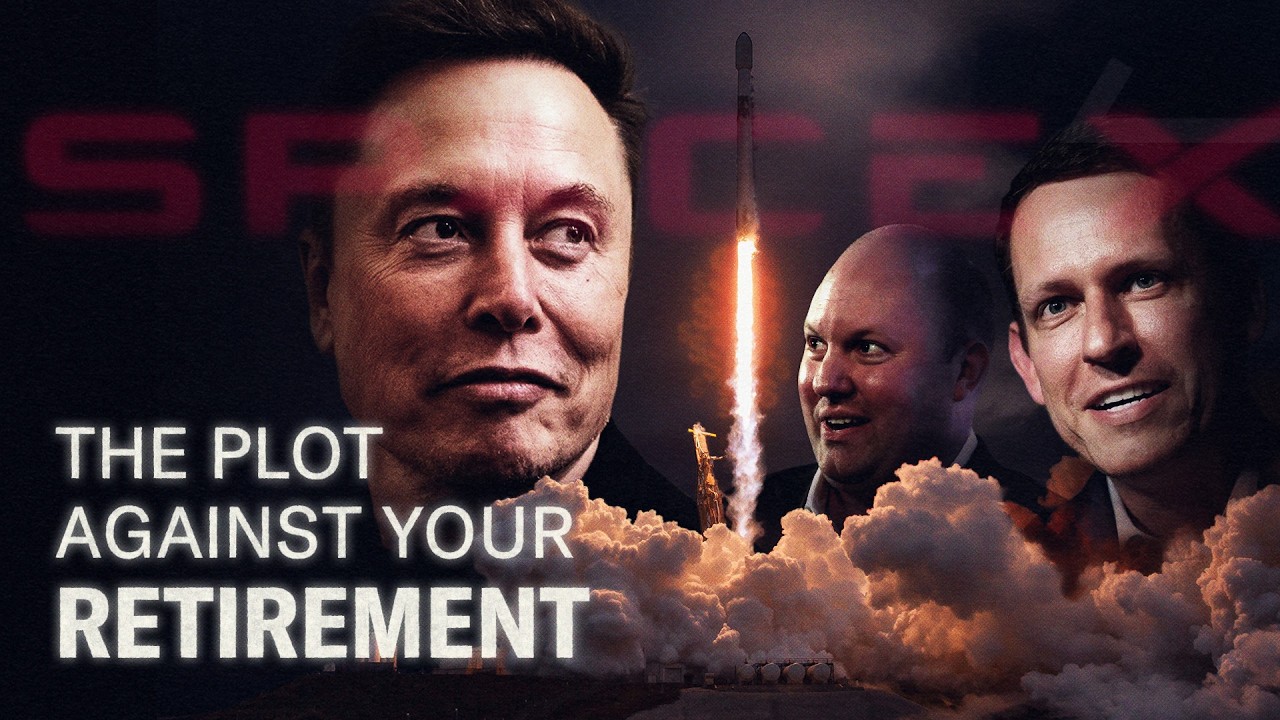
TLDR - the valuation is Elon hopium and copium and the IPO is purely a pump and dump people can’t opt out of, because Musk has gotten the rules regarding index funds trading rewritten
FryIsShocked.gif
poor joe is gonna have a tough time defending this
I am not and never have defended the IPO.
I have said in previous posts that I don’t want SpaceX to go public previously as shareholders want profits and disbursements and that puts at risk the massive amounts of money that will be needed for building bases on Mars and a future colony.
All I have done is state reasons why SpaceX can realistically make a lot of money. Not that it is good IPO investment.
Hmm… think I made the point clearly I would not try and be a part of the IPO.
Learn to read.
Not the gotcha you were hoping for huh?
Commenting on the content of thre video, it makes good points on the impacts on the share price once it lists. These things are widely known and happens a lot when companies list.
Indices having to buy in on the relatively small number of shares will inflate the price in the short term and continue to keep the price inflated in the medium term.
Does not discuss the possible future revenue streams and growth in the medium and long term. I can’t say I have seen a good video or article assessing this. Unless you are a day trader or a shorter, possible long term gains are what most people want.
I’m really happy for the initial staff during the falcon1, falcons5 and other staff attracted and employed via share plans. They are going to make serious bank. Reported that a 1,000 of them will make US$100+ if they sell at listing price and another 3,000 will make more than a million.
Rapt for them.