A lot of deaths from high wet bulb temperatures in red states may be the only way to get some action on CO2 emissions. The US and others couldn’t care about the Antactic/Southern hemisphere ozone hole. They did nothing about CFCs until there was an ozone hole over the arctic.
2 Likes
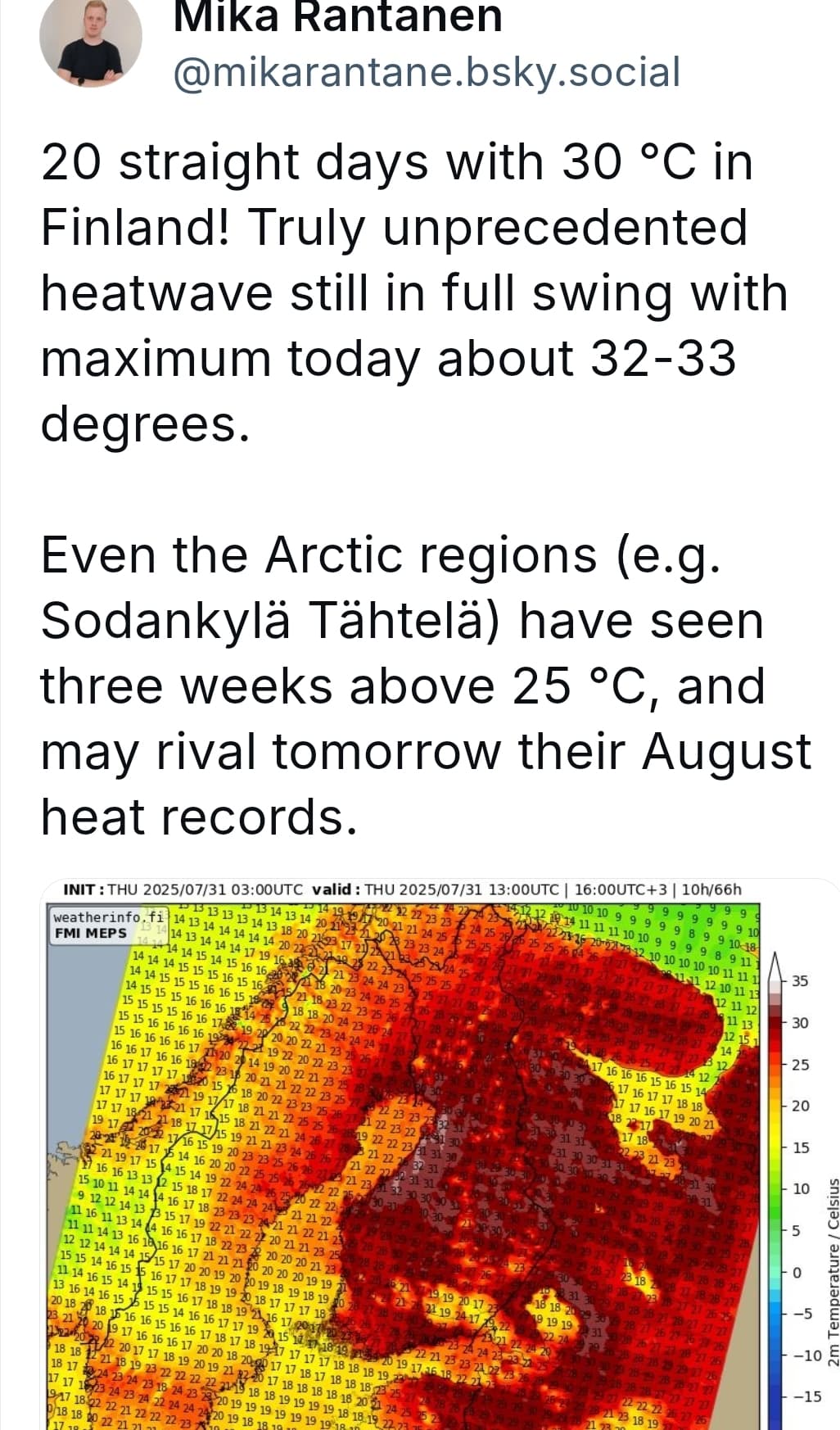
1 Like
Forty-year-old advice remains valid — in the above scenario we have reached stage four…
1st stage: nothing is going to happen
2nd stage: something would happen but we dont need to do anything about it.
3nd stage: maybe we should do something about it but there’s nothing we can do
4th stage: maybe there was something we could do, but it’s too late now
1 Like

Just in case:

The above scenario was about Russia taking over a small country, meh.
2 Likes
Every month now there is some sort of extreme weather event in NSW. This time it’s the Northern Tablelands turn. Climate roulette kinda sucks.
When your house is built to contain heat and the sun doesn’t set til after midnight, this would be a nightmare. Not to mention what would be happening to the permafrost.
1 Like
I’ve always liked Alan Kohler but this is really disappointing. You can’t point out China like that and attribute blame to them for we we find ourselves now. And you can’t refer to our emissions as a “rounding error” without mentioning how much coal and gas we export.
3 Likes
A little mild humour👇

Lets accept it and just prepare for it. The worst response possible. There aint no preparing for it Alan, whatever you think the world will be like, multiple it by 10,000. ABC should get an expert to talk about it.
1 Like


8 Likes
1 Like
A drier spring than what was predicted mightn’t be such a bad thing for places like Sydney, although bushfire conditions sound worrisome for many across the country. Hoping it doesn’t get too hot.
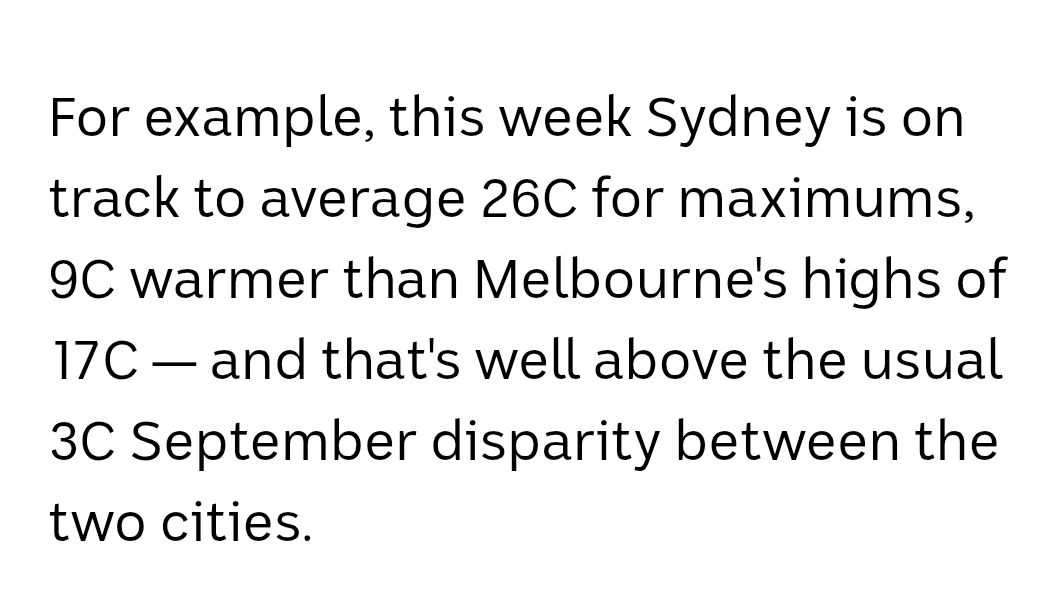
28 today and 30⁰C tomorrow for Sydney ahead of more warm conditions.
New feedback loop just dropped.
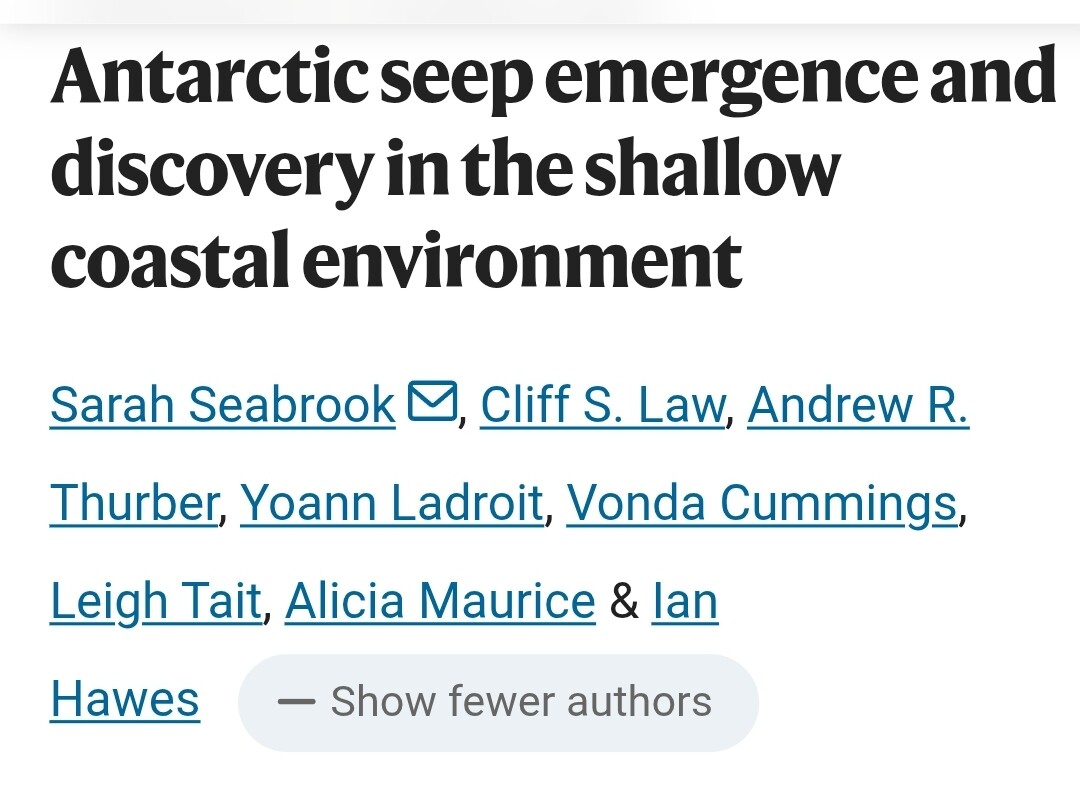
We report striking discoveries of numerous seafloor seeps of climate-reactive fluid and gases in the coastal Ross Sea, indicating this process may be a common phenomenon in the region. We establish the recent emergence of many of these seep features, based on their discovery in areas routinely surveyed for decades with no previous seep presence. Additionally, we highlight impacts to the local benthic ecosystem correlated to seep presence and discuss potential broader implications. With these discoveries, our understanding of Antarctic seafloor seeps shifts from them being rare phenomenon to seemingly widespread, and an important question is raised about the driver of seep emergence in the region. While the origin and underlying mechanisms of these emerging seep systems remains unknown, similar processes in the paleo-record and the Arctic have been attributed to climate-driven cryospheric change. Such a mechanism may be widespread around the Antarctic Continent, with concerning positive feedbacks that are currently undetermined. Future, internationally coordinated research is required to uncover the causative mechanisms of the seep emergence reported here and reveal potential sensitivities to contemporary climate change and implications for surrounding ecosystems.
2 Likes
Sydney’s daytime temperatures during the first half of October have been so hot that they would be above average in January, at the height of summer. This unseasonable heat has put the city on track to register its hottest October on record, with a maximum temperature anomaly that could even eclipse any other month in the city’s 168-year history.
No spring for us this year it seems, just a first summer followed by a second summer. It was almost 33⁰C today. Really am not looking forward to second summer that will bring with it the humidity in all probability.
1 Like
Another gigantic ■■■■■■■■■■■■ of a storm. Has gone from Cat 3 to Cat 5 remarkably quickly.
1 Like
Latest from the NHC:
A slow westward motion is
expected today, followed by a turn to the north and northeast on
Monday and Tuesday. On the forecast track, the core of Melissa is
expected to move near or over Jamaica on Tuesday, across
southeastern Cuba Tuesday night, and across the southeastern
Bahamas on Wednesday. Additional intensification is forecast over
the next day or so, followed by fluctuations in intensity.
Melissa is expected to be a powerful major hurricane when making
landfall in Jamaica Monday night or Tuesday morning and
southeastern Cuba late Tuesday. Melissa is expected to bring
extremely heavy rainfall to portions of southern Hispaniola and
Jamaica through Wednesday. Catastrophic flash flooding and
numerous landslides are likely. Very heavy rainfall is expected for
eastern Cuba as well, resulting in life-threatening flash
flooding and numerous landslides.
1 Like
All things considered, and given how strong the system was.
Jamiaca 1 Melissa 0
There is a lot of damage, but what could have been had there been a direct hit on Kingston that was initially feared.
2 Likes